
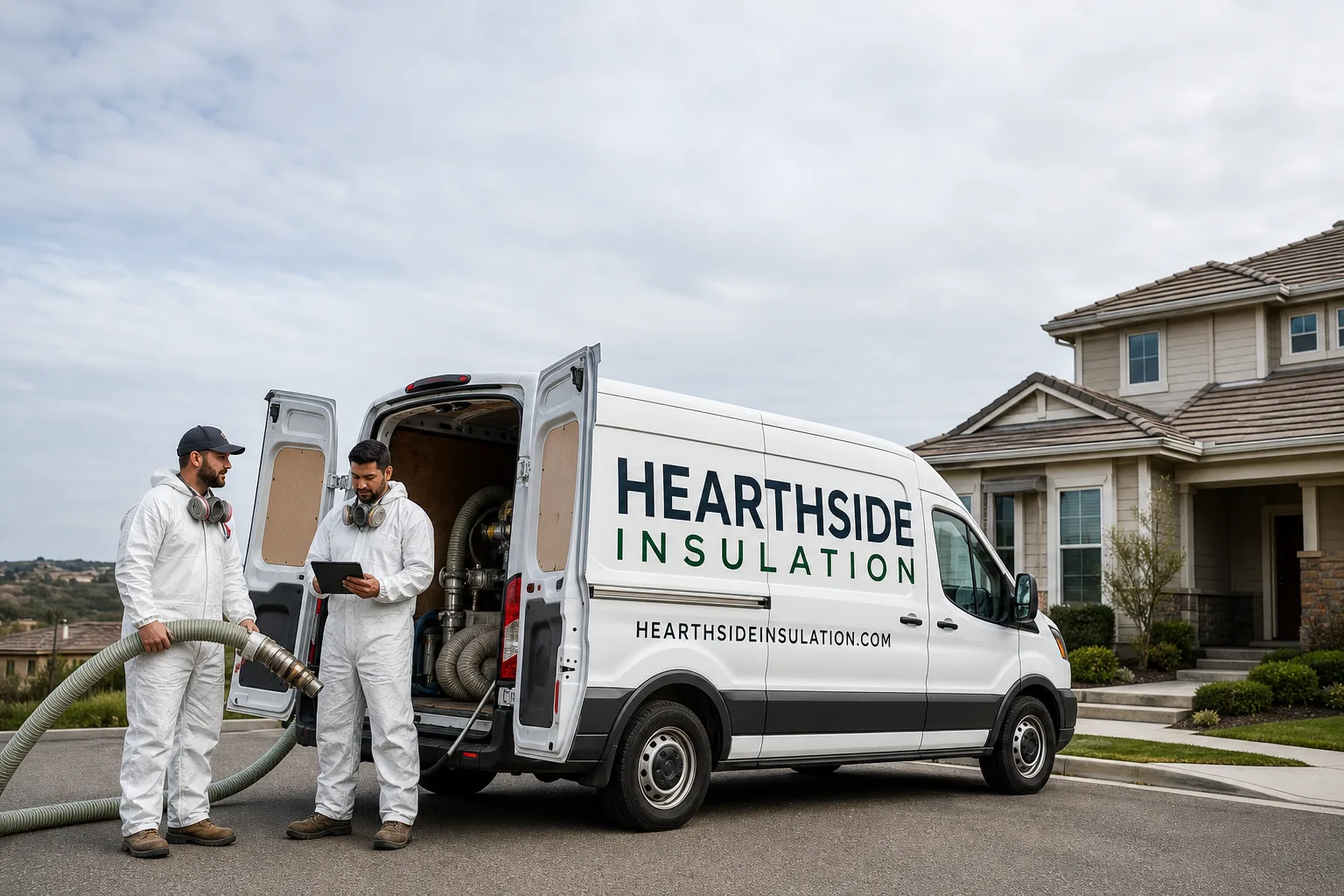
Fast, Reliable Attic Insulation Across Citrus
Attic insulation in Citrus runs between $1,450 and $3,800 for a typical 1,200 to 1,800 square foot home, depending on existing material condition, attic depth, and whether we’re adding radiant barrier or upgrading ventilation. That’s the straight answer. What that number buys you is simpler: lower summer cooling costs, fewer hot rooms upstairs, and an attic that stops baking your living space every afternoon from June through October. We’re Hearthside Insulation, and we work throughout Citrus ZIP 91702 regularly. Call (877) 265-4871 for a free estimate, and we’ll put real numbers on your roof by the end of the visit.
Why Hearthside Insulation Is Citrus’s Preferred Attic Insulation Company
Most Citrus homeowners don’t need us to tell them their upstairs runs ten degrees hotter than the rest of the house. They’ve felt it. What they need is someone who knows why it happens here and what actually fixes it. We do. Citrus sits in the San Gabriel Valley foothills directly against the Angeles National Forest, and that location changes everything about how insulation performs. Roofs here get direct afternoon sun with almost no shade from May through October, and that drives attic temperatures past 140°F on a regular basis. Fiberglass and cellulose both behave differently under that kind of sustained heat load than they do a few miles south in Covina or West Covina, where you get more tree cover and slightly cooler afternoon air.
Trevor Bassett started Hearthside Insulation with one operating principle: match the material to the home, not the other way around. That’s why we carry Owens Corning, Johns Manville, Knauf, and Rockwool instead of pushing a single product line. For Citrus specifically, we’ve spent enough time in these foothill attics to know what forty or fifty years of heat cycling does to insulation. That local experience means we diagnose faster and recommend with confidence. Our Attic Insulation team has re-insulated homes throughout ZIP 91702, from the ranch clusters near the forest edge to the later additions south toward the 210 corridor.
When you call, you get a real person who can schedule a site visit. We measure your existing insulation depth, check your attic ventilation, and look for radiant barrier or the absence of it. Then we give you a written estimate that same day. No phone tag, no waiting a week for a number. Call (877) 265-4871 and we’ll get you on the schedule.
Attic Ventilation in Citrus
Attic Ventilation in Citrus matters more than in most San Gabriel Valley cities because of how long your roof holds afternoon heat. When attic air can’t move, temperatures inside the attic cavity climb past 160°F during summer afternoons, which shortens the life of your insulation, stresses your ductwork if it runs through the attic, and forces your AC to work harder than it should. A properly ventilated Citrus attic moves that hot air out and pulls cooler air in, keeping the entire system in balance. Most mid-century homes in ZIP 91702 were built with minimal venting, and fifty years of wear hasn’t improved it.
What Ventilation Work Involves Here
On a typical Citrus home, we’re adding or replacing soffit vents, installing attic fans, or expanding ridge and gable venting to get proper airflow. Insulation and ventilation are two parts of the same problem. Insulation slows heat transfer, but ventilation removes the heat that does get in. If your attic doesn’t ventilate correctly, even fresh R-49 insulation underperforms. Expect to pay $450 to $1,600 for ventilation improvements depending on attic size and what’s already in place. The work often happens alongside insulation replacement rather than as a standalone job.
Sizing Ventilation to Your Roof Pitch
Foothill streets in Citrus tend to run east-west, which means a lot of your roof slope faces dead south and catches maximum sun. Steeper pitches trap heat differently than shallow ranch profiles. We calculate vent area based on your actual attic square footage and roof orientation instead of using a generic rule of thumb. That’s the kind of specificity a lot of contractors skip on Citrus homes, and it’s the difference between an attic that breathes and one that keeps baking.
Radiant Barrier in Citrus
Radiant Barrier in Citrus is the single most effective upgrade we recommend for foothill homes, because it directly addresses what makes this ZIP code different from the rest of the valley: unrelenting afternoon sun on unshaded roofs. Radiant barrier is a reflective foil installed on the underside of your roof deck that reflects radiant heat back out instead of letting it radiate down into your attic, similar to how Reflectix repair in Citrus uses reflective materials to manage heat transfer. In a place where roofs bake all afternoon with little shade, that reflection can drop attic temperatures by 20 to 30°F. We routinely find mid-century stucco homes in Citrus with no radiant barrier at all, and the difference after installation is immediate and measurable.
Radiant Barrier with Existing Insulation
You don’t need to replace your insulation to benefit from radiant barrier. In fact, we often install radiant barrier as a companion to existing fiberglass or cellulose. The barrier handles the radiant load, and your insulation handles the conductive transfer. On a 1,500-square-foot Citrus ranch, radiant barrier installation typically runs $1,100 to $2,400 depending on roof complexity, accessibility, and whether we’re also addressing ventilation in the same visit. It’s one of the best performance-per-dollar upgrades available for these foothill homes.
Sun-Exposed Slopes vs. Partially Shaded Homes
Some Citrus properties sit back from the forest edge with mature trees offering partial shade, and those homes need less barrier on their northern slopes and more on their southern exposures. We map your roof’s sun load before recommending coverage, so you’re not paying for foil where it does nothing. The honest answer we give homeowners is this: if your attic hits 130°F or higher on a normal summer afternoon, radiant barrier will pay for itself faster than any insulation upgrade alone. If you’re not sure, we’ll measure it during the estimate. Call (877) 265-4871 to set that up.
Trusted Brands We Service in Citrus
We’re authorized to install products from Owens Corning, Johns Manville, Knauf, and Rockwool, which means the recommendation you get is driven by what your home needs rather than what we happen to have on the truck. For Citrus’s sustained heat load, we lean on Rockwool for its density and thermal stability in hot attics, and Owens Corning fiberglass for its consistent R-value performance in vented attic spaces. We keep material stocked locally and can have most products staged for Citrus jobs within two to three business days. Citrus homeowners get access to the same full material spec, air-sealing, and ventilation expertise we deploy across the San Gabriel Valley.
Common Attic Insulation Problems We See in Citrus Homes
- Compressed fiberglass batts from decades of heat cycling. Original insulation in 1950s-1970s Citrus homes has spent fifty summers absorbing direct foothill sun. Batts that started at 3.5 inches often settle to under 2 inches, which cuts their R-value roughly in half. We see this on nearly every original-insulation attic we enter in ZIP 91702.
- Missing or degraded radiant barriers. Most mid-century stucco homes in Citrus were built before radiant barrier was standard practice. Homeowners don’t realize their attic is absorbing full afternoon sun until they’re standing in a 95°F upstairs bedroom at 4 p.m. Installing a barrier is straightforward, but it has to be done with proper air gap spacing to work.
- Insufficient attic ventilation trapping heat against insulation. Foothill homes often have undersized or blocked soffit vents, some of which were painted over or filled with dust over the decades. When air can’t circulate, even new insulation degrades faster than it should. We address ventilation in every insulation quote because skipping it is how you end up redoing the job in eight years.
- Air leaks through the attic floor. Citrus homes with original construction often have gaps around plumbing stacks, electrical penetrations, and recessed lights that let conditioned air escape into the attic. This is less visible than missing insulation but can account for a significant portion of your cooling loss. We air-seal as part of the insulation process, which is something a lot of generalist contractors skip entirely.
Pricing for Attic Insulation in Citrus, CA
Here are real numbers for Citrus, not vague ranges from a national website. Blown-in attic insulation for a typical 1,400-square-foot ranch runs $1,650 to $2,900. Attic batt insulation replacement lands between $1,800 and $3,400 depending on access and removal of old material. An insulation top-up over existing material runs $750 to $1,500. Attic insulation replacement with full removal of degraded batts sits in the $2,800 to $4,800 range. Attic baffles and ventilation prep add $300 to $850. These numbers reflect job complexity, attic accessibility, and current material depth. Call (877) 265-4871 for a free estimate, and we’ll give you an exact figure for your home, measured from inside your actual attic.
We Also Serve Cities Near Citrus
In addition to ZIP 91702, we work regularly in Attic Insulation in Citrus and the surrounding communities. If you’re in Covina, West Covina, Valinda, or South San Jose Hills, you’re within our normal service area. We schedule Citrus jobs five days a week, and the drive from Foothill Ranch doesn’t change your pricing.
Serving Citrus, CA — Our Local Coverage Area
We’re based in the Citrus area and know this community well. Use the map below to see our service coverage — if you’re nearby, we can almost certainly help.
FAQs About Attic Insulation in Citrus
Yes, for most foothill homes in ZIP 91702. Insulation slows heat transfer, but a radiant barrier reflects the heat before it ever reaches your insulation. In Citrus’s all-afternoon sun exposure, your attic cavity can hit 140°F or higher without a barrier, and that heat radiates down through your insulation into your living space regardless of R-value. Adding a barrier drops attic temps by 20 to 30°F and is one of the fastest payback upgrades available. Call (877) 265-4871 and we’ll measure your attic temperature so you can decide with real numbers.
Look at your attic floor insulation depth. Original fiberglass from the 1950s and 1960s in Citrus homes started around 3.5 inches, but after decades of heat cycling it often settles to 2 inches or less. If you can see your ceiling joists poking above the insulation line, you’ve lost significant R-value. The other tell is an upstairs that runs consistently hotter than downstairs during summer afternoons. We check insulation depth and density during every estimate; call (877) 265-4871 and we’ll verify it properly.
Yes, ventilation makes a measurable difference in Citrus because your attic holds heat all afternoon and into the evening. Proper soffit-to-ridge airflow moves that hot air out, which keeps your attic from baking your insulation and ductwork. Most Citrus homes from the 1960s and 1970s were built with minimal venting, so adding ventilation alongside insulation is a common recommendation we make. Ventilation improvements typically run $450 to $1,600 depending on attic size and existing vent layout.
For Citrus’s sustained heat and wide daily temperature swings, we typically recommend Rockwool batts for their density and thermal stability, or Owens Corning fiberglass for consistent R-value in vented attic spaces. Both hold up well under decades of foothill heat cycling. The honest answer depends on your home’s construction, attic access, and budget, which is why we carry multiple lines instead of pushing one product. Call (877) 265-4871 and we’ll give you a straight recommendation based on your actual attic.
Yes, significantly. Citrus homes built in the 1950s through 1970s were framed and vented for a different insulation standard than current building codes. They often need air-sealing, added ventilation, and radiant barrier alongside whatever insulation material we put in. Newer homes, particularly those built after 2000, usually have adequate venting but may still benefit from an insulation top-up or replacement depending on what the original builder installed. We factor age and construction into every recommendation, not just what’s cheapest to install.
Written by Trevor Bassett, Owner at Hearthside Insulation, serving Citrus since day one of our foothill work.
Ready to stop heating the outside air? Call (877) 265-4871 for a free estimate. We’ll measure your attic, give you real numbers, and have the job done right the first time.