
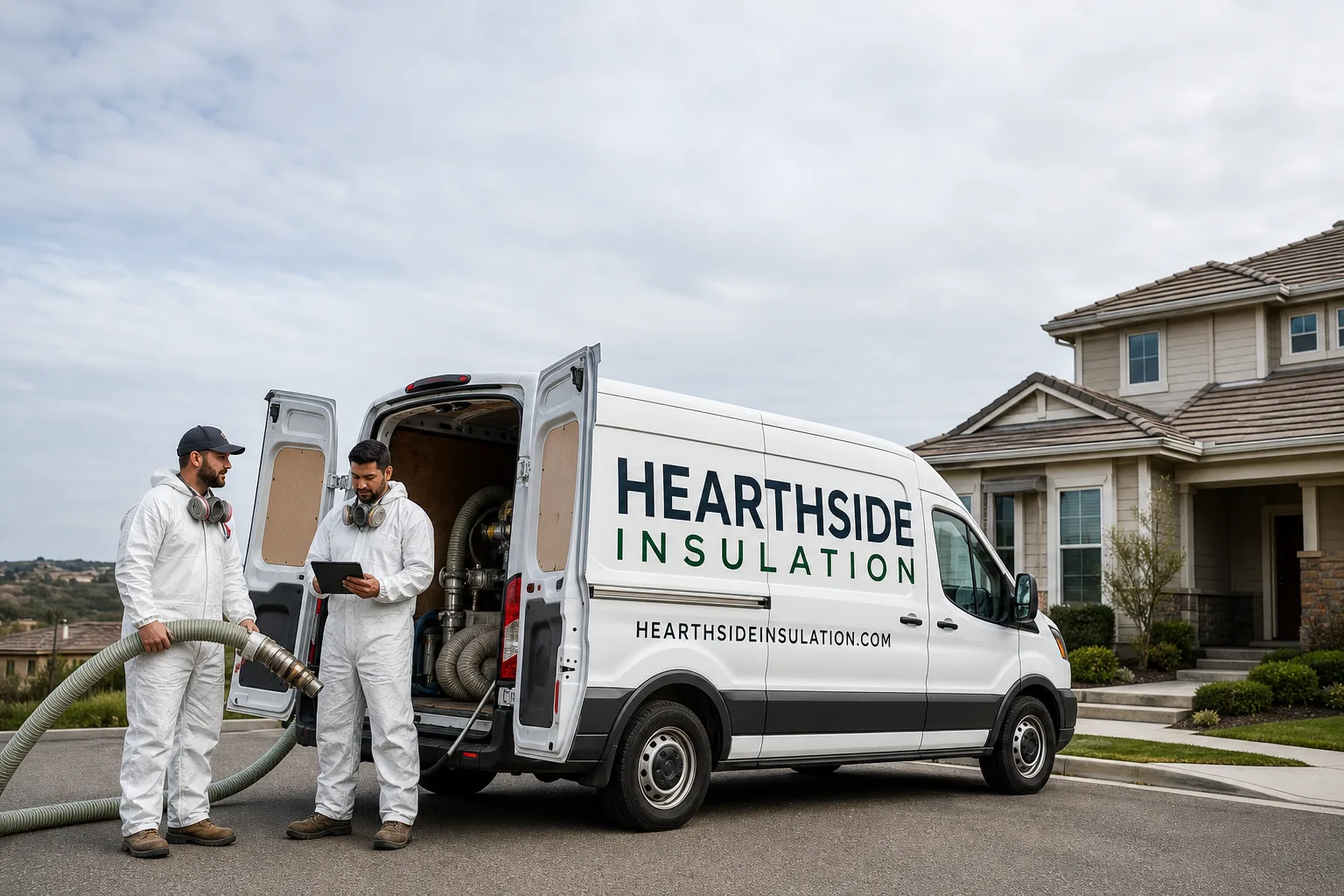
Fast, Reliable Attic Insulation Across March Air Force Base
Attic insulation in March Air Force Base typically costs $1.80 to $3.50 per square foot for blown-in fiberglass or cellulose, and $2.50 to $5.00 per square foot for batt replacement. Most jobs on base housing take one to two days, and Hearthside Insulation serves the 92551 ZIP and surrounding base family housing areas with same-week scheduling. If your attic is hot enough to bake in August and cold enough to frost in January, the insulation is doing its job. Call us at (877) 265-4871 for a free estimate on Attic Insulation work, whether you need a top-up, full replacement, or ventilation prep.
March Air Force Base homes are different from the tract housing sprouting up in Moreno Valley or Perris. Many were built in the 1940s through 1960s, and the insulation in those attics has been settling, compressing, and shifting for 60 or 70 years. Wind off the San Gorgonio Pass pushes dust and air through the eaves in a way you simply don’t see a few miles west, and that wind-washing quietly strips away the insulation’s effectiveness at the perimeter. We know which bays go first on base housing, and we address that before adding material.
Why Hearthside Insulation Is March Air Force Base’s Preferred Attic Insulation Company
We’re an insulation-only contractor, which matters in March Air Force Base because the housing stock demands focused attention. A general contractor who handles drywall, roofing, and insulation as a side note will not spot a wind-washed perimeter bay or a vent gap that’s been pulling dust through your attic for decades. Our Attic Insulation in March Air Force Base work is the entire job, not a line item. Trevor Bassett built Hearthside around one question: what does this specific attic actually need? That means we match the material to the application, not the other way around.
Base housing residents call us because we carry products from eight manufacturers, including Owens Corning, Johns Manville, Knauf, and Rockwool. If your 1950s quadplex attic needs dense-pack cellulose around roof penetrations but mineral wool at the vented eaves, we can do both without calling another contractor. We also know the privatized military-family housing management companies work under specific facility standards, and we’ll coordinate with property managers so the job gets done right the first time without a reschedule.
Response to March Air Force Base is straightforward: we’re based in Foothill Ranch and run crews through the 215 and 60 corridors regularly. Most estimates happen within a few business days, and emergency or time-sensitive work for inspections or move-out requirements can often be accommodated the same week. Call (877) 265-4871 and we’ll tell you honestly what your timeline looks like.
Insulation Contractors in March Air Force Base
Insulation Contractors in March Air Force Base do more than blow fiberglass into an attic. The job here means assessing whether the existing material has compressed below functional R-value, whether wind-washed gaps at the eaves have left the perimeter bays exposed, and whether the attic ventilation is actually moving air. A March Air Force Base homeowner typically needs this service when a room above the garage stays 10 degrees hotter than the rest of the house, when attic temperatures spike above 140 degrees in July, or when the original batts look like thin gray blankets instead of fluffy insulation. A typical attic insulation replacement in March Air Force Base runs $2,000 to $6,500 depending on square footage, access, and whether we’re pulling old material or topping off. A top-up without removal usually lands between $1,200 and $3,000.
Perimeter Bay Top-Off and Re-Seal
Because March AFB sits in a high-wind, dust-prone inland corridor, the outer two to four feet of every attic we inspect shows wind-washed settling. Air pushes through soffit vents, scours the insulation away from the eaves, and leaves the perimeter bays nearly bare. We re-seal the vent gaps, top off those bays with fresh batts or dense-packed cellulose, and only then address the main field of the attic. Skipping this step means you pay to insulate 90% of the attic while 20% of the heat loss continues at the edges.
Attic Insulation Replacement and Retrofit
For the 1940s through 1960s wood-frame and stucco duplexes and quadplexes common on base, the original insulation usually falls between R-11 and R-19 and has settled to half that. A full replacement with Owens Corning insulation or GreenFiber cellulose gets you to R-38 or R-49, which is where modern energy standards actually start to make sense. We also address the access hatch, flue clearances, and any old wiring that needs to be flagged before new material goes in.
Attic Ventilation in March Air Force Base
Attic Ventilation in March Air Force Base is not a nice-to-have; it’s the thing that keeps your new insulation from baking into uselessness. Riverside County inland heat pushes attic temperatures past 150 degrees in peak summer, and without proper airflow, that heat radiates through the ceiling and forces your AC to run longer. A March Air Force Base homeowner needs ventilation work when attic moisture condenses on the underside of the roof sheathing in winter, when energy bills climb year after year, or when the existing gable or soffit vents are blocked by old insulation. Typical attic baffle installation and ventilation prep in March Air Force Base runs $350 to $900, depending on whether we’re adding baffles, clearing blocked vents, or installing a ridge vent system.
Attic Baffles and Soffit Vent Prep
Most base housing attics have soffit vents that were either blocked by original batts or have been buried by decades of accumulated dust. We install attic baffles to hold insulation back from the roof deck while keeping a clear air channel from the soffit to the ridge. That’s especially important in March AFB’s windy conditions, where dust and debris migrate into the attic and clog those channels over time.
Radiant Barrier and Vent Gap Sealing
In the hot, dry inland climate around March Air Force Base, a radiant barrier attached to the underside of the roof deck can reflect a significant portion of the heat before it ever reaches your attic floor. We pair radiant barrier with vent gap sealing and Reflectix repair in March Air Force Base because the wind-driven dust in this corridor finds every seam. Sealing those gaps first means the radiant barrier and the insulation both actually perform.
Trusted Brands We Service in March Air Force Base
Hearthside Insulation installs products from Owens Corning, Johns Manville, Knauf, and Rockwool, among others, and we stock enough material to handle common March Air Force Base attic sizes without ordering delays. Owens Corning batt insulation is a workhorse for perimeter top-offs; Johns Manville blown-in fiberglass is fast and consistent for full attic replacement; Knauf offers a solid budget-conscious fiberglass line; and Rockwool mineral wool gives base homeowners a fire-resistant, moisture-tolerant option when safety and sound attenuation matter as much as thermal performance. Tell us what your attic needs, and we’ll match the material. Call (877) 265-4871 to schedule an estimate.
Common Attic Insulation Problems We See in March Air Force Base Homes
- Wind-washed gaps at the eaves and vents: March AFB sits in a high-wind, dust-prone inland corridor, and the outer perimeter bays in most base housing attics show exposed or nearly bare decking. Air pushes through the soffits and scours the insulation back, leaving the edges of the ceiling unprotected.
- Compressed or missing original batts: The 1940s through 1960s military duplexes and quadplexes were insulated with materials that settle. By now, much of that original R-11 or R-19 batts reads closer to R-8 in real-world performance, especially under foot traffic from maintenance access.
- Aging insulation in privatized military-family housing: Many privatized units received minimal retrofits during ownership transitions, and the attic ventilation is often inadequate. The combination of old material, blocked soffits, and dusty vent channels means these attics run hot and lose cool air fast.
- Dust and debris buildup in vent channels: The same wind that scours insulation also deposits fine dust into the soffit and ridge vents. Over a few decades, that dust clogs the airflow path and traps heat, which is why we clean and install baffles before adding any new insulation.
Pricing for Attic Insulation in March Air Force Base, CA
Here’s what we see on the ground in March Air Force Base. Blown-in attic insulation top-up runs $1,500 to $3,200 for a typical 1,200 to 1,800 square foot base home. Full attic insulation replacement with removal of old material runs $2,800 to $6,500. Batt replacement only, with perimeter top-off and re-seal, usually lands between $2,000 and $4,500. Attic baffles and ventilation prep add $350 to $900 depending on vent count and access. These ranges reflect 92551 market conditions, including the older housing stock and the need for perimeter work on nearly every job. Free estimates are standard. Call (877) 265-4871 and we’ll give you a number based on your actual attic, not a brochure price.
We Also Serve Cities Near March Air Force Base
Hearthside Insulation runs crews throughout the Moreno Valley, Woodcrest, Perris, and Good Hope areas. If you’re managing a property near the base or just across the city line, the same team that handles March Air Force Base attics can be on site with the same eight-brand material access and the same perimeter-focused approach.
Serving March Air Force Base, CA — Our Local Coverage Area
We’re based in the March Air Force Base area and know this community well. Use the map below to see our service coverage — if you’re nearby, we can almost certainly help.
FAQs About Attic Insulation in March Air Force Base
Because March AFB sits in a high-wind, dust-prone inland corridor, the outer bays of most base housing attics are scoured by air moving through the soffit vents. The insulation gets pushed back from the eaves, leaving the ceiling perimeter unprotected. If we add new material on top without first topping off those bays and re-sealing the gaps, the attic still loses conditioned air around the edges. We always address the perimeter before the main field. Call (877) 265-4871 to schedule an attic inspection and see if your perimeter bays need attention.
It depends on what’s actually up there. In many 1940s and 1950s base duplexes and quadplexes, the original batts are so compressed and dust-filled that repair means pulling them and starting fresh. In some cases, especially where we see settled but not degraded material, a targeted top-off and perimeter re-seal brings the attic to functional R-38 or R-49 without a full teardown. We’ll show you what’s in the attic and give you an honest answer on repair vs. replacement. Call (877) 265-4871 for a free estimate.
For March Air Force Base’s hot, dry summers and cool winter nights, we typically recommend blown-in fiberglass or cellulose for the main attic field, with a radiant barrier to cut summer heat gain. Owens Corning batts work well for perimeter top-offs, Johns Manville blown-in fiberglass is a consistent full-attic option, and Knauf offers a solid fiberglass line for budget-conscious retrofits. Rockwool mineral wool is worth considering if you want better fire resistance and sound attenuation. The right material depends on your attic, your ducts, and your home’s exposure. Call (877) 265-4871 and we’ll match the material to the application.
Ventilation moves the hot air out of the attic before it can radiate through your ceiling. In March AFB’s inland heat, an unventilated attic can reach 150 degrees or more, which taxes your air conditioning and degrades some insulation materials faster. Proper soffit-to-ridge airflow keeps the attic cooler, reduces moisture buildup in winter, and helps the insulation do its job. We install baffles, clear blocked vents, and seal wind-driven dust gaps as part of every attic job on base housing. Call (877) 265-4871 to have your ventilation checked.
Yes. We work directly with property managers and residents in privatized military-family housing at March Air Force Base. Many of those units were built decades ago and received minimal insulation retrofits during ownership transitions. We understand the facility standards that apply and coordinate with management to keep the job on schedule and within scope. If you’re a resident or a property manager, call (877) 265-4871 and we’ll set up a walkthrough and quote.
Why March Air Force Base’s Legacy Housing Needs a Different Approach
One thing we see on base that we almost never see in nearby Riverside city homes: wind-washed perimeter bays that leave outer attic edges effectively uninsulated. The base sits in a high-wind corridor, and decades of prevailing winds have pushed air through the eaves of 1940s through 1960s housing, scouring insulation away from the perimeter. That means a standard insulation quote written for a Moreno Valley tract home may not account for the top-off and re-seal work that nearly every March AFB attic needs. Our crew was called to a 1950s wood-frame duplex in the March AFB family housing area where the original attic batts had settled and wind-washed gaps at the eaves left the perimeter bays exposed. We topped off the perimeter with Owens Corning R-30 batts, re-sealed the vent gaps, and added a radiant barrier to cut attic heat gain. The result was a more uniform envelope that met both military facility standards and modern energy expectations. That’s the level of local knowledge you get when insulation is all we do.
Call Hearthside Insulation for Attic Insulation in March Air Force Base
If your March Air Force Base attic is running hot, showing dust lines at the eaves, or simply hasn’t been touched since the original construction, we’ll walk you through what it needs and what it costs. No pressure, no material bias, just the right insulation for your home. Call (877) 265-4871 for a free estimate, or reach out through our contact page and we’ll schedule a walkthrough. We serve all of the 92551 ZIP and the surrounding March AFB family housing areas.
Written by Trevor Bassett, Owner at Hearthside Insulation, serving March Air Force Base and the Inland Empire with dedicated attic, spray foam, and blown-in insulation work.