
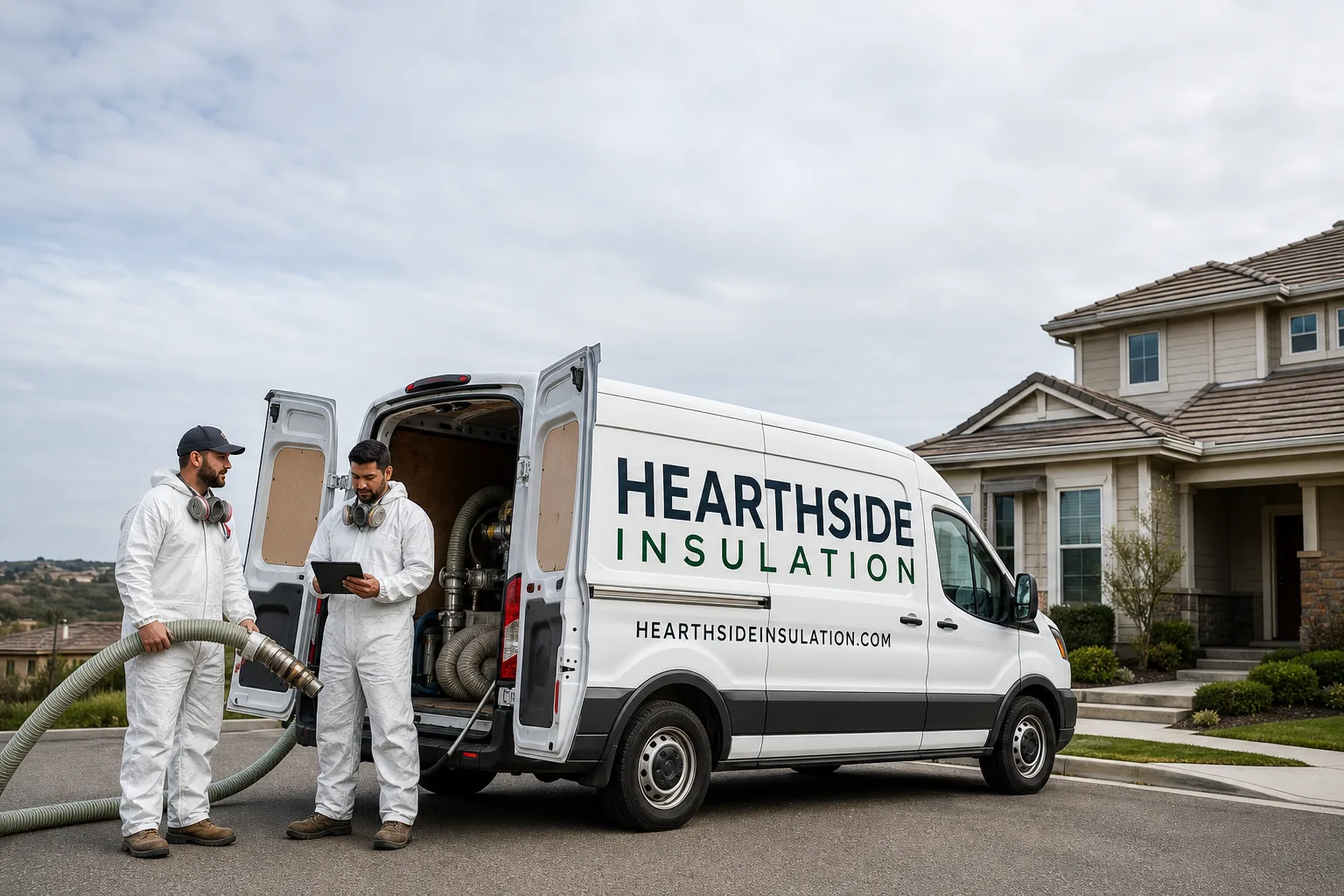
Fast, Reliable Attic Insulation Across Rancho Cucamonga
Attic insulation in Rancho Cucamonga is a different job than it is in Los Angeles or Orange County. Out here, summer attics regularly hit 150°F, Santa Ana winds drive dust and embers through standard vent mesh, and much of the housing stock from the late 1970s through the 1990s still carries builder-grade R-11 or R-19 batts that have sagged, compressed, or settled. We work in every zip from 91730 to 91739, and we know what these attics actually look like inside. If your cooling bills climb every August and the upstairs never quite cools down, the problem is usually up there. Call Hearthside Insulation at (877) 265-4871 and we’ll tell you straight what’s going on.
Why Hearthside Insulation Is Rancho Cucamonga’s Preferred Attic Insulation Company
Trevor Bassett leads our team, and he’s built Hearthside Insulation around one principle: we match the material to the home, not the other way around. That matters in Rancho Cucamonga, where a 1985 stucco-on-frame tract house in 91730 has different needs than a low-slope Alta Loma ranch in 91737. We carry eight brands across fiberglass, mineral wool, spray foam, and cellulose – Owens Corning, Johns Manville, Knauf, Rockwool, CertainTeed, Icynene, Demilec, and GreenFiber – so the recommendation comes from what your attic actually needs, not what a one-product shop happens to stock.
Homeowners in Rancho Cucamonga keep calling us back for the same reason: we explain tradeoffs in plain language. We’ll tell you why blowing Owens Corning to R-49 over your compressed R-11 batts costs different money than a full removal and air-seal, and why GreenFiber cellulose makes sense in some attics but not others. We arrive when we say we will, and we treat your garage and walkways with the care you’d expect from someone working in your home. Our Attic Insulation team handles everything from top-ups to full replacements, and we’re in Rancho Cucamonga every week.
Attic Mold Removal in Rancho Cucamonga
Attic Mold Removal in Rancho Cucamonga catches homeowners off guard because most people assume a hot, semi-arid climate means mold can’t grow. That’s half true – but the October through March season changes things. Warm days, cold nights, and poor attic ventilation create condensation on the underside of roof sheathing, and once mold takes hold, it spreads into insulation batts and framing. We handle the job completely: containment, removal of affected insulation, treatment of framing, and correction of the ventilation problem that caused it. A full attic mold remediation with insulation replacement in Rancho Cucamonga typically runs $2,800 to $5,500 depending on attic size and contamination extent.
What Rancho Cucamonga Homeowners Should Watch For
Look for dark staining on roof sheathing, a musty smell when you open the attic hatch, or increased allergy symptoms in the household. In homes near the 210 freeway corridor and the foothills, wind-driven dust can settle on damp surfaces and feed mold growth faster than you’d expect. If you’ve had a roof leak repaired but never addressed the insulation below it, that’s another common trigger.
Ventilation And Mold Connection
Rancho Cucamonga’s older tract homes often have soffit vents that are undersized or clogged, which means the attic never really breathes. Fixing the insulation without fixing the airflow just brings mold back. We check the vent path before we do anything else.
Attic Insulation Removal in Rancho Cucamonga
Attic Insulation Removal in Rancho Cucamonga is something we recommend more often in this city than in most Inland Empire communities, and the reason is the age of the housing stock. Homes built between 1975 and 2000 in neighborhoods like Alta Loma, Cucamonga, and the central tract developments often have original fiberglass batts that are still up there, doing almost nothing. Rodent droppings, dust accumulation, and compression from decades of HVAC service work leave insulation at a fraction of its rated R-value. Removal alone, before any new installation, typically runs $1.50 to $2.75 per square foot in Rancho Cucamonga depending on attic access and material condition.
Signs You Need Full Removal
Sagging batts, visible dust trails around can lights, or rodent activity are the three biggest red flags. If your attic insulation crumbles when touched or smells like the last time someone was up there was years before you bought the house, it’s usually time for a clean slate.
Top-Up Versus Replacement
Not every attic needs full removal. If your batts are intact but just underperforming for this climate, blowing additional insulation on top can get you to R-49 for less money. The decision comes down to condition, not age alone – and we’ll show you photos from your own attic before you spend a dollar.
Trusted Brands We Service in Rancho Cucamonga
We’re authorized to install products from Owens Corning, Johns Manville, Knauf, Rockwool, CertainTeed, Icynene, Demilec, and GreenFiber. The value of that for a Rancho Cucamonga homeowner is simple: you get the right material for your specific attic, not whatever brand the installer happens to stock. We keep common products from GreenFiber and Owens Corning readily available for fast turnaround in Rancho Cucamonga, and we can source Rockwool mineral wool quickly when fire resistance and sound control are priorities. No waiting on shipments from out of state, no generic substitutions.
Common Attic Insulation Problems We See in Rancho Cucamonga Homes
- Compressed builder-grade batts under HVAC flex runs. In original 1970s and 1980s tract attics across 91730 and 91737, we routinely find R-11 or R-19 batts crushed to half depth where HVAC installers knelt or laid flex duct. The thermal loss sits exactly where duct runs need it most, so your AC works harder to deliver air that’s already losing temperature.
- Settled tile-roof batts hidden from view. Rancho Cucamonga’s 1980s and 1990s homes with concrete tile roofs often have insulation that’s shifted or settled under the tile channels. You can’t see it from below until summer cooling bills spike and the upstairs refuses to hold temperature.
- Dust-clogged soffit vents from Santa Ana wind events. Foothill homes below Mount Cucamonga and the Cucamonga wilderness take wind-driven dust and embers through standard 1/8-inch mesh. Over time, soffit intakes clog and the attic stops breathing, which turns a 150°F attic into a heat trap that radiates into living space all afternoon.
- Low-slope and cathedral sections that never got proper air-sealing. Older Alta Loma ranch homes with partial low-slope roofs complicate insulation. The shallow attic or cathedral cavity means standard batts don’t fit, and air leaks through top plates and recessed lights go unaddressed for decades.
Pricing for Attic Insulation in Rancho Cucamonga, CA
We Also Serve Cities Near Rancho Cucamonga
Beyond Rancho Cucamonga, our crews work throughout the western Inland Empire. San Antonio Heights, Upland, Ontario, and Fontana homeowners call us for the same attic insulation upgrades, removal jobs, and mold remediation work we do every week in Rancho Cucamonga’s 91730, 91737, 91739, and 91701 zip codes.
Serving Rancho Cucamonga, CA — Our Local Coverage Area
We’re based in the Rancho Cucamonga area and know this community well. Use the map below to see our service coverage — if you’re nearby, we can almost certainly help.
FAQs About Attic Insulation in Rancho Cucamonga
My 1980s Alta Loma home has a low-slope roof section – can you still air-seal and insulate it properly?
Yes, low-slope and cathedral sections in Rancho Cucamonga’s older Alta Loma homes can absolutely be air-sealed and insulated properly, though the approach differs from a standard pitched attic. We use a combination of dense-pack techniques, closed-cell spray foam where the cavity is shallow, and careful baffle work to keep airflow moving without creating condensation. This is one of the situations where our access to both Icynene and Demilec spray foam systems matters – we can give you an honest open-cell versus closed-cell comparison rather than steering you toward whatever single product we happen to carry. Call (877) 265-4871 and we’ll walk your specific roof section.
Do attic vents in 91737 and 91739 need special screens for wildfire resilience?
Yes, the foothill zip codes in Rancho Cucamonga sit at the wildland-urban interface, and standard 1/8-inch vent mesh can admit wind-driven embers during Santa Ana events. We recommend upgrading to ember-resistant 1/16-inch mesh on soffit and gable vents for homes below the Cucamonga wilderness, and we include this in our attic insulation work when we’re already inside the attic. It’s a small cost addition that meaningfully reduces wildfire risk, and it keeps the high-desert dust out of your insulation too.
How do I know if my original batts are still doing anything after an HVAC retrofit?
If your Rancho Cucamonga home had an HVAC retrofit – new ductwork, a relocated air handler, or just years of service calls in the attic – the original batts around those areas are almost certainly compressed. We typically find builder-grade R-11 or R-19 batts pressed to half their rated depth under flex runs, which cuts effective R-value right where supply air travels through the hottest part of the house. The telltale sign is an upstairs that runs 5 to 10 degrees warmer than downstairs in summer. We’ll bring a board to walk the attic, take photos, and show you the compressed areas before recommending a top-up or full replacement.
Why would attic mold removal come up in a hot, semi-arid city like Rancho Cucamonga?
Because winter temperature swings in Rancho Cucamonga create condensation on the underside of roof sheathing, especially in homes with poor attic ventilation. Days in the 60s and nights in the 30s from November through February are the culprit. Add dust from Santa Ana winds settling on that damp surface, and mold gets the organic material it needs. Poorly vented attics in older tract homes and the occasional roof leak are the two most common triggers we see. The fix is not just treating mold – it’s removing affected insulation and correcting the ventilation so it doesn’t return.
When should I retrofit versus repair my attic insulation?
Repair – meaning a top-up over existing batts – makes sense when the insulation is intact, dry, and pest-free, just underperforming for Rancho Cucamonga’s 100°F-plus summers. Retrofit – meaning full removal, air-sealing, and new installation – is the right call when batts are compressed from HVAC work, contaminated by mold or rodents, or so dusty that the material has lost its loft. In foothill homes with ember and dust intrusion, the retrofit path lets us address vent screens and air-sealing at the same time. We’ll give you a straight recommendation based on what’s actually in your attic.
Contact Hearthside Insulation in Rancho Cucamonga
If your attic insulation is underperforming, contaminated, or just plain old, we’re ready to help. Our crews work throughout Rancho Cucamonga’s neighborhoods every week, from the central tract developments to the foothill communities below Mount Cucamonga. Call (877) 265-4871 for a free estimate, and we’ll schedule a time to walk your attic, take photos, and give you a straight answer about what you need and what you don’t.
Written by Trevor Bassett, Owner at Hearthside Insulation, serving Rancho Cucamonga and the Inland Empire.