
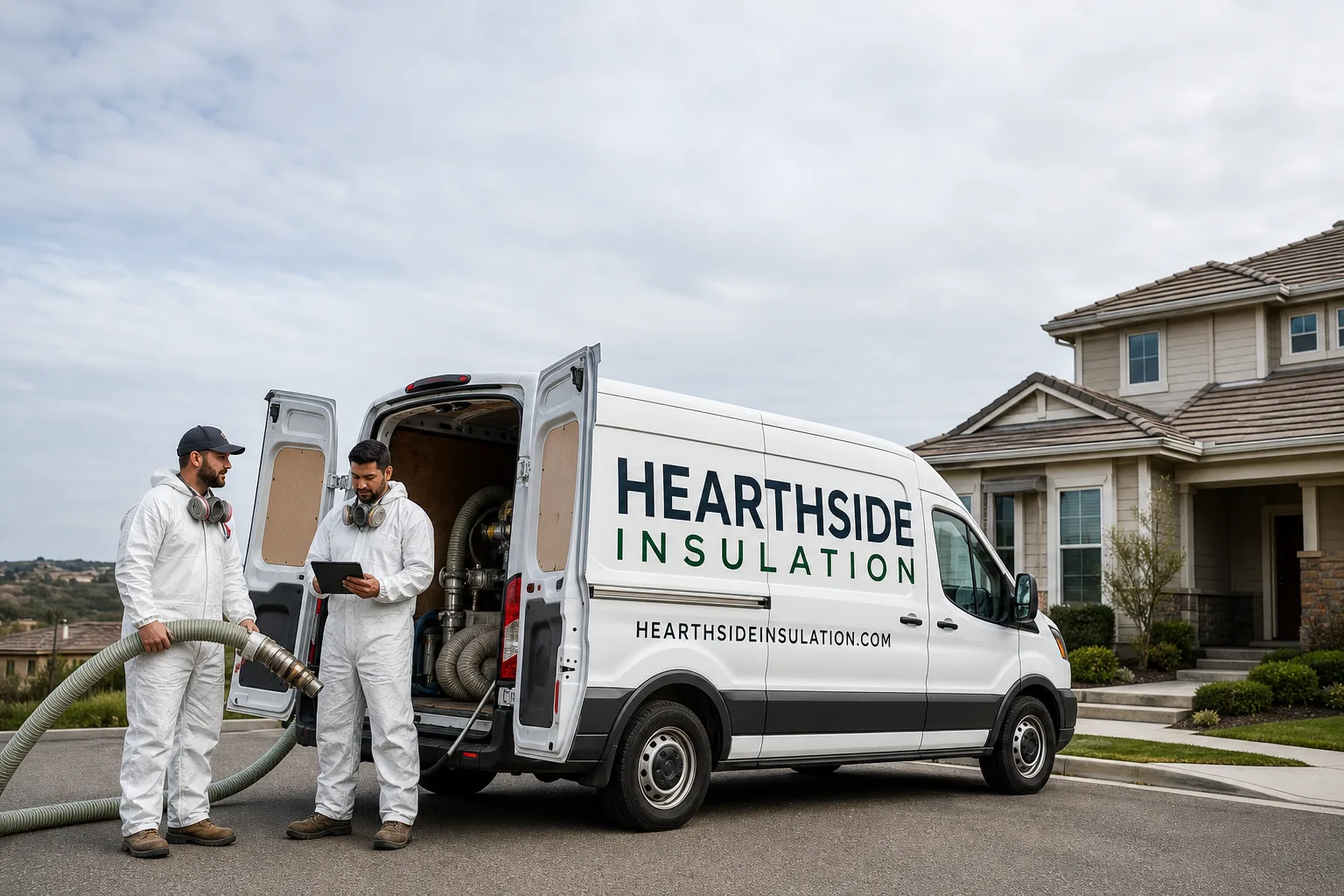
Fast, Reliable Spray Foam Insulation Across Lakewood
Spray foam insulation in Lakewood typically costs $2,800 to $9,500 depending on whether we’re sealing an attic deck, punching wall cavities, or insulating a rim joist band. Most Lakewood jobs finish in one to two days because we cut our teeth on the 1950s Lakewood Park tract homes that dominate this city. Call (877) 265-4871 and we’ll have someone out to your street within 24 to 48 hours, often sooner. We know these houses, we know what’s inside their walls, and we know what actually works here.
Key Takeaways:
- Lakewood’s original tract homes were built with little or no wall insulation, so retrofit spray foam is the highest-impact upgrade most homeowners can make.
- Slab-on-grade construction means the attic and roof deck are where spray foam earns its keep in Lakewood.
- We install both Icynene and Demilec spray foam systems, so you get an honest open-cell vs. closed-cell comparison for your specific house.
- Free estimates, upfront line-item pricing, and no pressure to buy a product we happen to stock.
Why Hearthside Insulation Is Lakewood’s Preferred Spray Foam Insulation Company
We’re an insulation contractor first and only. That matters in Lakewood because the homes here demand a retrofit specialist, not a general contractor who treats insulation as a side job between roofing and HVAC calls. Spray Foam Insulation is one of three core methods we run daily, alongside attic insulation and blown-in, and our crews have worked through enough Lakewood Park attics to know what’s behind those stucco walls before we open them.
Trevor Bassett runs our operation. He’s spent his career working through the peculiarities of Southern California housing stock, and Lakewood’s 1950s tract homes are a case study in why material choice matters. Our customers across Lakewood, Bellflower, and Long Beach call us because we carry both Icynene and Demilec systems, which means we can tell you honestly when open-cell makes more sense than closed-cell for a specific attic or wall cavity. Most installers carry one product and recommend it for everything. We carry two spray foam lines plus fiberglass, mineral wool, and cellulose, and we match the material to the application.
When you call for an estimate in Lakewood, you get a crew that knows the ZIP codes here: 90711, 90712, 90713, 90714. We know the difference between a Lakewood Park original and a later-build Mutual addition. That local knowledge shows up in the quote, not just in conversation.
Spray Foam Insulation Contractors in Lakewood
Spray foam insulation contractors in Lakewood do work that’s fundamentally different from what the same job looks like in a newer Orange County development. Here, we’re rarely insulating new construction. We’re retrofitting 70-year-old houses that were built fast in the early 1950s, often with kraft-faced batts in the attic that have collapsed off the joists and walls with empty stud bays behind the original stucco. A typical wall-cavity injection job in Lakewood runs $3,500 to $7,200 depending on how many exterior walls need treatment and what’s behind the gypsum.
Wall Cavity Retrofit Work
Most Lakewood Park homes have zero insulation in their exterior walls. We punch small access holes through the stucco, inject foam into the stud bays, and patch. The complication here is the original rock-lath or early drywall, which can be brittle. We move carefully and account for the keys before injecting.
Rim Joist and Band Sealing
On slab-on-grade homes, the rim joist is where the floor framing meets the foundation. It’s also a major air leak point. Closed-cell foam here costs $1,800 to $3,400 for a typical single-story Lakewood home and stops the drafts that make west-facing rooms feel like ovens in July.
Spray Foam Attic Insulation in Lakewood
Spray foam attic insulation in Lakewood is the single highest-value upgrade for these 1950s tract homes because the attic is where the heat actually moves. The coastal-influenced LA Basin climate means summers are warm but not brutal, yet long sunny stretches turn low-slope roofs into heat radiators that bake the ceiling below. Sealing the attic deck with spray foam in a Lakewood Park home typically costs $4,200 to $9,500 depending on roof area and whether we’re spraying the deck or installing a vented attic floor application.
Attic Deck Sealing
This is where spray foam replaces ventilation-dependent insulation. We seal the underside of the roof sheathing, which brings the attic into the conditioned envelope of the house. For Lakewood homes with HVAC ducts running through the attic, this stops the duct-heat penalty that drives summer bills up.
Vented Attic Applications
Alternatively, we can air-seal the attic floor and install foam around penetrations and top plates. This works when the roof pitch is too low for deck sealing or when the homeowner wants to preserve existing eave vent function. A typical Lakewood Park attic floor treatment runs $3,800 to $6,600.
Trusted Brands We Service in Lakewood
We’re authorized to install spray foam from both Icynene and Demilec, two manufacturers with deep credibility in open-cell and closed-cell chemistry respectively. For Lakewood homeowners who want alternatives to foam, we also carry Owens Corning and Johns Manville fiberglass, Knauf products, and Rockwool mineral wool. Having eight brand lines under one roof means you get a straight comparison rather than a sales pitch for whatever’s on the truck. We keep material on hand for fast turnaround in Lakewood, and we’re not routing crews over from another county.
Common Spray Foam Insulation Problems We See in Lakewood Homes
- Foam over collapsed kraft-faced batts: Original 1950s batts have often fallen off the joists or compressed into a dense, useless layer. Spraying foam over them without removing the debris traps a dead air pocket instead of sealing the stud bay.
- Blocked eave vents: Lakewood’s low-slope roofs have narrow eave vent strips. Over-spraying the deck can clog them, which traps marine-layer condensation against the foam and sheathing. A blocked vent means wet foam and eventually rotted wood.
- Cracked stucco around injection points: Rock-lath behind the stucco has brittle keys. If a crew injects too fast or doesn’t account for the wall’s age, the surrounding stucco can crack while the bay fills.
- Uninsulated slab perimeter: Slab-on-grade construction means the floor slab itself conducts heat. Foam can’t fix a slab, but sealing the rim joist and wall cavities around it makes a measurable difference in how the whole house holds temperature.
Pricing for Spray Foam Insulation in Lakewood, CA
Here’s what we quote for Lakewood homes:
- Open-cell spray foam (attic deck): $4,200 – $7,800
- Closed-cell spray foam (attic deck): $5,500 – $9,500
- Wall cavity injection (exterior walls): $3,500 – $7,200
- Rim joist and band sealing: $1,800 – $3,400
- Garage ceiling spray foam: $1,500 – $3,200
What moves the number: roof area, number of exterior walls, wall cavity depth, whether we’re removing old insulation first, and whether the job includes air sealing around top plates and penetrations. We give free estimates with line-item breakdowns, and we’ll tell you if foam isn’t the right call for your specific house. Call (877) 265-4871 for a quote.
We Also Serve Cities Near Lakewood
Our crews work throughout Lakewood and the surrounding communities, including Signal Hill, Bellflower, Long Beach, and Paramount. If you’re a few blocks over the city line, the quote’s the same and the crew knows the housing stock. Call and ask.
Serving Lakewood, CA — Our Local Coverage Area
We’re based in the Lakewood area and know this community well. Use the map below to see our service coverage — if you’re nearby, we can almost certainly help.
FAQs About Spray Foam Insulation in Lakewood
Because Lakewood Park homes have slab foundations with no crawlspace, the attic and wall cavities are the only accessible insulation zones. Spray foam air-seals as it insulates, which blown-in fiberglass or cellulose cannot do. In a 70-year-old house with air leaks at every top plate, eave, and rim joist, that air-sealing function is the difference between “insulated” and actually comfortable. Call (877) 265-4871 and we’ll assess your specific house’s leak profile before recommending anything.
The narrow eave vent strips on Lakewood’s low-slope 1950s roofs are easy to block if the installer over-sprays. When we seal an attic deck, we install baffles or clear the vent line before foam application so moisture from the marine layer doesn’t get trapped against the sheathing. This is a standard part of our Lakewood process.
Yes. We work on the Lakewood Mutual and older pockets that have original rock-lath behind the stucco. We inject slowly, account for the brittle keys, and patch carefully. Our crews have done enough of these to know which sections of wall will take foam cleanly and which need a different approach. Call (877) 265-4871 for a free wall-by-wall assessment.
Only if the installer does it wrong. When we spray the underside of the roof deck in a Lakewood home, we’re intentionally converting the attic to an unvented, conditioned space. That means the eave vents get sealed or removed, not left half-open. A botched job leaves vents partially blocked and marine-layer moisture pumping into the attic. We’ve fixed that exact problem in homes near Mayfair Park and throughout 90711.
We install both Icynene open-cell and Demilec closed-cell systems, and we’ll recommend the right one for the application. Open-cell is typically better for attic deck sealing where you want breathability and sound damping. Closed-cell makes more sense for rim joists and wall cavities where you need higher R-value per inch and moisture resistance. Since we carry both, you get a real comparison instead of a one-product pitch. Call (877) 265-4871 for a straight answer on your house.
The Lakewood Park Condition: Why These Houses Need a Different Approach
Lakewood Park is one of America’s original postwar planned communities. The 17,000-plus tract homes built starting in 1950 by Ben Weingart, Louis Boyar, and Mark Taper went up fast and nearly identical, and most of the original stock still standing was built with little or no wall insulation. 1950s Southern California builders treated insulation as optional, and in a mild climate it took sixty years for the consequences to show up: drafty rooms, hot ceilings, HVAC systems that run constantly, and energy bills that don’t match the house’s size.
The defining construction condition here is slab-on-grade with no basement and no crawlspace. That means the whole insulation job lives in two places: the attic and the punched-in wall cavities. There’s no under-floor zone to insulate, no rim joist accessible from a crawlspace. The attic is where the heat moves, and the wall cavities are where the air leaks. When we open a Lakewood Park attic, we routinely find original kraft-faced batts that have collapsed off the joists or never existed in the first place. The low-pitch roofs over narrow eave vents decide whether new foam cures dry or traps marine-layer moisture against the sheathing.
On a Lakewood Park tract home near Mayfair Park, our crew opened the attic and found original 1950s kraft-faced batts collapsed off the joists and a single narrow eave vent line choked with dust. We sealed the attic deck in Icynene and punched the uninsulated front wall bays from the exterior stucco, then cleared the eave vents so the foam could off-gas and dry. The homeowner noticed the west-facing rooms stopped cooking through the long July afternoons within a week.
This is what makes spray foam insulation in Lakewood different from the same job in a newer city. The houses are old, the walls are mostly empty, and the attic is the battlefield. If you own one of these homes, the right foam job changes how the whole house feels. Call (877) 265-4871 and we’ll walk your attic with you, show you what’s actually in there, and give you a straight answer on what your house needs.
Written by Trevor Bassett, Owner at Hearthside Insulation, serving Lakewood and the surrounding LA Basin since the company’s founding.