
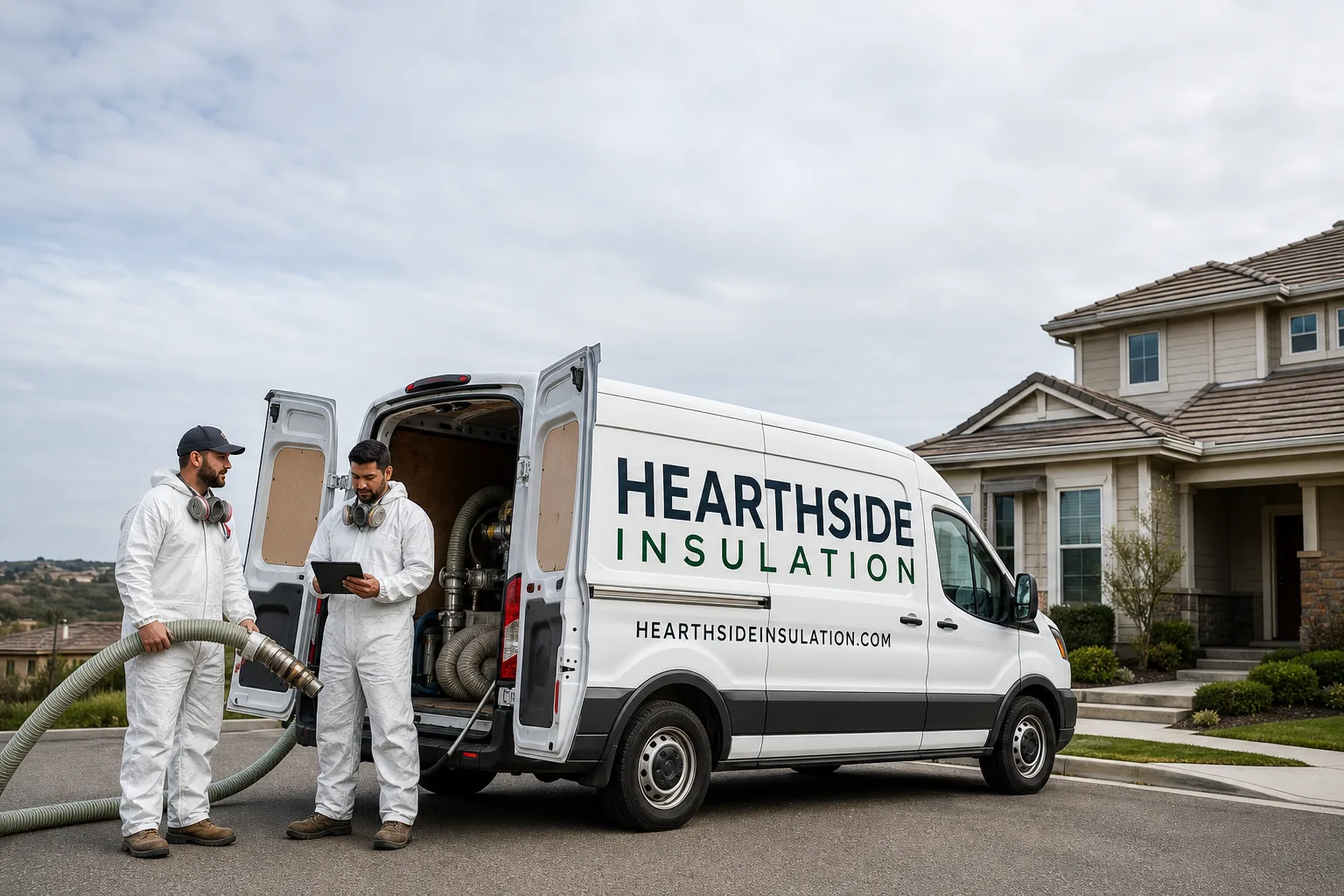
Fast, Reliable Spray Foam Insulation Across Stanton
Spray foam insulation in Stanton typically runs $2,800 to $7,500 for a full attic job in a mid-century tract home, and most projects wrap up in one to two days. We’re Hearthside Insulation, and we work in Stanton’s 90680 zip code every week, often on homes built between 1955 and 1975 that were never designed for Orange County’s inland heat. Call (877) 265-4871 for a straight answer on what your home actually needs, not a canned sales pitch.
What makes Stanton different from Garden Grove or Westminster? The housing stock. We’ll get into that below, but the short version is this: older tract homes with thin stucco walls and settled attic insulation respond differently to spray foam than newer construction, and you need a contractor who’s seen those attics before. We have.
Why Hearthside Insulation Is Stanton’s Preferred Spray Foam Insulation Company
We’re an insulation-only contractor. That’s not a marketing line; it means every training hour, every truck, and every product decision is about thermal and air-sealing performance. We install materials from eight manufacturers, including Johns Manville, Knauf, and CertainTeed, plus spray foam systems from both Icynene and Demilec. When a Stanton homeowner asks us about open-cell versus closed-cell foam, we can compare two respected product lines side by side instead of pushing whatever single brand we happen to carry.
Our familiarity with Stanton’s specific housing stock matters more than a national brand name. We know what a 1962 ranch near Beach Boulevard and Katella Avenue looks like inside the attic: likely settled fiberglass, possibly vermiculite, maybe original knob-and-tube wiring. We plan for those conditions before we show up, not after. Trevor Bassett, our owner, built Hearthside around that kind of preparation, and it shows on every job.
Response time to Stanton from our Foothill Ranch base is typically same-week for estimates and one to two days for installation, depending on scope. For homeowners dealing with a failed insulation job or a drastic heat gain problem in a west-facing bedroom, we can often schedule sooner.
Spray Foam Attic Insulation in Stanton
Spray Foam Attic Insulation in Stanton is the highest-impact upgrade for mid-century single-story tract homes, because the attic is where most of the afternoon heat enters. We apply foam directly to the roofline, creating an air barrier that stops radiant heat from baking the living spaces below. On a 1962 tract home near Beach Boulevard and Katella Avenue, our crew found settled fiberglass and vermiculite in the attic; we tested for asbestos, air-sealed the top plates, and applied Icynene spray foam to the roofline, cutting afternoon heat gain by roughly 30 percent for that homeowner.
A typical spray foam attic job in Stanton runs $2,800 to $5,500 for open-cell foam on the roofline, and $5,000 to $8,000 for closed-cell, which adds more R-value per inch and acts as a vapor barrier. Homes with complicated roof geometry or extensive air sealing needs land on the higher end.
Open-Cell for Attic Rooflines
Open-cell foam is the workhorse for Stanton attics. It expands to fill cavities, seals gaps around wiring penetrations and top plates, and stays flexible as the house settles. For most 1950s to 1970s tract homes, this is the right material: effective, manageable cost, and less prone to trapping moisture than closed-cell in vented attic designs.
Closed-Cell for Unvented Attics
Closed-cell foam from Demilec offers higher R-value per inch and structural rigidity, which matters when a Stanton homeowner wants to convert an attic or garage into living space. It also acts as a vapor barrier, which is useful in unvented attic configurations. The tradeoff is cost, and we walk through that honestly.
Spray Foam Wall Insulation in Stanton
Spray Foam Wall Insulation in Stanton addresses a problem no one talks about: many mid-century wood-frame, stucco-clad homes here have empty wall cavities or nothing more than a thin fiberglass batt that’s slumped over the decades. The afternoon sun beats on west-facing stucco, and that heat transfers straight through the wall. Spray foam injected into wall cavities stops that transfer and seals air gaps in one step.
Wall retrofits in Stanton typically run $3,000 to $7,000 depending on how many walls are done and whether we’re injecting from the interior or exterior. Interior injection through small holes is the most common approach for finished mid-century homes, and it keeps the stucco intact.
Interior Injection for Finished Walls
We use slow-rise open-cell foam for wall cavity retrofits, injected through small drill holes that get patched afterward. It’s the cleanest way to add insulation to a finished Stanton tract home without tearing out drywall or stucco. Most walls take one day per room.
New Construction and Remodel Additions
When Stanton homeowners add a room or gut an existing wall, closed-cell foam from Icynene or Demilec works well for new stud cavities before drywall goes up. It provides an air seal and high R-value in one pass, and we coordinate directly with the framing crew.
Trusted Brands We Service in Stanton
We install and service spray foam systems from Icynene and Demilec, two of the most respected names in the category. For fiberglass and mineral wool components that sometimes pair with spray foam jobs, we also work with Johns Manville, Knauf, and CertainTeed products. That multi-brand access means we can match the material to your Stanton home’s construction, not bend your home to fit one manufacturer’s limitations. We keep common materials and parts stocked for Stanton jobs, so we’re not waiting on a shipment from the Midwest to fix your attic.
Common Spray Foam Insulation Problems We See in Stanton Homes
- Foam sprayed over settled fiberglass without air sealing: In Stanton’s older attics, the original fiberglass has often compressed to half its rated R-value. Spraying foam over it without first air sealing the top plates traps heat and moisture between layers, creating a humid attic that degrades both materials.
- Ignored knob-and-tube wiring behind walls: Many of Stanton’s mid-century homes still have original knob-and-tube circuits in exterior walls. Encasing those wires in foam can cause overheating and poses a fire risk. We check wiring before any wall injection.
- Closed-cell foam in vented attics without proper thermal barrier planning: Closed-cell changes how moisture moves through a roof assembly. On stucco-clad wood frames common in Stanton, installing it without accounting for local humidity and rafter ventilation can lead to condensation at the sheathing.
- Vermiculite contamination overlooked: Stanton attics from the 1950s through 1970s sometimes contain vermiculite insulation, which may include asbestos. Applying foam without testing first locks the material in place and complicates future removal. We test before we spray, every time.
Pricing for Spray Foam Insulation in Stanton, CA
Here are honest numbers for Stanton’s market. An open-cell attic roofline job in a typical 1,200 to 1,600 square foot tract home runs $2,800 to $5,500. Closed-cell attic work lands between $5,000 and $8,000. Wall cavity injection runs $3,000 to $7,000 depending on how many exterior walls need treatment. Garage ceiling spray foam runs $900 to $1,800. Factors that shift the price: attic accessibility, whether vermiculite testing is required, the presence of knob-and-tube wiring that needs assessment, and roof geometry. Estimates are free, and we give you a written number before any work starts. Call (877) 265-4871 to schedule one.
We Also Serve Cities Near Stanton
Beyond Stanton, our crews regularly work in Garden Grove, Cypress, Westminster, and Midway City. If you’re just outside the 90680 boundary, we still cover the area. Learn more about Spray Foam Insulation from our main service page, or see how we approach Spray Foam Insulation in Stanton specifically on our city page.
Serving Stanton, CA — Our Local Coverage Area
We’re based in the Stanton area and know this community well. Use the map below to see our service coverage — if you’re nearby, we can almost certainly help.
FAQs About Spray Foam Insulation in Stanton
Yes, but we test the vermiculite for asbestos before any foam touches the attic. If the test comes back negative, we proceed with air sealing and spraying. If it’s positive, we pause and walk you through abatement options before resuming. Call (877) 265-4871 to talk it through.
Not if the attic is air-sealed properly first and the right foam is used for your roof design. Moisture problems in Stanton happen when foam is sprayed without sealing top plates or when closed-cell is installed in a vented attic without accounting for Orange County humidity. We check both before we spray.
West-facing walls in Stanton absorb the strongest afternoon sun, and empty or under-insulated wall cavities transfer that heat directly into living spaces. Spray foam fills the cavity and seals air gaps, reducing the heat that reaches your interior drywall. Wall injection cuts that transfer significantly. Call (877) 265-4871 for a heat-gain assessment on your worst rooms.
Sometimes, but not always. If the existing fiberglass is clean, dry, and pest-free, we can air-seal above it and spray foam to the roofline. If it’s contaminated with vermiculite, rodent droppings, or moisture damage, it needs removal first. We assess each Stanton attic individually and tell you what we find.
An attic spray foam job in a standard Stanton single-story home takes one to two days from setup to cleanup. Wall injection work typically adds one day per room. Testing for vermiculite or wiring evaluation can add a day at the front end. We schedule around your availability and confirm the timeline before starting.
Ready for an honest assessment of your Stanton home’s insulation? Call Hearthside Insulation at (877) 265-4871 for a free estimate. Trevor Bassett and our crew will walk you through what your attic and walls actually need, with numbers you can budget against.
Written by Trevor Bassett, Owner at Hearthside Insulation, serving Stanton since the company’s founding in Foothill Ranch.