
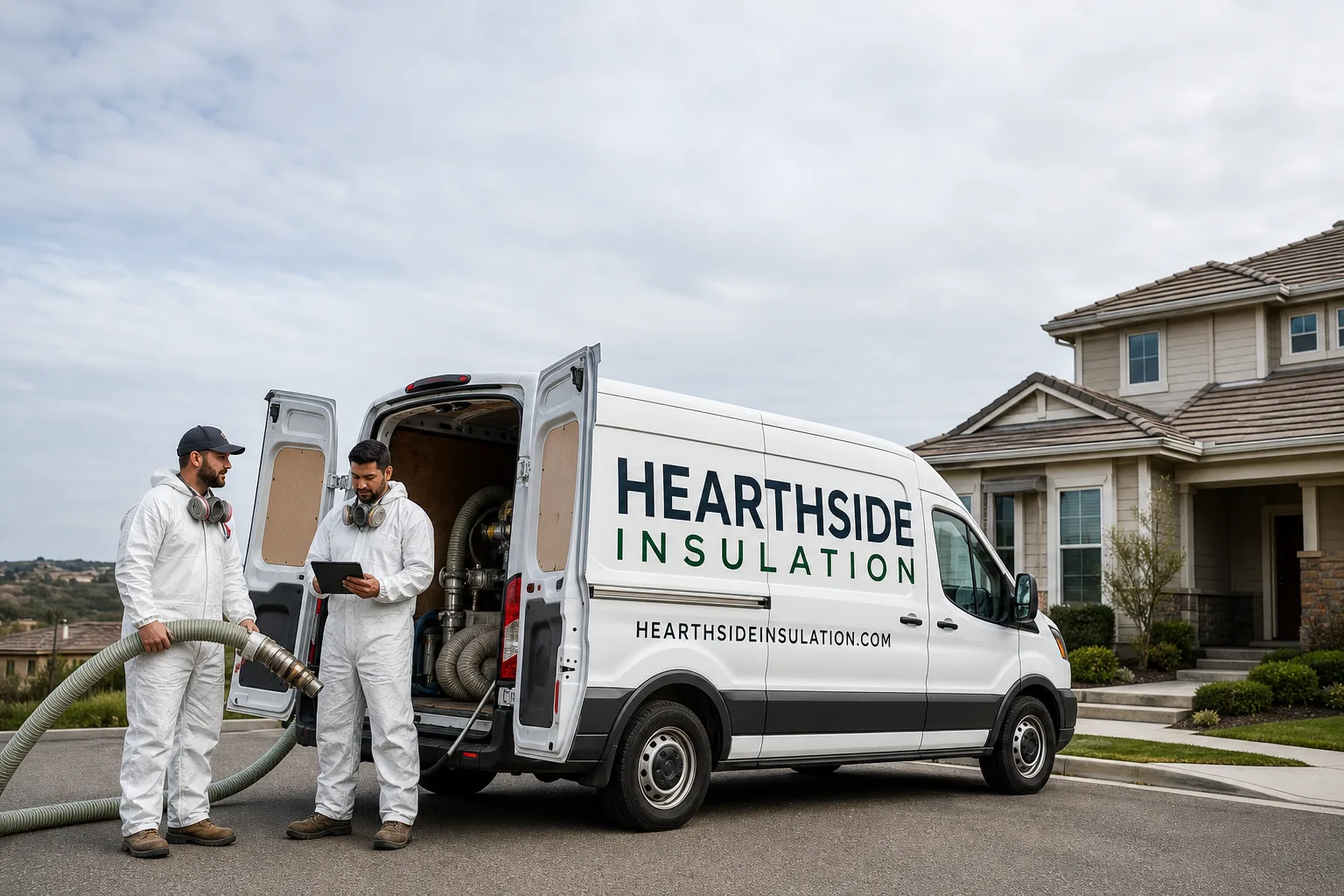
Fast, Reliable Spray Foam Insulation Across Valinda
Spray foam insulation in Valinda typically costs $2.50 to $7.50 per square foot depending on whether the job calls for open-cell or closed-cell foam, and wall-cavity injection work on a mid-century tract home usually lands between $4,000 and $9,000 total. The real issue in Valinda isn’t just the price though. It’s that most homes here were built between the 1950s and 1970s with empty wall cavities and attic insulation that has settled to a fraction of what it once was. When the San Gabriel Valley pushes past 95°F in July and August, those uninsulated stucco walls radiate heat straight into the living space, and attic-only fixes barely move the needle. We know the housing stock here because we’ve opened walls across Valinda. Our crews work the 91744 zip code regularly, and we can usually be on site within a day or two of your call. If you want to talk through what your house actually needs, call Trevor Bassett’s team at (877) 265-4871.
Why Hearthside Insulation Is Valinda’s Preferred Spray Foam Insulation Company
We’re an insulation-only contractor. That distinction matters in Valinda because the homes here need a specific diagnosis before anyone touches a spray foam rig. Most generalist contractors treat insulation as an add-on: an HVAC crew swaps a condenser and throws a few batts in the attic on the way out. Our entire job is understanding how heat moves through a 1960s stucco tract home in the San Gabriel Valley, and what material actually stops it. We carry both Icynene and Demilec spray foam systems, which gives us an honest open-cell versus closed-cell conversation most single-line installers can’t offer. Trevor Bassett built Hearthside around that material-agnostic approach. When we quote a Spray Foam Insulation job in Valinda, the recommendation comes from the house’s wall configuration, the condition of the stucco, and the homeowner’s actual comfort complaint, not from whatever foam happens to be on the truck.
Our reputation in Valinda comes from the follow-up calls we get. Homeowners refer us to neighbors on Amar Road, Wing Lane, and around Del Valle Park because they saw what wall-cavity injection actually did to their back bedrooms in August. We don’t publish review counts we can’t verify, but the pattern we hear from Valinda customers is consistent: the rooms that used to bake by 3 p.m. finally hold temperature. That’s the only metric that counts out here.
Spray Foam Attic Insulation in Valinda
Spray foam attic insulation in Valinda means sealing the attic deck and top plates so 95°F-plus attic air stops bleeding down into the living space. On most homes off Amar Road and across the 91744 zip code, we find the attic insulation has settled to three or four inches, and the top plates where wall framing meets the ceiling were never sealed. A typical attic spray foam job in Valinda runs $2,800 to $6,500 for a small single-story tract home, depending on square footage and whether we’re spraying the roof deck or the attic floor plus air-sealing. The work involves removing or addressing the settled existing insulation, sealing every ceiling penetration, and installing foam that creates a continuous thermal and air barrier. For Valinda’s climate, the attic is both the biggest heat load and the easiest fix when done correctly.
Roof Deck Sealing
We spray the roof deck itself in many Valinda homes to turn the attic into a semi-conditioned space. This matters when HVAC ducts run through the attic, which is common in 1960s tract layouts where the furnace sits in a hallway closet. Ducts in a 130°F attic lose a significant amount of cooling energy before air ever reaches the registers. Foaming the roof deck drops that attic temperature dramatically and takes a huge load off the air conditioner.
Top Plate Air Sealing
Many Valinda attics have never had their top plates sealed. The result is a convection loop: hot attic air pulls into the wall cavities through gaps along the top plates and gets drawn down into the living space. We find this on nearly every mid-century home we open. Spray foam applied along the top plates and into the knee wall intersections stops that air movement at the source.
Spray Foam Wall Insulation in Valinda
Spray foam wall insulation in Valinda is where the real comfort change happens, because the original 1950s – 70s tract homes here were built with empty wall cavities. The stucco exterior from that era has no insulation behind it. When the afternoon sun hits a west-facing wall in July, that stucco acts as a thermal mass, absorbing heat and radiating it inward for hours after sunset. Wall-cavity injection on a typical single-story Valinda home costs $3,500 to $8,000 depending on linear wall footage and whether we use closed-cell or open-cell foam. The process, called drill-and-fill or injection foaming, involves drilling small access holes through the stucco at each stud bay, injecting foam to fill the cavity, and patching the holes to match. We don’t tear off your stucco.
Closed-Cell Cavity Injection
For Valinda’s empty wall cavities, closed-cell foam is usually the right call. It delivers roughly R-6.5 per inch, which means a 2×4 stud bay filled with about 3.5 inches of closed-cell foam nets around R-22 plus a complete air seal. The stucco exterior remains untouched except for the small injection holes, which we patch and texture to blend. The air-sealing properties of closed-cell foam are what make it work here: it stops the valley heat from convecting through the wall assembly, not just from conducting through it.
Probing Before We Quote
We probe the wall bays before quoting any Valinda wall job. The reason is simple: some homes in the 91744 zip code were partially insulated during a past remodel, and others are completely empty. If we assume one condition and the wall turns out to be the other, the foam volume calculation is wrong and you get voids or waste. Skill comes down to checking the actual cavities, not guessing from the outside.
Trusted Brands We Service in Valinda
We install spray foam from Icynene and Demilec, two of the most respected manufacturers in the category, and we stock their product lines for both open-cell and closed-cell applications. That dual access means we can recommend the correct foam for a Valinda wall cavity or attic deck without a single-line installer’s bias. Beyond foam, we carry Owens Corning and Johns Manville products for fiberglass and mineral wool applications, which matters when a Valinda homeowner wants a hybrid approach: closed-cell foam on the walls and Rockwool or blown-in material in other areas. We match the material to the application, not the other way around. Eight brands, three methods, one specialist.
Common Spray Foam Insulation Problems We See in Valinda Homes
- Empty wall cavities behind original stucco. The 1950s – 70s tract homes in Valinda were built before energy codes required wall insulation. We find completely empty 2×4 bays behind the stucco on most homes we probe, which means the walls have been conducting San Gabriel Valley heat into the living space for fifty-plus years.
- Attic-only bids that skip the walls. We regularly see quotes from other contractors that foam or add insulation to the attic but never touch the wall cavities. In a Valinda summer, that leaves the stucco walls radiating 95°F-plus heat inward, and the homeowner notices almost no comfort change in the bedrooms that face west.
- Settled attic insulation hiding the real energy loss. Fiberglass batts installed in the 1970s have settled to three or four inches and lost most of their R-value. But the bigger issue is what settled insulation hides: unsealed top plates and ceiling penetrations that let hot attic air pour down into the house.
- Foam applied without air-sealing first. Some crews spray foam over the existing settled attic insulation without sealing the top plates and wire penetrations first. The foam insulates, but the convective air movement continues through the gaps, and the homeowner is left wondering why the upstairs or back rooms still feel warm at 6 p.m.
Pricing for Spray Foam Insulation in Valinda, CA
Spray foam pricing in Valinda breaks down roughly like this: open-cell attic spray foam runs $2.50 to $4.50 per square foot, closed-cell attic or wall foam runs $4.50 to $7.50 per square foot, and a full wall-cavity injection on a typical single-story tract home lands between $3,500 and $8,000. Attic deck spraying usually falls in the $2,800 to $6,500 range for the small ranch layouts common along Amar Road and the streets off Temple Avenue. The biggest cost variables are wall square footage, whether the attic needs old insulation removal, and whether we’re doing both walls and attic in one mobilization. We give a firm, line-item quote before any work begins, and estimates in Valinda are free. Call (877) 265-4871 and Trevor’s team will walk you through what your house actually needs.
We Also Serve Cities Near Valinda
Our crews work throughout the eastern San Gabriel Valley, and if you’re searching for Spray Foam Insulation in Valinda from a neighboring community, we cover La Puente, West Covina, South San Jose Hills, and Hacienda Heights as well. The housing stock in these areas shares the same mid-century wall-cavity issues, so the diagnosis process is the same: probe the walls, check the attic, match the material.
Serving Valinda, CA — Our Local Coverage Area
We’re based in the Valinda area and know this community well. Use the map below to see our service coverage — if you’re nearby, we can almost certainly help.
FAQs About Spray Foam Insulation in Valinda
Because the 1950s – 70s tract homes in Valinda were built with empty wall cavities, and attic-only insulation cannot stop the San Gabriel Valley heat from radiating through the uninsulated stucco walls. The west-facing bedrooms in most of these homes bake in the afternoon heat regardless of how much attic insulation is added, because the stucco itself acts as a thermal mass. Wall-cavity injection fills that void and creates an air seal that attic work alone can’t achieve. If you’re not sure whether your walls are empty, call (877) 265-4871 and we’ll probe them during the estimate.
We use a drill-and-fill injection method: small holes are drilled through the stucco at each stud bay, foam is injected under low pressure to fill the cavity completely, and the holes are patched and textured to match the surrounding finish. The stucco exterior stays in place. This is the standard approach for the original stucco tract homes across the 91744 zip code because it preserves the 1960s exterior while modernizing the thermal envelope.
We install Icynene and Demilec spray foam systems, covering both open-cell and closed-cell applications. For a Valinda wall cavity that needs the air-sealing properties of closed-cell foam, we typically recommend the right Demilec or Icynene closed-cell product. For attic roof decks where open-cell foam is often the better fit, we have both manufacturers available. Having two lines means the recommendation is driven by the house, not by what we happen to stock. Call (877) 265-4871 to talk through which foam fits your walls.
Yes, because the problem in Valinda is cooling, not heating. The San Gabriel Valley regularly hits 95°F and above from June through September, and that heat load drives air conditioning costs and comfort complaints. Spray foam, especially closed-cell in the walls, cuts the conductive and convective heat gain through the stucco walls and attic, which reduces how hard and how often your AC runs. Mild winters don’t change the summer math. If your back bedrooms turn into ovens by late afternoon, the issue is the wall cavities and the attic, not your HVAC system.
Usually nothing. Most of the single-story tract homes built in Valinda during the 1960s have empty 2×4 wall cavities behind the original stucco, and any attic insulation has settled to a few inches of compressed fiberglass. We’ve opened walls on homes off Amar Road and found the exterior sheathing visible from inside the stud bays, with no insulation of any kind. Every once in a while we find a partial retrofit from a past remodel, but the majority of the time the walls are empty and the top plates were never sealed. That’s the exact condition that spray foam wall injection is designed to fix.
Written by Trevor Bassett, Owner at Hearthside Insulation, serving Valinda and the San Gabriel Valley with eight-brand material access and an insulation-only focus.