Fast, Reliable Attic Insulation Across Moreno Valley
Attic insulation in Moreno Valley is rarely a simple add-more job. It’s a re-insulation upgrade on homes built when Title 24 energy standards were far weaker than they are now. Most calls we take from the 92553, 92555, and 92557 subdivisions involve original blown-in cellulose that has settled to half its labeled depth, or sun-baked batts compacted under 150°F attic heat. We repair the failure, not just the symptom. If your upstairs runs 10 degrees hotter than downstairs between July and September, call (877) 265-4871 and we’ll put a thermal assessment on the calendar.
Why Hearthside Insulation Is Moreno Valley’s Preferred Attic Insulation Company
Hearthside Insulation is an insulation-only contractor, which matters more in Moreno Valley than in most markets. This is a retrofit-heavy city: 1980s and 1990s stucco tract homes dominate the housing stock, and nearly every one was built with code-minimum R-13 or R-19 ceiling insulation. Our crews work this housing type every week, so we know what to expect before we open the attic hatch – settled cellulose, blocked soffit vents, can-light penetrations leaking 150°F air into the living space.
Led by Trevor Bassett, our team carries products from eight manufacturers: Owens Corning, Johns Manville, Knauf, Rockwool, CertainTeed, Icynene, Demilec, and GreenFiber. That breadth means we match the material to the application, not the other way around. A 1988 tract home off the Sunnymead corridor gets a different recommendation than a larger 2000s build in the 92555 east end. Same specialist, different prescription.
Moreno Valley homeowners also get our full attention because we don’t run HVAC calls or roofing jobs on the side. Attic insulation is what we do. That focus means faster diagnosis, cleaner installs, and a material recommendation based on your home’s actual thermal profile – not what happens to be on the truck.
Radiant Barrier in Moreno Valley
Radiant Barrier in Moreno Valley is one of the highest-return upgrades we install, given how hard the summer sun hits attic roof decks here. A radiant barrier is a reflective foil layer stapled to the underside of the roof rafters. It reflects radiant heat back toward the roof deck instead of letting it radiate into the attic, which can drop attic temperatures by 20°F to 30°F on triple-digit afternoons. For a typical single-story 92553 home, expect to budget $1,800 – $3,200 depending on roof square footage and accessibility. Properties with tile roofs and tight rafter spacing run toward the upper end.
When It Pays for Itself
In Moreno Valley’s inland-empire heat, a radiant barrier works hardest exactly when your AC runs hardest. Reducing attic air temperature means the insulation below it has less heat to fight, and your duct runs – often aging metal or flex duct from the 1980s – spend less time sitting in a 155°F oven. We typically recommend pairing radiant barrier with an insulation top-off rather than treating it as a standalone fix.
South-Facing Roof Decks First
If your house on the 60/Sunnymead corridor has a south-facing roof slope, that’s where the heat rejection needs to happen. We often find batt insulation on south slopes that has compacted and scorched under years of direct sun. A radiant barrier on those rafters, combined with fresh insulation at the ceiling plane, addresses the problem from both sides.
Attic Cleaning Services in Moreno Valley
Attic Cleaning Services in Moreno Valley aren’t cosmetic. They’re the prerequisite for any insulation upgrade in a 1980s or 1990s tract home. Old blown-in cellulose breaks down into dust. Rodent activity, roof leaks, and decades of dust coat the attic floor. More importantly, we routinely find the original insulation packed against the soffit vents, blocking airflow that should be moving continuously. A clean attic is a venting attic, and a venting attic is what keeps your insulation from becoming a heat sink. Typical attic cleaning runs $800 – $1,800 for a standard Moreno Valley home, with larger two-story properties pushing higher.
What We Remove
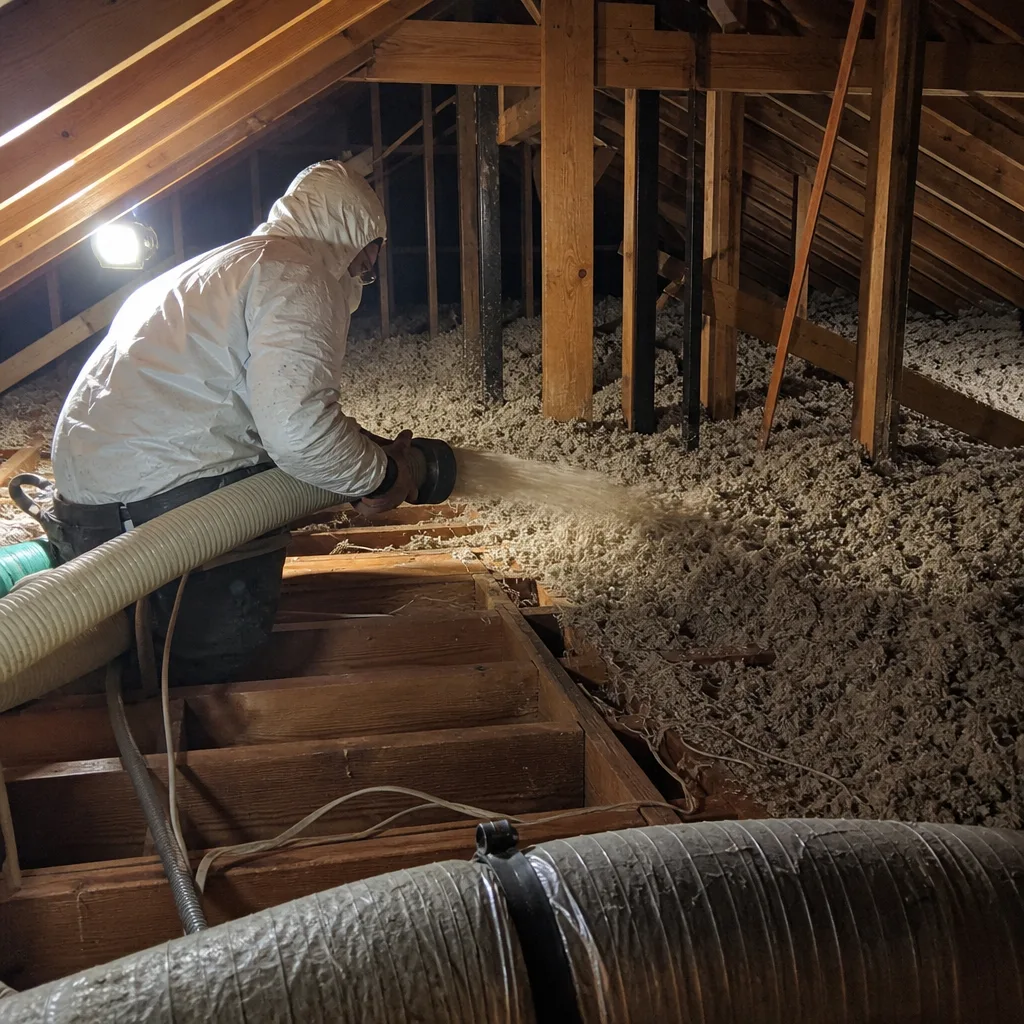
When we clean a Moreno Valley attic, we’re pulling out settled, degraded insulation, old rodent nesting material, and debris. We’re also clearing every soffit vent and checking that baffles are still in place. If the existing insulation is original to a 1980s build, removal is the right call before the new material goes down. You can’t top off over a dust bed and expect R-value to hold.
After the Clean
Once the attic floor is clean, we air-seal the penetrations that matter: can lights, ceiling fans, plumbing chases, and the gap around the attic access hatch. That’s where 150°F attic air sneaks into your living space. Then we install the new material. A clean, sealed, properly vented attic is the only way insulation performs at its labeled R-value in Moreno Valley’s July and August heat.
What happens when you call
- 1
A real person answersNo phone trees — you reach a local pro.
- 2
You get an upfront price rangeHonest numbers before anyone is dispatched.
- 3
A background-checked tech heads outLicensed & insured, dispatched right away.
- 4
You approve before work beginsNothing starts until you say go.
Trusted Brands We Service in Moreno Valley
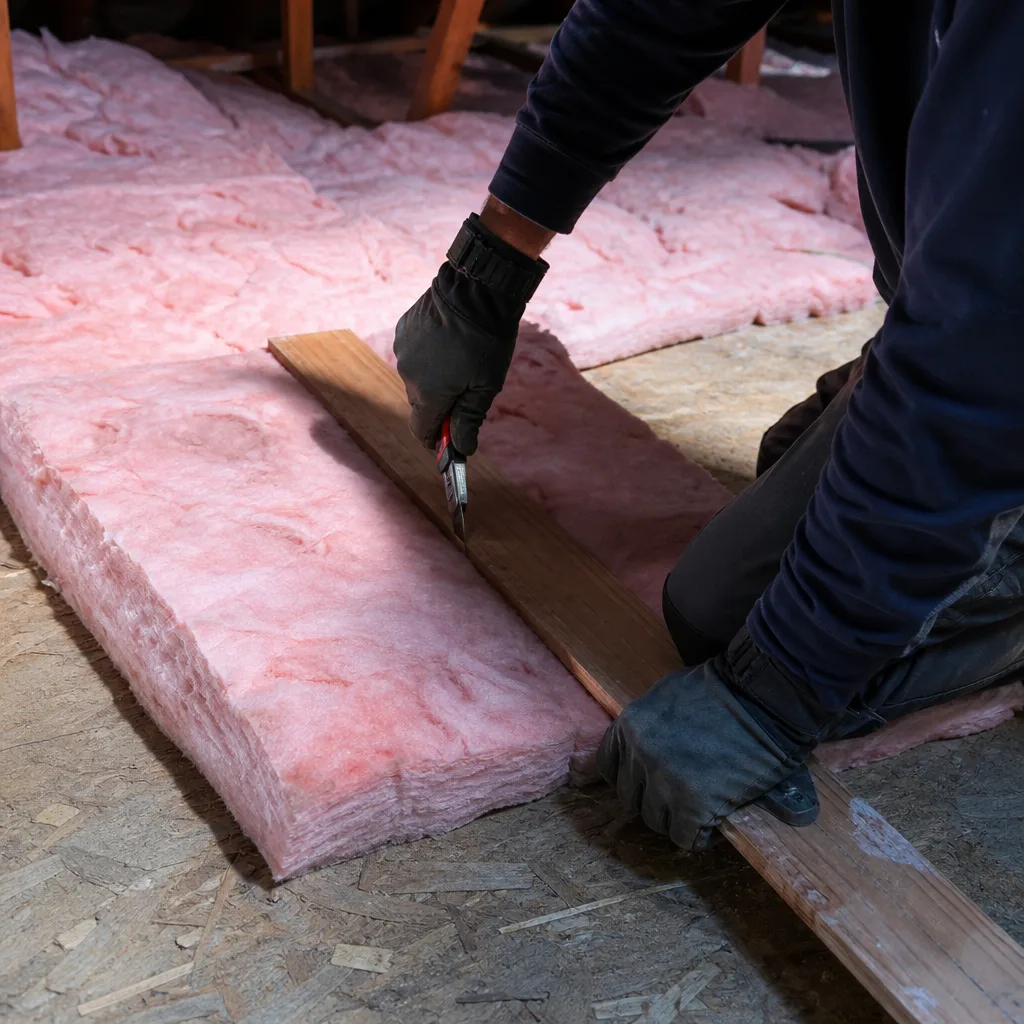
We install and service attic insulation from Owens Corning, GreenFiber, Johns Manville, and Knauf, among a broader portfolio. This matters for Moreno Valley homeowners because an older tract home may already have one brand’s original material in the attic, and matching the replacement or top-off material to the existing system improves long-term performance. Our GreenFiber blown-in cellulose is a frequent fit for the 1980s Sunnymead-area homes, since it matches the original material profile and delivers consistent coverage over existing batts or settled cellulose after removal and re-prep. We have the hands and materials ready for fast turnaround across the 92553, 92555, 92556, 92557, and 92551 ZIP codes.
Common Attic Insulation Problems We See in Moreno Valley Homes
- Settled original cellulose. In the 1980s and 1990s tracts off the Sunnymead corridor, the original blown-in cellulose has often settled to 4 inches or less – roughly half its labeled depth. That’s an R-value collapse, and it’s invisible from below the hatch.
- Blocked soffit vents from the same insulation. As old cellulose settles, it drifts and packs against the soffit vents, cutting off the passive airflow that every vented attic in the 92553 and 92557 subdivisions relies on. The attic becomes a stagnant heat box, and the insulation bakes and degrades faster.
- Scorched and compacted batts on south-facing slopes. Direct inland sun through a tile or composition roof pushes attic temperatures past 150°F, which compacts batt insulation and scorches the surface. That’s a Moreno Valley-specific failure mode we see less often in coastal or higher-desert parts of Riverside County.
- Unsealed can-light penetrations and aging duct runs. Older tract homes are full of ceiling penetrations: can lights, ceiling fans, bathroom vents, and duct boots. Each one is a heat leak. Without air-sealing before insulation goes in, the new material works at a fraction of its rated performance.
Pricing for Attic Insulation in Moreno Valley, CA
A typical attic insulation top-off in Moreno Valley runs $1,200 – $2,400 for a standard single-story 92553 home, assuming the existing material is salvageable after vent clearing and air-sealing prep. A full removal and re-insulation, which is what we recommend for most 1980s builds with settled cellulose, runs $2,500 – $4,800 depending on attic square footage and the material chosen. Radiant barrier adds $1,800 – $3,200 as noted above. Attic cleaning alone is $800 – $1,800. If you’re in the 92555 east end in a larger 2000s home, add roughly 20 – 30% for the extra square footage. Every job starts with an on-site assessment. Call (877) 265-4871 for a free estimate, and we’ll give you a line-by-line quote before any work begins.
We Also Serve Cities Near Moreno Valley
Our crews work throughout the inland empire. Along with Moreno Valley, we service March Air Force Base, Woodcrest, Grand Terrace, and Highgrove. If you’re in one of those communities and dealing with attic heat or degraded insulation, the same assessment and material-agnostic recommendation applies.
Serving Moreno Valley, CA — Our Local Coverage Area
We’re based in the Moreno Valley area and know this community well. Use the map below to see our service coverage — if you’re nearby, we can almost certainly help.
FAQs About Attic Insulation in Moreno Valley
Almost certainly not at full performance. The original blown-in cellulose in 1980s Moreno Valley tract homes has typically settled to half its labeled depth or less, and the material has often degraded from years of 150°F attic heat. It’s not a failure of the material; it’s physics and time. Schedule an attic assessment and we’ll show you exactly what’s up there. Call (877) 265-4871 and we’ll put an inspection on the calendar.
Insulation slows heat transfer; it doesn’t stop solar gain entirely. In Moreno Valley, a vented attic with blocked soffit vents traps heat, and once the air inside reaches 150°F or more, even properly installed insulation starts to lose effectiveness. The fix is venting first: clear the soffit vents, ensure baffles are in place, then assess whether the insulation depth and condition are adequate. A radiant barrier on the roof deck can make a measurable difference too.
Sometimes, but not if the old material is blocking the soffit vents or has degraded into dust. In the Sunnymead-area tracts we serve, the original cellulose has often settled and compacted to the point where adding over it just masks the problem. We’ll rake back the old material, clear the vents, air-seal the penetrations, then add the new material – that’s the reseal-and-top-off approach that actually holds up. For a free quote, call (877) 265-4871.
For most 1990s stucco tract homes in 92553, we recommend blown-in cellulose or fiberglass at R-38 to R-49 depending on your budget and attic configuration. GreenFiber cellulose is a strong fit because it matches the original material profile and fills around existing framing better than batts. If the existing insulation is still viable after vent clearing and air-sealing, a top-off is the most cost-effective path. We’ll give you options at every performance tier, not just one product line.
Look for the telltale signs: upstairs rooms that stay hot even with the AC running, a persistent musty smell, or visible dark staining near the roof edges inside the attic. If you can see insulation pressed against the soffit openings from inside the attic, that’s the confirmation. The original blown-in material often drifts over time and settles right into the vent channels. We clear this as part of every top-off and re-insulation job in Moreno Valley.
Get an Honest Assessment of Your Moreno Valley Attic
If you live in Moreno Valley and your attic is original to a 1980s or 1990s build, don’t guess. We’ll inspect it, show you what’s there, and tell you what it needs – even if the answer is nothing. That’s the Hearthside approach: insulation is our only trade, and our recommendation is driven by fit, not inventory. Call (877) 265-4871 to schedule a free estimate, or reach out and we’ll talk through what you’re seeing. The right insulation for your home, matched honestly.
Written by Trevor Bassett, Owner at Hearthside Insulation, serving Moreno Valley and the surrounding inland empire.