Fast, Reliable Attic Insulation Across San Joaquin Hills
Attic insulation in San Joaquin Hills isn’t a one-size-fits-all job. Homes here sit on ridges and canyon rims where sustained winds scour loose-fill away from eaves, and southwest-facing roof planes get hammered by afternoon sun that pushes attic temperatures well past what a code-minimum R-value can handle. We know this because we work these streets. Hearthside Insulation has been matching materials to San Joaquin Hills homes long enough to recognize which properties need wind-wash baffles, which need radiant barriers, and which need both. If your attic is underperforming, call (877) 265-4871 and we’ll tell you exactly what’s going on up there.
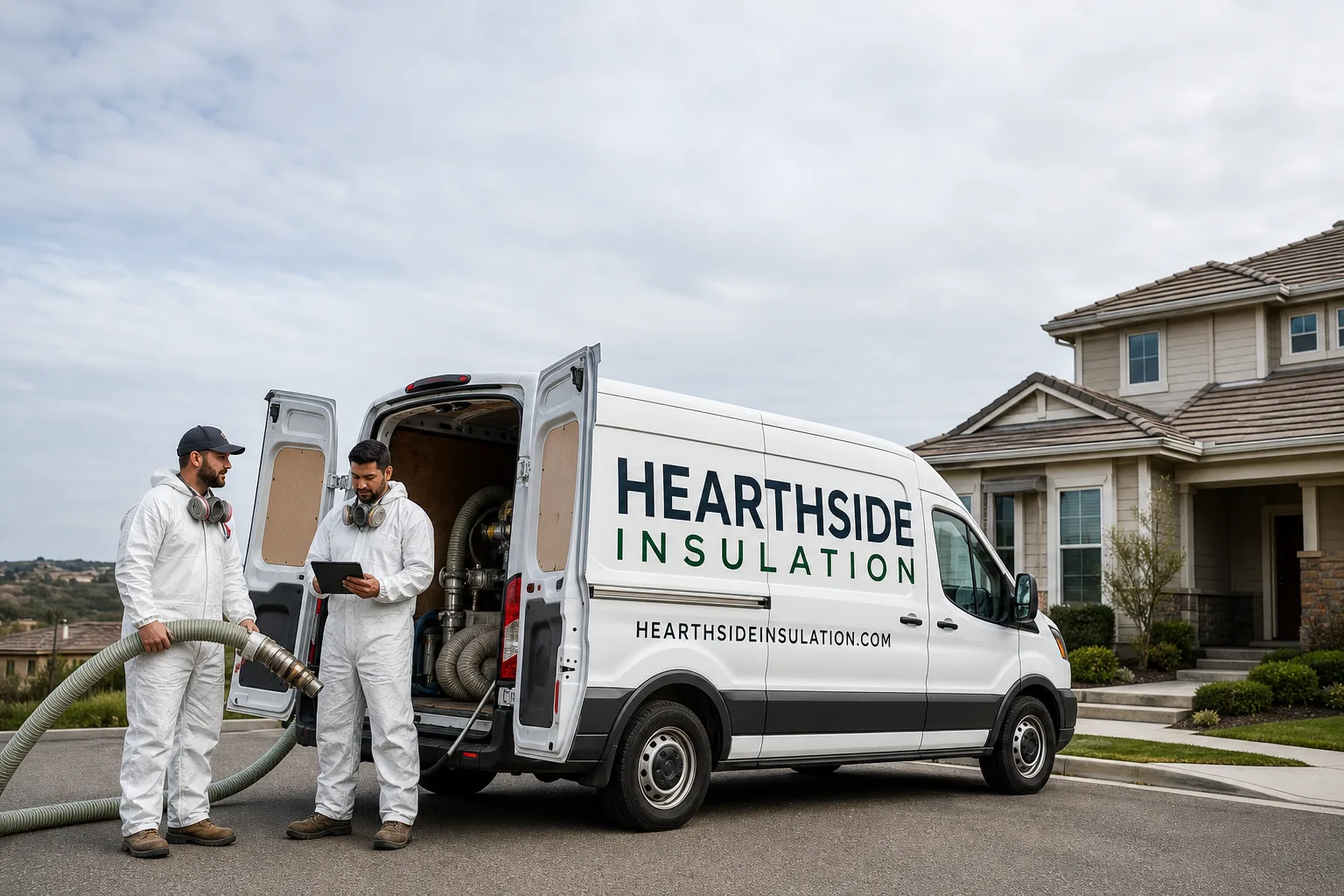
Our crews reach San Joaquin Hills fast from Foothill Ranch. Same-week scheduling is standard for attic work, and we stock the brands that matter here: Owens Corning, Johns Manville, Rockwool, and more. No waiting on a parts truck from a warehouse two counties over.
Why Hearthside Insulation Is San Joaquin Hills’s Preferred Attic Insulation Company
Most contractors in the 92657 area treat insulation as a side job. Their HVAC crew throws in batts between duct runs, or their roofing sub blows in some fiberglass and calls it done. That’s why so many San Joaquin Hills homeowners call us after a previous insulation job failed to fix the problem. We’re an insulation-only contractor. Every job, every day, is attic insulation, spray foam, or blown-in. When you ask us about your attic, you’re talking to someone whose entire trade is thermal performance and air sealing.
Trevor Bassett leads our team, and he’s built Hearthside around one principle: match the material to the house, not the house to whatever product we happen to stock. That’s why we carry eight manufacturer lines: Owens Corning, Johns Manville, Knauf, Rockwool, CertainTeed, Icynene, Demilec, and GreenFiber. A San Joaquin Hills home with cathedral ceilings and a west-facing concrete tile roof gets a different recommendation than a stucco rancher on an interior street. We have the material range to make that recommendation honestly.
Response time to San Joaquin Hills runs one to three business days for inspection, and we keep spray foam rigs and blown-in machines ready for the area. Reviews from San Joaquin Hills customers consistently mention two things: we showed up when we said we would, and we explained the material tradeoffs instead of quoting one number and disappearing.
Common Attic Insulation Problems We See in San Joaquin Hills Homes
- Wind-wash along canyon-rim streets. Homes on ridge and rim lots in San Joaquin Hills lose loose-fill insulation at eave edges and soffit gaps. Sustained canyon gusts literally push the material back from the roofline, leaving bare ceiling drywall that bakes in afternoon sun. Baffles and wind-wash guards solve this; standard attic jobs on interior streets rarely need them.
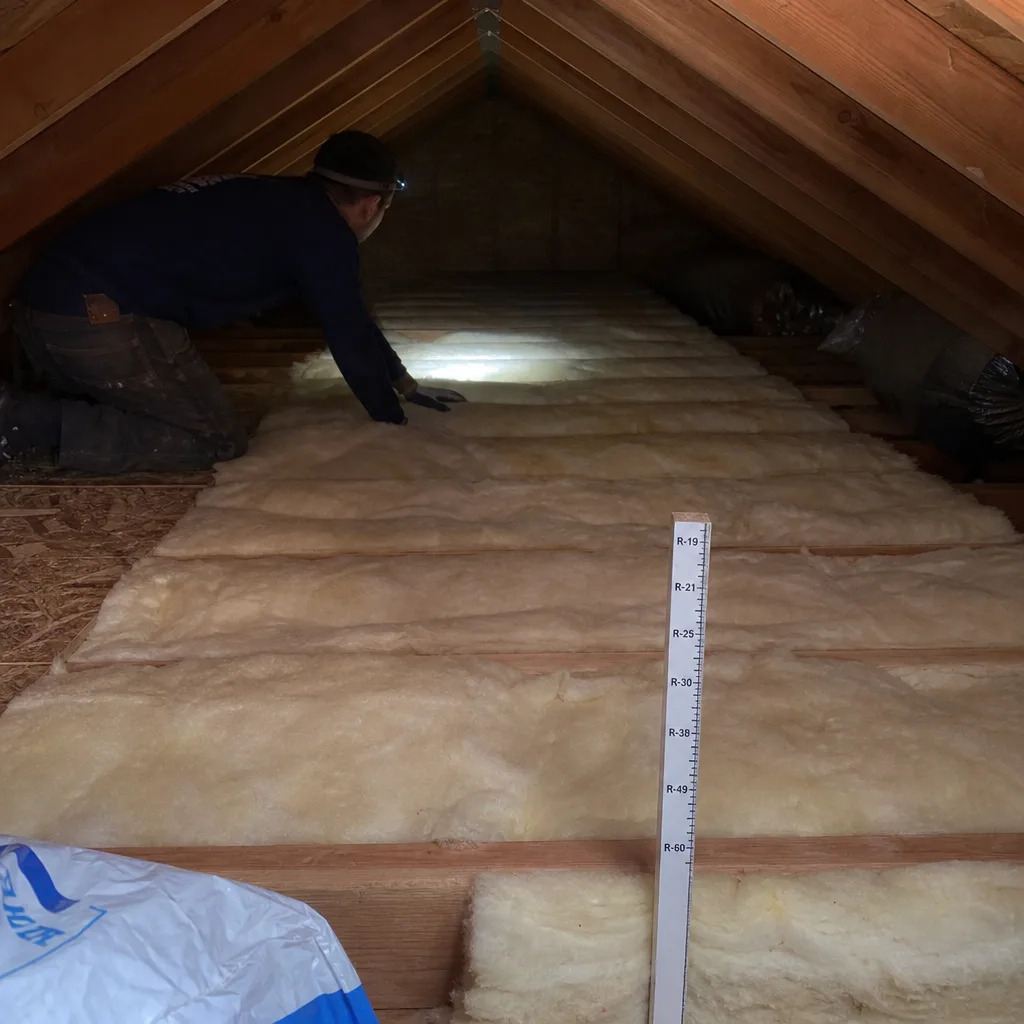
- Compressed batts in 1980s and 1990s builds. Original R-19 fiberglass batts in older San Joaquin Hills attics are often compressed, dirty, and degraded well below their rated performance. Most Mediterranean-era homes here need a top-up or full replacement to reach R-38 or R-49.
- Radiant barrier that’s stopped working. Foil-faced radiant barriers on southwest-facing roof planes lose emissivity fast when dust and debris settle on the foil. We see attics in San Joaquin Hills where a barrier installed ten years ago is now reflecting almost nothing. Cleaning and proper airspace restoration brings it back.
- Airtightness gaps in cathedral ceilings. Can lights, top plates, and HVAC penetrations leak conditioned air into hot attics. In homes with multi-zone ductwork routed through the attic, those leaks tax the system twice: once in lost air, once in conditioned air hitting 140-degree attic space before it reaches the registers.
Radiant Barrier in San Joaquin Hills
Radiant Barrier in San Joaquin Hills is often the single biggest attic improvement available, and it’s not about R-value at all. On southwest-facing roof planes, the sun transfers heat into the attic primarily by radiation, not conduction. A foil-faced radiant barrier with clean emissivity reflects that heat before it ever reaches your insulation. For ridge and canyon-rim homes that absorb direct afternoon sun, a properly installed barrier can knock 20 to 30 degrees off peak attic temperature. Hearthside installs radiant barriers on San Joaquin Hills homes regularly, and we always check one thing first: is the foil face clean and is there an airspace for it to work. Without both, you’re paying for shiny paper.
A typical radiant barrier installation in San Joaquin Hills runs $1,800 to $3,600 for a single-story home, depending on roof geometry and whether we’re cleaning or replacing existing foil. Homes with multiple roof planes and cathedral sections run higher.
Southwest-Facing Roof Planes Need More Than R-Value
The thermal problem on a San Joaquin Hills southwest roof is radiative load, not conductive loss. Adding R-19 on top of R-30 slows heat transfer, but it doesn’t stop the radiant gain that makes attics hover at 140 degrees from 2 p.m. to sunset. A radiant barrier with clean emissivity below 0.10 reflects most of that heat. That’s the difference between an attic that cools down at dusk and one that keeps radiating into your ceiling until midnight.
Dust and Debris Kill Radiant Barriers
Foil barriers lose reflective performance when attic dust settles on the face. In San Joaquin Hills, where canyon winds blow fine particulate through eave vents, this happens faster than in sheltered communities. We clean the foil, verify the airspace, and install new material only where the old barrier can’t be restored. It costs less than replacement and performs just as well.
Attic Cleaning Services in San Joaquin Hills
Attic Cleaning Services in San Joaquin Hills matter more here than in most coastal cities, and the reason is dust. Canyon winds carry fine silt into attic spaces, where it settles on insulation, ductwork, and radiant barrier foil. Over years, that dust degrades insulation performance, shortens HVAC filter life, and can hold moisture against framing. We clean attics before any insulation top-up or replacement, because new insulation over a dirty attic is a waste of good material. Hearthside removes debris, clears eave vents, vacuums the deck where needed, and preps the space for whatever insulation follows.
Attic cleaning in San Joaquin Hills typically runs $800 to $1,800 for a standard two-car-garage footprint home. Larger custom homes with multiple attic zones and cathedral sections can run $2,000 to $3,500. The price includes vent clearing and debris disposal; rodent remediation and mold treatment are separate services we can scope after inspection.
Why Clean Before Insulating
Loose debris, rodent droppings, and construction dust under new insulation create a moisture trap and a future mold risk. In San Joaquin Hills, where the marine layer adds humidity to overnight air, that moisture can sit against ceiling drywall for weeks. Cleaning first means the insulation you buy actually performs for its full service life. We also clear soffit vents and verify airflow paths before we seal anything.
Vent Clearing for Wind-Prone Streets
On canyon-rim and ridge streets, eave vents clog faster than anywhere else in the 92657 ZIP. Dust, leaf litter, and wind-blown debris reduce attic ventilation, which pushes attic temperatures up and shortens insulation life. Our cleaning crews clear every vent they can reach and flag any that are undersized for the roofline. Proper venting is what lets a radiant barrier and blown-in insulation do their jobs.
What happens when you call
- 1
A real person answersNo phone trees — you reach a local pro.
- 2
You get an upfront price rangeHonest numbers before anyone is dispatched.
- 3
A background-checked tech heads outLicensed & insured, dispatched right away.
- 4
You approve before work beginsNothing starts until you say go.
Trusted Brands We Service in San Joaquin Hills
We install and service insulation from Owens Corning, Johns Manville, Knauf, Rockwool, CertainTeed, Icynene, Demilec, and GreenFiber. That matters in San Joaquin Hills because many homes here have a mix: batts in one attic zone, blown-in in another, and maybe an older spray foam application from a previous owner. A contractor with access to one brand can’t match that. We stock common materials locally, so a top-up job on a Johns Manville attic doesn’t mean waiting weeks for an out-of-state warehouse. If your home already has a specific brand and you want to stay with it, we can do that. If a different material would perform better for your roofline and orientation, we’ll tell you that too. That’s the whole point of carrying eight lines.
Pricing for Attic Insulation in San Joaquin Hills, CA
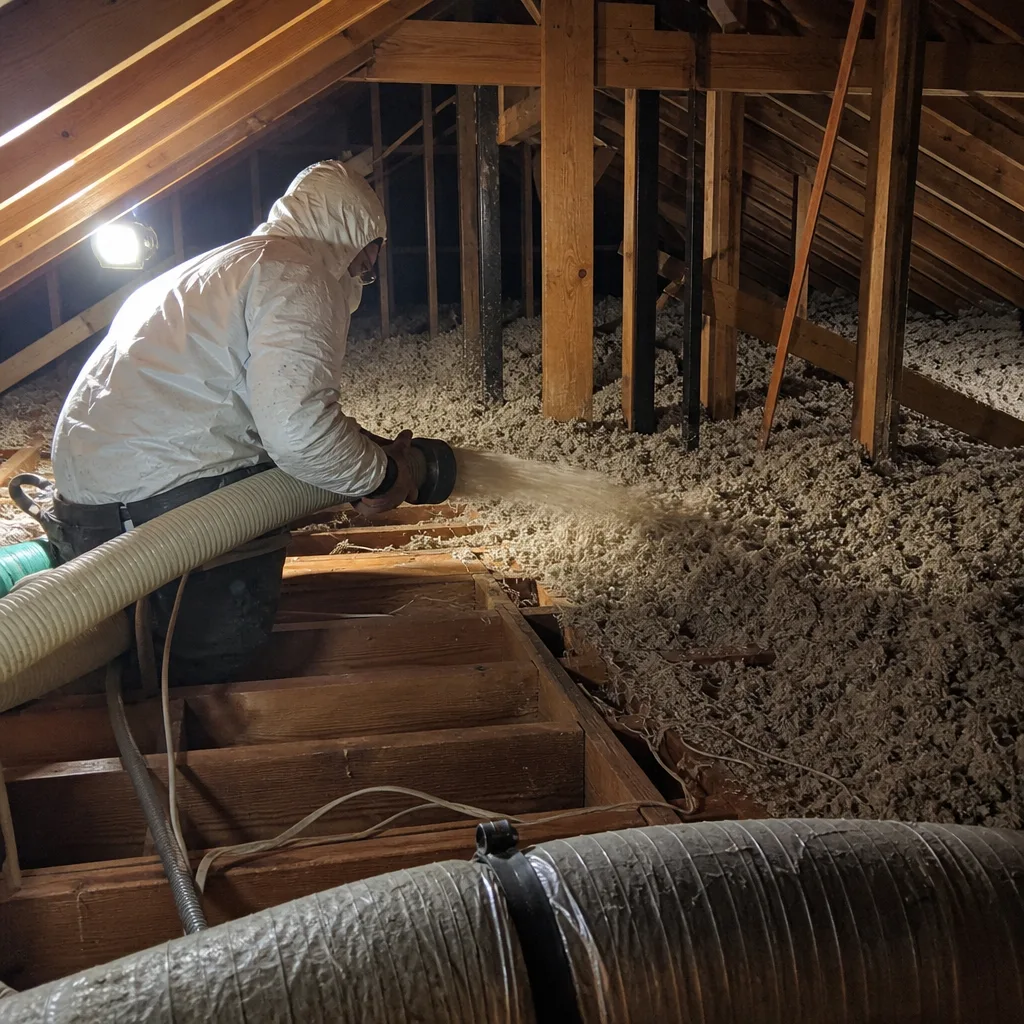
Attic insulation in San Joaquin Hills runs $2,800 to $7,200 for a full removal and replacement on a typical 2,000-square-foot home, depending on material and access. A top-up over existing insulation runs $1,400 to $2,800. Blown-in fiberglass to R-49 averages $2,600 to $4,400. Radiant barrier adds $1,800 to $3,600. Attic cleaning before insulation runs $800 to $1,800. Cathedral ceiling and open-beam homes run higher because access is tighter and air sealing is more labor-intensive. Every estimate is free, and we give you a written line-item quote before any work starts. Call (877) 265-4871 to schedule an inspection.
We Also Serve Cities Near San Joaquin Hills
Hearthside Insulation works throughout the hills and coastal corridor, including Attic Insulation in San Joaquin Hills and nearby communities. We also serve Aliso Viejo, Newport Beach, Laguna Beach, and Irvine. If you’re in any of these areas and need a specialist who treats Attic Insulation as its entire trade, not a side service, call us at (877) 265-4871.
Serving San Joaquin Hills, CA — Our Local Coverage Area
We’re based in the San Joaquin Hills area and know this community well. Use the map below to see our service coverage — if you’re nearby, we can almost certainly help.
FAQs About Attic Insulation in San Joaquin Hills
A radiant barrier addresses radiative heat gain, which is the dominant attic heat source on San Joaquin Hills southwest-facing roof planes, while R-value addresses conductive heat transfer. Adding insulation alone won’t stop the sun from baking your roof deck to 150 degrees and radiating that heat into the attic. A radiant barrier with clean foil reflects that heat before it enters. Homes on ridge and canyon-rim streets get the biggest benefit. Call (877) 265-4871 and we’ll tell you honestly whether your roof orientation justifies the install.
Canyon winds push loose-fill insulation away from eave edges and through soffit gaps, leaving bare ceiling drywall at the perimeter of the attic. The fix is wind-wash baffles installed at every eave vent plus, in severe cases, a higher-density blown-in material. Interior streets in San Joaquin Hills don’t experience this, so standard attic jobs there skip the baffles entirely. If you live on a rim lot or ridge street, ask us to check your eave edges during the inspection.
Yes. Hearthside installs products from Owens Corning, Johns Manville, Knauf, Rockwool, CertainTeed, Icynene, Demilec, and GreenFiber, so if your attic already has one of those lines, we can match it. Matching matters when you’re topping up a partial attic or blending new material into older insulation. And if a different material would perform better for your specific roofline and orientation, we’ll recommend that instead. You’ll always know the tradeoff before you decide.
Yes, significantly. Open-beam and cathedral ceilings reduce the attic cavity, so there’s less space for insulation depth and more direct heat transfer through the beam structure. Multi-zone HVAC means ductwork routed through hot attic space, so air sealing at can lights, top plates, and register penetrations becomes critical. We typically recommend a combination of closed-cell spray foam at the roofline, blow-in or batts in the flat attic zones, and airtightness sealing throughout. A standard single-material quote won’t solve a multi-zone home’s comfort problem.
Attic cleaning involves removing debris, vacuuming the deck where needed, clearing eave and soffit vents, and verifying that existing ventilation paths are open. In San Joaquin Hills, we also check for wind-blown dust on radiant barrier foil, since canyon particulates reduce reflective performance. Rodent remediation and mold treatment are separate scopes we can add after inspection. New insulation over a dirty attic is wasted money, so we always clean first. Call (877) 265-4871 for a free inspection and quote.
Written by Trevor Bassett, Owner at Hearthside Insulation, serving San Joaquin Hills and the surrounding communities.