
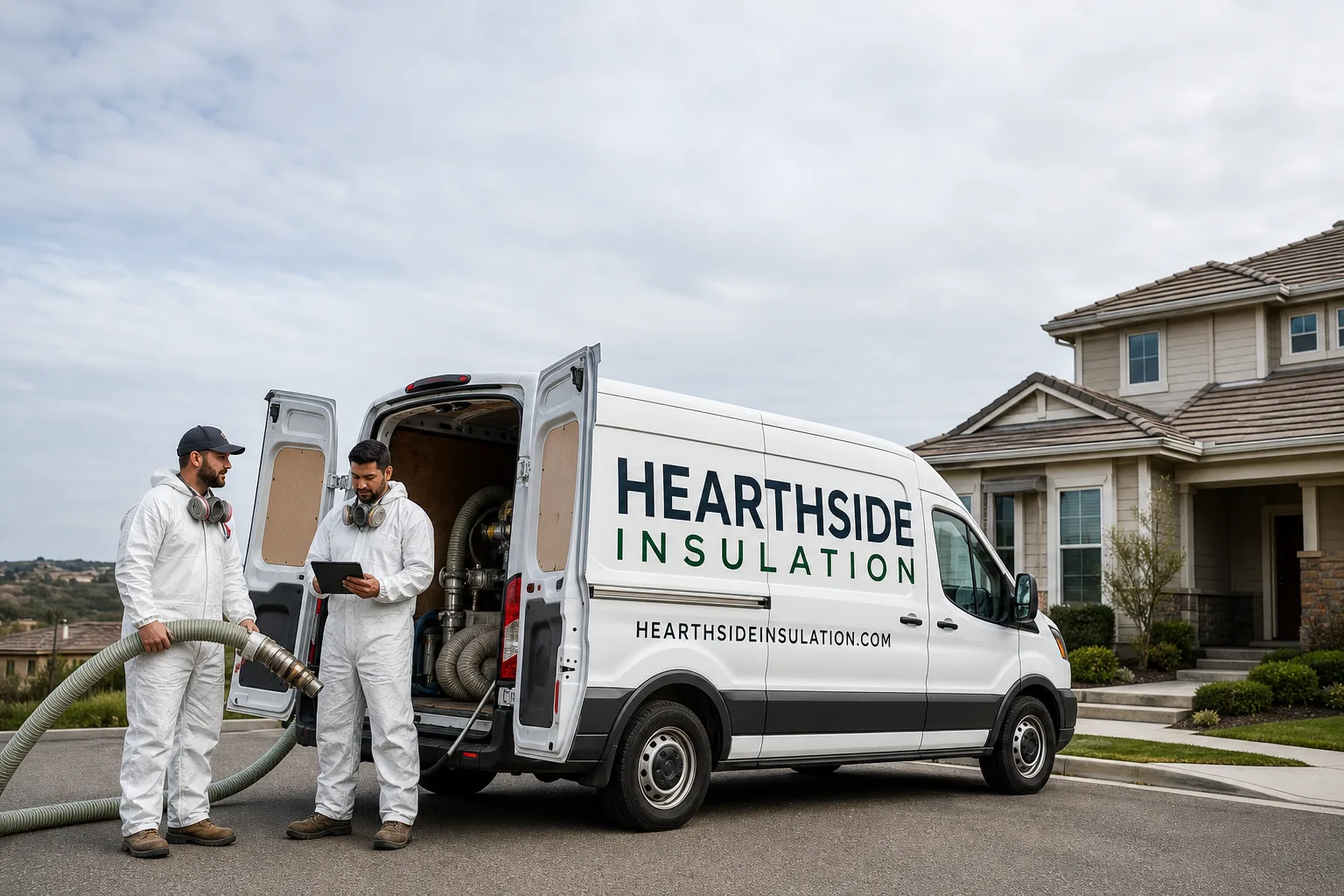
Fast, Reliable Attic Insulation Across West Puente Valley
Attic insulation in West Puente Valley is a retrofit project on homes that were mostly built between the 1940s and 1960s, when insulation wasn’t standard. The payoff here is immediate: hot inland San Gabriel Valley summers push attic temperatures past 140°F, and that heat radiates down into living spaces all afternoon and evening. We work these unincorporated LA County streets regularly, from the stucco ranches off Valley Boulevard to the cul-de-sacs near the El Monte line, so we know the access tightness and permit flow before we arrive. If your attic is shallow, under-vented, or still holding nothing but air, call (877) 265-4871 for a free estimate and a straight answer on what your roof assembly actually needs.
Key Takeaways:
- West Puente Valley homes are largely 1940s – 1960s single-story stucco with little or no original attic insulation.
- Summer heat gain, not winter cold, drives most retrofit decisions here.
- LA County, not a city building department, handles permits for this unincorporated area.
- Shallow attics with low-pitch roofs demand baffles and venting work before any insulation goes in.
- We run eight brands and three methods, so the material gets matched to the house, not our inventory.
Why Hearthside Insulation Is West Puente Valley’s Preferred Attic Insulation Company
Our reputation on West Puente Valley jobs comes from handling the unglamorous parts correctly. Before we open a single bag of material, we check eave clearance, top-plate access, existing venting, and what the County will want to see at final sign-off. That’s the difference between an attic that cools down and one that backslides within two seasons.
Trevor Bassett, who leads our insulation crews, has spent enough time in this specific housing stock to know what a 1950s clay-tile roof over a converted garage addition does to airflow, and why the radiant barrier has to be sequenced after venting gets fixed, not before. We don’t rush the diagnosis to get to the installation.
Homeowners here tend to ask the same question after a few August heat waves: why does the living room feel like an oven by 5 p.m.? The answer almost always sits directly overhead. We walk you through what we find, in plain language, with the brand and material options that actually fit your attic geometry and budget.
Attic Mold Removal in West Puente Valley
Attic Mold Removal in West Puente Valley is frequently needed on these older stucco homes because decades of rising warm air met unsealed attic penetrations, and in a shallow space with poor venting, condensation did the rest. A 1950s ranch with original composition roof and no bath fan venting to the exterior is a textbook case. We don’t just spray and walk away. We identify the moisture path, correct the venting or bypass, then remove and treat affected framing and decking before new insulation goes in.
When Mold Requires Full Removal
Surface staining on sheathing can sometimes be treated in place, but fungal growth that has penetrated wood fibers or spread across large deck sections typically calls for cutting out the affected material. We’ll show you the extent before any work proceeds. In West Puente Valley, this tends to cluster in low-pitch roof sections where headroom is tight and venting was never adequate.
Cost Ranges and Scope
A straightforward mold treatment plus venting correction in a West Puente Valley attic generally runs $900 – $2,100 depending on square footage and affected deck area. Full remediation with sheathing replacement on a heavily damaged 1,200-square-foot attic can push $3,500 – $6,000. Getting the moisture source fixed first is what keeps the problem from returning in two seasons.
Attic Insulation Removal in West Puente Valley
Attic Insulation Removal in West Puente Valley usually involves what’s left of original material that’s been compressed, rodent-soiled, or water-damaged over 60-plus years, or an old blown-in layer that was never installed with baffles and has blocked the eaves entirely. We vacuum it out, inspect what’s underneath, and prep the space for whatever comes next. It’s the first step in almost every full retrofit we do on these postwar houses.
When Replacement Outperforms Top-Up
If existing insulation is compressed below its rated R-value, contaminated, or blocking ventilation paths, adding more on top just seals the problem in. Removal lets us see the top plates for air-sealing and confirm the eave baffles are doing their job. For most West Puente Valley attics we assess, removal is the honest recommendation before a blow-in.
What Removal Costs Here
On a typical West Puente Valley single-story home, expect $1,200 – $2,800 for full removal and disposal of old attic insulation, with pricing influenced by attic access clearance, material type, and contamination level. It’s not the cheapest line item in a retrofit, but it’s the one that makes every other dollar perform. We’ll give you an exact number after walking the attic, not before seeing it.
Trusted Brands We Service in West Puente Valley
We’re authorized to install products from Owens Corning, Johns Manville, Knauf, Rockwool, CertainTeed, Icynene, Demilec, and GreenFiber. In West Puente Valley we find ourselves reaching for GreenFiber cellulose for shallow attics and hard-to-reach bays, Rockwool for homeowners prioritizing fire resistance on these older wood-framed structures, and Johns Manville or Knauf batts where the truss spacing is standard. The brand follows the application. We don’t work backward from whatever’s left on the truck. For typical West Puente Valley retrofit jobs, material availability is consistent, and we can usually complete the job within a few days of the initial assessment.
Common Attic Insulation Problems We See in West Puente Valley Homes
- No eave baffles in shallow postwar attics. Blowing insulation without first clearing and baffling the eave path blocks the only airflow these low-pitch roofs have, and the attic overheats anyway.
- Unsealed top plates and converted-garage additions. Original stucco-on-wood-frame top plates were never sealed, and add-on rooms create thermal bypasses that pull cool air out and push hot air in.
- Radiant barrier installed over unvented low-pitch roof space. Traps heat in a roof assembly that can’t move air, which is a specific failure mode for this inland heat. Venting has to come first.
- Compressed or contaminated original material. Sixty years of foot traffic, roof leaks, and rodents leaves material performing at a fraction of its labeled R-value, if it was ever adequate in the first place.
Pricing for Attic Insulation in West Puente Valley, CA
A full blown-in attic insulation retrofit in West Puente Valley on a typical 1,100 – 1,500-square-foot single-story home runs $2,800 – $5,500, including removal of old material if needed, air-sealing, baffles, and new blown-in insulation to code. A straightforward top-up over existing material that’s still performing runs $1,500 – $2,400. Radiant barrier installation here, which makes sense in the inland summer heat, adds roughly $1,100 – $2,200 depending on attic access and roof geometry. Call (877) 265-4871 for a free estimate; we’ll give you numbers tied to your actual attic, not a range pulled from a brochure.
We Also Serve Cities Near West Puente Valley
Our crews work throughout the San Gabriel Valley. You’ll find us in West Puente Valley most weeks, along with jobs in Avocado Heights, La Puente, Valinda, and Hacienda Heights. It all falls within our regular service territory. If you’re just over the line in any of those communities, the same crew and the same eight-brand Attic Insulation expertise applies.
Serving West Puente Valley, CA — Our Local Coverage Area
We’re based in the West Puente Valley area and know this community well. Use the map below to see our service coverage — if you’re nearby, we can almost certainly help.
FAQs About Attic Insulation in West Puente Valley
Yes, because West Puente Valley is unincorporated LA County territory, attic insulation retrofits here are permitted and signed off through LA County rather than a city building department. We handle the County paperwork and scope the job around inspection requirements from the start. Call (877) 265-4871 and we’ll confirm exactly what your project triggers.
Yes, shallow postwar attics with 4 feet of clearance are precisely what most West Puente Valley homes have, and they’re workable with the right sequence: baffle the eaves, seal the top plates, then blow material to a uniform depth rather than trying to lay batts in a space that fights you. Much of our work here involves retrofit plans designed specifically for low-pitch geometry. We’ll assess your attic in person and tell you what’s realistic.
In West Puente Valley’s inland heat, venting and baffles come first, then blown-in insulation, then radiant barrier. Radiant barrier over an unvented low-pitch roof space traps heat that has nowhere to go, which is a failure we see on local retrofits. The sequence matters more than the products. Call (877) 265-4871 for an assessment on your specific roof assembly.
If the old material is compressed, contaminated, or blocking venting, removal should happen before adding new material. Most West Puente Valley attics we assess fall into this category because the houses are so old. Adding new on top of bad material seals in the problem and shortens the life of your investment. We’ll give you an honest recommendation after seeing the attic.
We identify and correct the moisture source first, then remove or treat affected framing and decking, and only after that installs new insulation. On West Puente Valley stucco homes, the usual culprits are bathrooms venting into the attic and unsealed penetrations in a shallow space with no air movement. Mold treated without fixing the moisture path will return. Call (877) 265-4871 and we’ll walk you through what we find.
Call (877) 265-4871 now for a free attic assessment and exact quote. We answer the phone, we schedule quickly, and we’ll tell you what your attic needs in plain terms.
Written by Trevor Bassett, Owner at Hearthside Insulation, serving West Puente Valley and the San Gabriel Valley.