Johns Manville Attic Insulation in Foothill Ranch: A Homeowner’s Guide
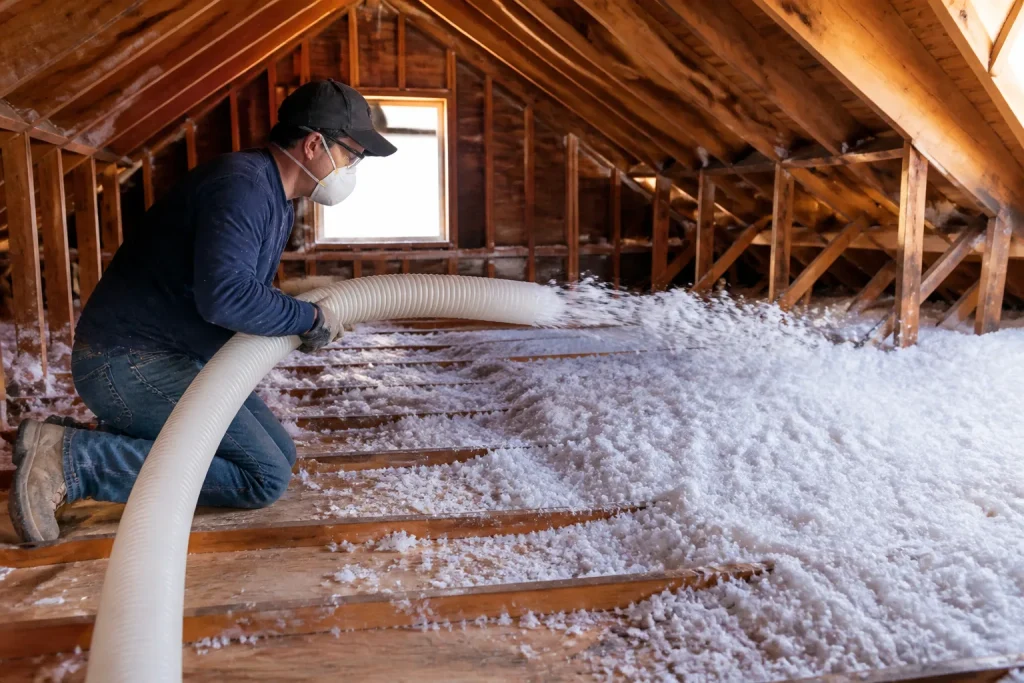
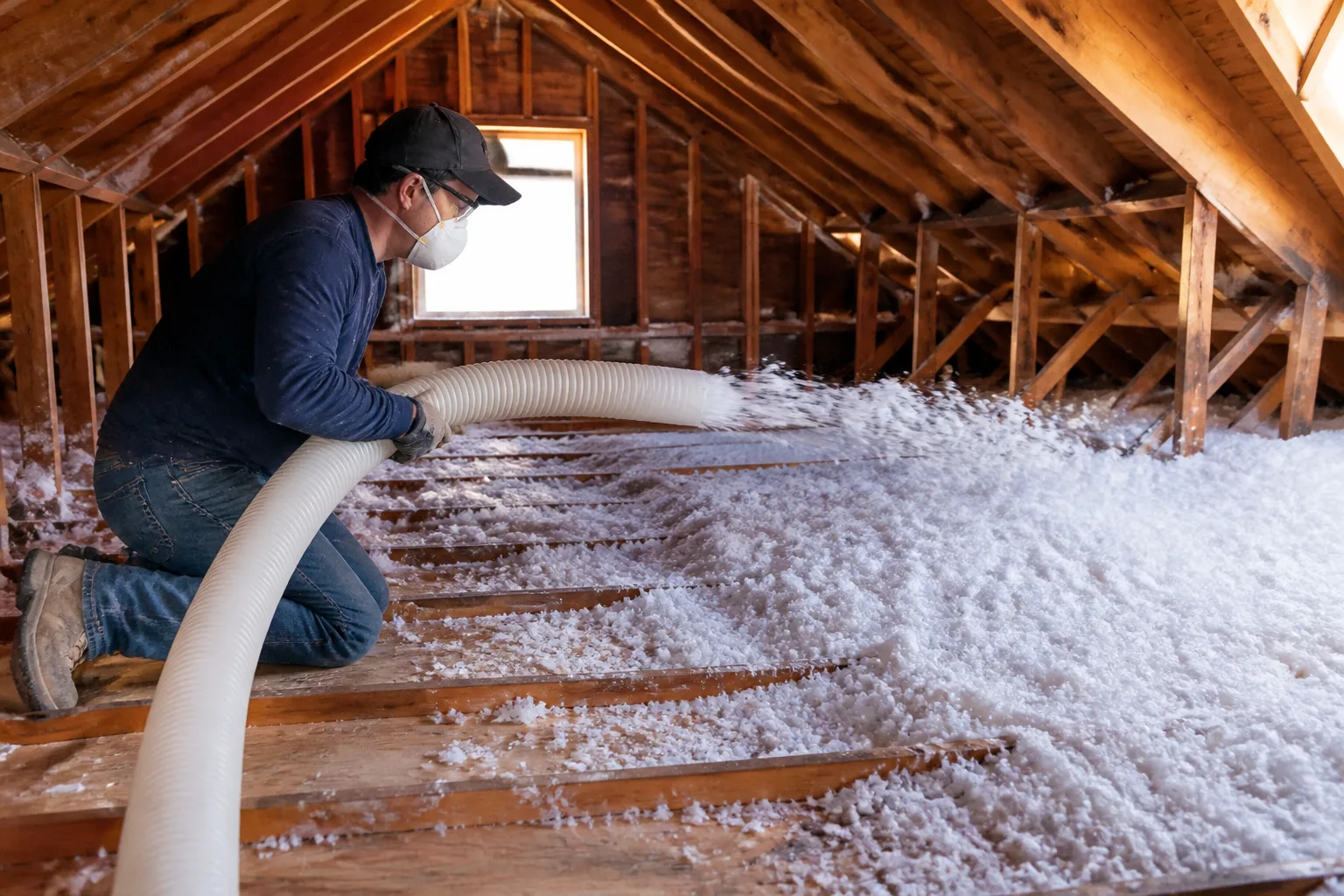
Johns Manville attic insulation in Foothill Ranch isn’t one product. The name covers kraft-faced fiberglass batts, unbatted rolls, and at least two distinct blown formulations, each with different installed R-values, settling behavior, and ideal attic configurations. If you’re comparing JM quotes right now, the single most useful thing you can do is ask which JM product is on the quote, not just whether the brand name appears. And if you’d rather skip the research and talk through your attic directly, call us at (877) 265-4871 for a free estimate.
Here’s the breakdown most contractors won’t give you.
What “Johns Manville Insulation” Actually Includes
We’ve lost count of how many Foothill Ranch homeowners have shown us a quote that just says “JM attic insulation” with no product spec. That’s like a mechanic quoting “new tires” without telling you the model. Johns Manville makes a full residential line, and for attic work in this climate, three categories matter:
- Climate Pro blown fiberglass – JM’s premium blowing wool. Labeled R-values run from R-11 to R-60 depending on installed depth. This is the product most insulation-focused contractors in Foothill Ranch quote for open, vented attics.
- Standard JM blowing wool – A more economical blown fiberglass. It insulates, yes, but it settles more over time and has a lower R-value per inch than Climate Pro. In a 140-degree summer attic, that difference compounds.
- JM kraft-faced and unfaced batts – Best for specific cavity applications: kneewalls, vaulted sections, or areas where you need a vapor-facing layer. Not the right primary product for a wide-open Foothill Ranch attic floor.
The right product depends on what’s already up there, how your attic is vented, and whether you’re topping off existing insulation or starting fresh. We match the material to the application, not the other way around.
What happens when you call
- 1
A real person answersNo phone trees — you reach a local pro.
- 2
You get an upfront price rangeHonest numbers before anyone is dispatched.
- 3
A background-checked tech heads outLicensed & insured, dispatched right away.
- 4
You approve before work beginsNothing starts until you say go.
Climate Pro vs. Standard Blowing Wool: Why the Difference Matters in a Hot Attic
Foothill Ranch sits in a climate where attic temperatures routinely exceed 130 degrees between June and October. That’s the environment your insulation lives in for roughly four months a year. Heat accelerates settling in blown fiberglass, and settling is how you lose R-value without touching anything.
JM’s Climate Pro formulation uses a more uniform fiber distribution and a slightly higher density than standard blowing wool. The practical result: Climate Pro is tested to settle less over its service life. JM publishes settled-thickness charts on every bag, and installers are required to blow to the settled depth, not the installed depth. When we install Climate Pro in a Foothill Ranch attic, we’re accounting for that settled R-value on day one. Standard blowing wool has a wider variance between installed and settled depth, which means the R-38 you paid for can drift toward R-34 or lower over a decade if the installer cut corners on density.
If you want numbers: Climate Pro carries an R-value of roughly 2.9 to 3.1 per inch at typical attic densities, while standard JM blowing wool runs closer to 2.4 to 2.6 per inch settled. For a 1,200-square-foot attic targeting R-38, that’s the difference between roughly 13 inches of Climate Pro and over 15 inches of standard wool. More inches, more bags, and more long-term drift.
Installation Density: The Spec on the Bag Is a Compliance Document
Every bag of JM blown insulation has a chart on the side. It lists square footage coverage per bag at specific R-values and depths. That chart is not marketing. It’s the manufacturer’s installation specification, and it’s the single most common place we see Foothill Ranch insulation jobs go wrong.
Here’s what we mean. An R-38 attic in a 1,000-square-foot attic space requires a specific number of bags at a specific installed depth. If a contractor uses fewer bags and fluffs the insulation up to the right depth, the R-value isn’t R-38. Fluffed insulation traps more air but has lower density, which means it settles faster and loses thermal resistance. The bag count and the depth have to match. We’ve walked into Foothill Ranch attics where the previous installer hit the right depth with 30% fewer bags than the chart required. The homeowner paid for R-38 and was living with something closer to R-27 within three years.
This is also where brand matters less than installer discipline. A meticulous installer with standard JM wool will outperform a sloppy crew with Climate Pro. But given the same installer, Climate Pro holds its R-value longer in a hot attic.
JM Sustainability Claims: When They’re Real and When They’re Label Talk
Johns Manville promotes its recycled glass content and GREENGUARD certification on most residential products. Both claims are legitimate, but they matter differently depending on what you care about.
The recycled glass content varies by product, with many JM fiberglass lines containing 20% to 25% pre- and post-consumer recycled content. If you’re choosing between two similarly priced blown products and one has higher recycled content, that’s a fair tiebreaker. But in our experience, it shouldn’t override thermal performance. A lower-R-value recycled product that settles faster costs you more energy over 10 years than a higher-performing product with slightly less recycled content.
GREENGUARD certification means the product has been tested for chemical emissions and passed low-VOC thresholds. For a vented attic with good airflow, this is less critical. For an attic with a finished room above or a tight, partially sealed envelope, low-emitting insulation has a practical benefit. We install Johns Manville products regularly, and the certification is a real advantage when a homeowner has asthma, allergies, or chemical sensitivities. For most Foothill Ranch attics, it’s a secondary spec, not the deciding factor.
Where JM Is the Right Call, and Where It Isn’t
Here’s the honest comparison most single-brand contractors won’t give you.
Johns Manville is the right choice when: you have a traditionally vented attic with accessible floor space; you’re topping off existing fiberglass insulation; you want a cost-effective R-38 to R-49 upgrade without removing what’s already there; or you’re insulating a standard flat-ceiling attic with no unusual framing. Climate Pro specifically shines in these scenarios, and it’s a product we’re happy to quote for Foothill Ranch homes.
JM is the wrong tool when: you have an unvented attic section, a cathedral ceiling with limited cavity depth, or a knee wall area where air movement is your primary problem. In those cases, a closed-cell spray foam from Icynene or Demilec will outperform any fiberglass, regardless of brand. We carry both spray foam lines and Johns Manville fiberglass, which means we can tell you when foam is worth the premium and when blown fiberglass gets you 90% of the result for half the cost. That’s the advantage of not being married to one manufacturer.
Rockwool mineral wool and Knauf fiberglass also have their places, but for a standard vented attic in Foothill Ranch, JM Climate Pro is one of the strongest blends of price, durability, and long-term thermal retention on the market.
Related Services in Foothill Ranch
If you’re comparing JM blown fiberglass against spray foam or other blown-in options, these pages walk through the tradeoffs in detail: Hearthside Insulation home, Attic Insulation in South San Jose Hills, Spray Foam Insulation in South San Jose Hills, and Blown In Insulation in South San Jose Hills.
When to Call a Pro
Attic insulation isn’t dangerous in the way electrical work or high-tension springs are, but it’s awkward, hot, and physically demanding. If your attic has old wiring, recessed lighting cans that need baffling, or uneven joist spacing, a professional installation protects both the insulation’s performance and your home’s fire safety. We installed a Climate Pro job off Portola Parkway last month where the previous owner had buried six non-IC-rated can lights under fiberglass. That’s a fire hazard hiding under the insulation, and it’s exactly the kind of thing a professional attic walk catches before new material goes down.
The Bottom Line
Johns Manville attic insulation in Foothill Ranch is a strong choice for vented attics, provided you’re getting the right JM product and the installation density matches the bag chart. Climate Pro outperforms standard blowing wool in hot-attic conditions because it settles less, and that matters more in Foothill Ranch than in cooler coastal climate zones. But JM fiberglass isn’t the answer for every attic configuration. Unvented sections and tight ceiling cavities call for spray foam, and a contractor who installs both can tell you honestly which one your home actually needs.
If you’re in Foothill Ranch and want a product-specific quote, we’re happy to walk your attic and give you the straight answer. Call (877) 265-4871 for a free estimate.
Frequently Asked Questions
Johns Manville blown attic insulation in Foothill Ranch typically costs $1.75 to $3.50 per square foot installed, depending on the target R-value, the JM product chosen, and whether old insulation needs removal. A 1,000-square-foot attic upgraded to R-38 with Climate Pro generally runs $1,800 to $3,200. Call (877) 265-4871 for an exact quote on your attic.
For Foothill Ranch’s climate zone, the Department of Energy recommends R-38 to R-60 in vented attics. Most existing homes we see are sitting at R-19 to R-30, which means a meaningful upgrade is usually available without removing what’s there.
All blown fiberglass settles. JM’s Climate Pro formulation settles less than standard blowing wool because of its more uniform fiber distribution and higher installed density. Proper installation to the bag chart’s settled-depth spec is what preserves the labeled R-value long-term.
For an open, vented attic, Johns Manville blown fiberglass delivers strong thermal performance at roughly half the installed cost of closed-cell spray foam. For an unvented attic section or a cathedral ceiling with limited depth, spray foam from Icynene or Demilec outperforms fiberglass regardless of brand. The right answer depends on your attic’s configuration, not the manufacturer’s brochure.
Written by the team at Hearthside Insulation, serving Foothill Ranch since 2016.
Need Insulation Help?
Call Hearthside Insulation — licensed & insured, here with fast after-hours help in Foothill Ranch.
(877) 265-4871