Reflectix Insulation in South Whittier, CA | Hearthside Insulation
We provide independent Reflectix insulation service across South Whittier, from attic radiant barriers to full replacements in aging tract homes, and also offer Whittier Reflectix service for nearby homeowners. The thing that makes our Reflectix work different here is simple: we know how 1950s attic geometry, low-pitch roofs, and buried knob-and-tube wiring force specific cutting and fastening methods that generic radiant-barrier guides never address. If your Reflectix has failed or you’re considering it for the first time, call (877) 265-4871 for a straight answer.
Hearthside Insulation carries genuine Reflectix rolls, perforated radiant barrier, and approved seam tapes, and we install them with the same care we’d use on any of the eight brands in our material portfolio. We’re not manufacturer-affiliated or authorized by Reflectix. We choose the product when it’s the right fit for a South Whittier attic, and we tell you when it isn’t. Our Reflectix sales & service work spans the full 90605 area, and our South Whittier service area coverage means we can usually get a tech to your attic within a day or two.
Why South Whittier Residents Choose Us for Reflectix Service
Trevor Bassett, our owner, spent the better part of two decades working insulation jobs across Orange County and the surrounding foothills before building Hearthside around one straightforward idea: homeowners in this part of Southern California deal with a specific mix of summer radiant heat and cool canyon nights, and generic insulation advice doesn’t cut it here. That’s especially true in South Whittier and nearby East La Mirada Reflectix service areas, where postwar tract homes and uninsulated 2×4 walls make every attic job a retrofit puzzle rather than a clean install.
We’ve installed and retrofitted Reflectix radiant barriers in hundreds of South Whittier attics, from 1950s tract homes off the 605 to converted garages. That matters because Reflectix installed wrong is worse than no radiant barrier at all: gaps, sagging, and blocked venting wipe out the performance. We use genuine Reflectix rolls and approved seam tapes so the barrier performs as rated. When a section has failed, we recommend targeted replacement rather than a full re-cover if the foil is still intact and clean. And when Reflectix isn’t the right solution, like in an uninsulated 2×4 wall cavity, we’ll tell you and propose blown-in or spray foam instead. Eight brands. Three methods. One specialist.
Common Reflectix Insulation Problems We Solve in South Whittier
- Foil delamination on low-pitch roof decks. South Whittier attics routinely exceed 140°F in summer months. On low-pitch roofs, that sustained heat breaks down the adhesive bond on double-reflective rolls, causing the foil surface to peel and lose emissivity. We remove the failed layer, inspect the deck, and install perforated radiant barrier with mechanical fasteners that hold up better to inland heat.
- Moisture trapped between Reflectix and original wood framing. Cool, damp winter mornings create condensation risk in 90605 crawl spaces and rim joists where Reflectix was stapled directly against framing without an air gap. We see foil oxidation and mold-adjacent conditions in these areas regularly. The fix is re-installing with proper spacing and ventilation, not just re-stapling.
- Dust and soot accumulation on reflective surfaces. Decades of HVAC leaks, nearby refinery air, and general LA Basin particulate settle on attic foil. That layer of grime drops radiant performance by 20 – 30%. In South Whittier, where the 605 corridor adds its own dust load, this is one of the most common reasons a 20-year-old radiant barrier isn’t doing much anymore.
- Sagging or disturbed Reflectix in attic rafters. Amateur electrical additions, older satellite installs, and general foot traffic through attic spaces pull staples loose and create gaps. A radiant barrier with gaps isn’t a barrier; it’s a partial reflector. We re-secure with low-profile fasteners and re-tape seams so the reflective plane is continuous.
- Collapsed fiberglass batts mixed with old Reflectix. Many South Whittier attics have layers of different insulation attempts. We routinely find original 1950s batts collapsed against the eaves right under a later Reflectix install. That combination traps heat and blocks airflow. We clear old material, map the wiring, and rebuild the assembly correctly.
Reflectix Service in South Whittier: What Local Conditions Mean for Your Equipment
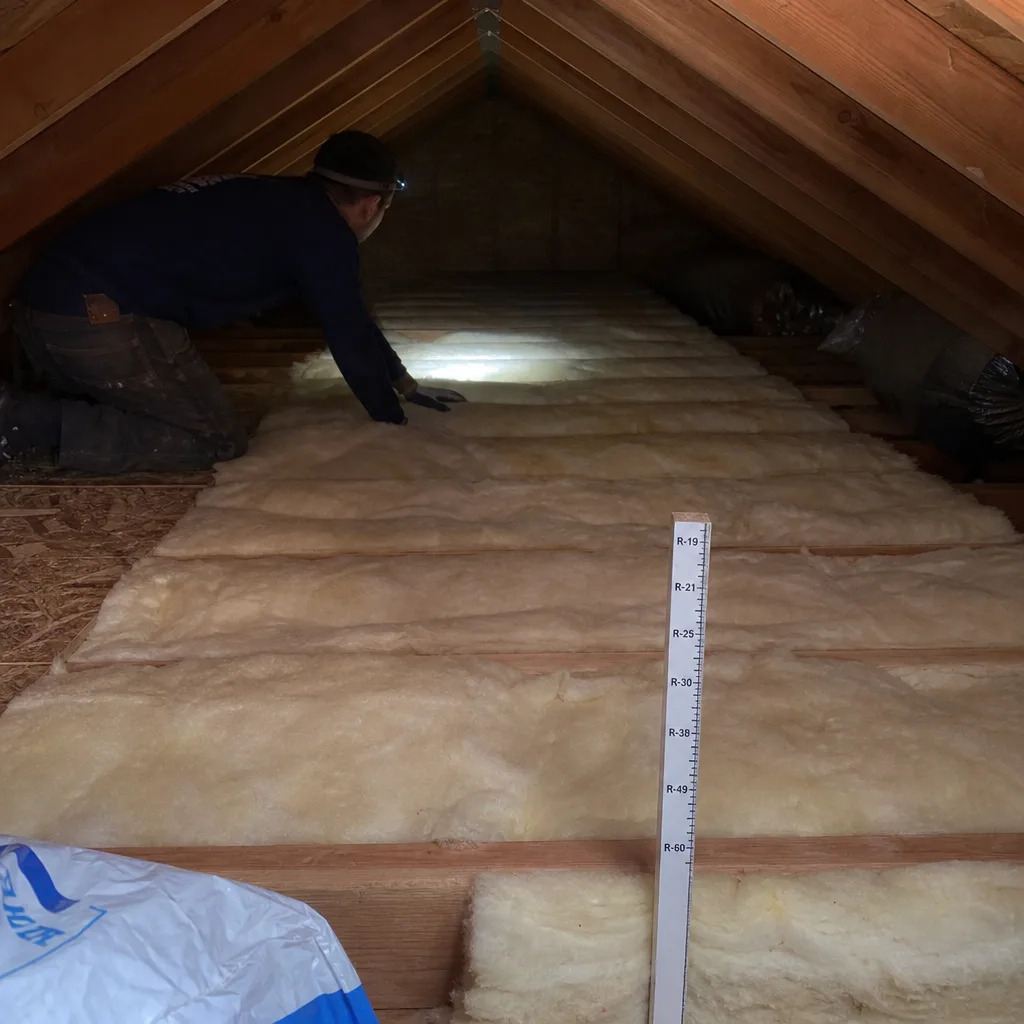
Most 90605 attics were built with 2×4 rafters and low-pitch roofs that leave only 3 – 4 inches of clearance at the eaves. That’s the single biggest constraint on Reflectix work in South Whittier, and it’s one most installers don’t plan for until they’re already in the attic. Standard Reflectix rolls have to be cut into narrow strips at the eaves and stapled with low-profile fasteners. If you use standard staples and full-width rolls, you end up crushing the original wiring against the roof deck or blocking soffit venting entirely, which turns your attic into an oven even with a radiant barrier up. We pre-cut on the ground, map penetration points before we staple, and leave the soffit vents clear. On a 1952 tract home near the 605/5 interchange, we found the original Reflectix radiant barrier had sagged and delaminated across a 12-foot section of roof deck after decades of 140°F attic heat. Our crew removed the failed foil, mapped buried knob-and-tube wiring, re-sealed penetrations, and installed new Reflectix perforated radiant barrier with low-profile staples and seam tape, dropping the attic temperature by 18°F on a 98°F afternoon.
Reflectix Models & Products We Service in South Whittier
We work with the full Reflectix lineup that shows up in South Whittier homes: the Double Reflective Insulation Roll, Radiant Barrier, R-21 Attic Wall Unfaced Roll, and the Reflectix Insulation Staples and Seam Tape. For repairs, we stock genuine rolls and approved seam tapes locally so most South Whittier jobs move fast without waiting on special orders. For damaged sections, we recommend targeted replacement rather than a full re-cover when the remaining foil is still intact and clean. We also carry Reflectix-specific fasteners sized for low-clearance rafters, which matters more here than it does in newer construction with deeper attics.
Reflectix Service Pricing in South Whittier
Reflectix radiant barrier installation in South Whittier typically costs $1.50 – $3.00 per square foot for attic applications. A full attic for a 1,000 – 1,500 square foot tract home generally lands between $1,500 and $4,500, depending on access, existing insulation condition, and whether we’re installing new barrier or removing failed foil first. Targeted repairs, like re-stapling a sagging section or replacing a delaminated 12-foot run, usually run $300 – $900. The variables that move the number in South Whittier specifically: low eave clearance, buried knob-and-tube wiring that needs mapping before we cut, and the condition of whatever insulation is already up there. Call (877) 265-4871 for an exact quote. Estimates are free, and we’ll tell you honestly if Reflectix is the right product for your attic or if a different material makes more sense.
Serving South Whittier, CA — Our Local Coverage Area
We’re based in the South Whittier area and know this community well, with Reflectix in La Mirada also within our service reach. Use the map below to see our service coverage — if you’re nearby, we can almost certainly help.
FAQs – Reflectix Insulation in South Whittier
Yes, as long as the batts haven’t collapsed against the eaves or absorbed moisture. In most South Whittier attics, the original 1950s fiberglass has compacted and trapped heat, so we recommend clearing the old material before installing Reflectix. Call (877) 265-4871 if you want us to assess your attic before you buy materials.
That’s delamination, usually from sustained attic temperatures above 140°F on a low-pitch roof deck. The adhesive bond fails and the reflective surface separates. Clouding is often dust and soot accumulation, which cuts radiant performance by 20 – 30%. We can repair or replace the affected sections with perforated barrier and mechanical fasteners that hold up better to inland heat.
In South Whittier’s climate, often yes. Blown-in insulation slows conductive heat transfer, but it doesn’t stop radiant heat gain from a 140°F roof deck. A radiant barrier works on the radiant side. Combined, they cut attic temperatures and reduce HVAC runtime more than either one alone. We’ll tell you if your specific attic would benefit.
We map every wiring run before we cut or staple anything. Knob-and-tube can be buried under insulation, and we don’t staple within several inches of any live run. If the wiring is degraded, we flag it for an electrician before proceeding. In South Whittier attics, this is routine work, not an exception. Call (877) 265-4871 for a free attic assessment.
Perforated radiant barrier allows moisture vapor to pass through, which prevents condensation against the roof deck. Double-reflective rolls don’t breathe, so they need an air gap to work correctly. In South Whittier’s cool, damp winter mornings, we recommend perforated for most attic rafter applications. The right insulation doesn’t fight your climate; it works with it.
Service Areas Near South Whittier
We serve South Whittier and the surrounding LA County and Orange County communities. If you’re nearby, we also provide Reflectix service in La Puente and Reflectix service in Norwalk. Our crews regularly work in Whittier, Santa Fe Springs, La Mirada, and the unincorporated pockets along the 605 corridor.
Book Your Reflectix Service in South Whittier Today
If your Reflectix has failed, sagged, or never performed the way you expected, we’ll take a look and give you a straight answer. Same-day estimates are available across South Whittier when schedules allow. Call (877) 265-4871 to book your free attic assessment.
Written by Trevor Bassett, Owner at Hearthside Insulation, serving South Whittier, Santa Fe Springs Reflectix service areas, and the surrounding LA Basin communities.