
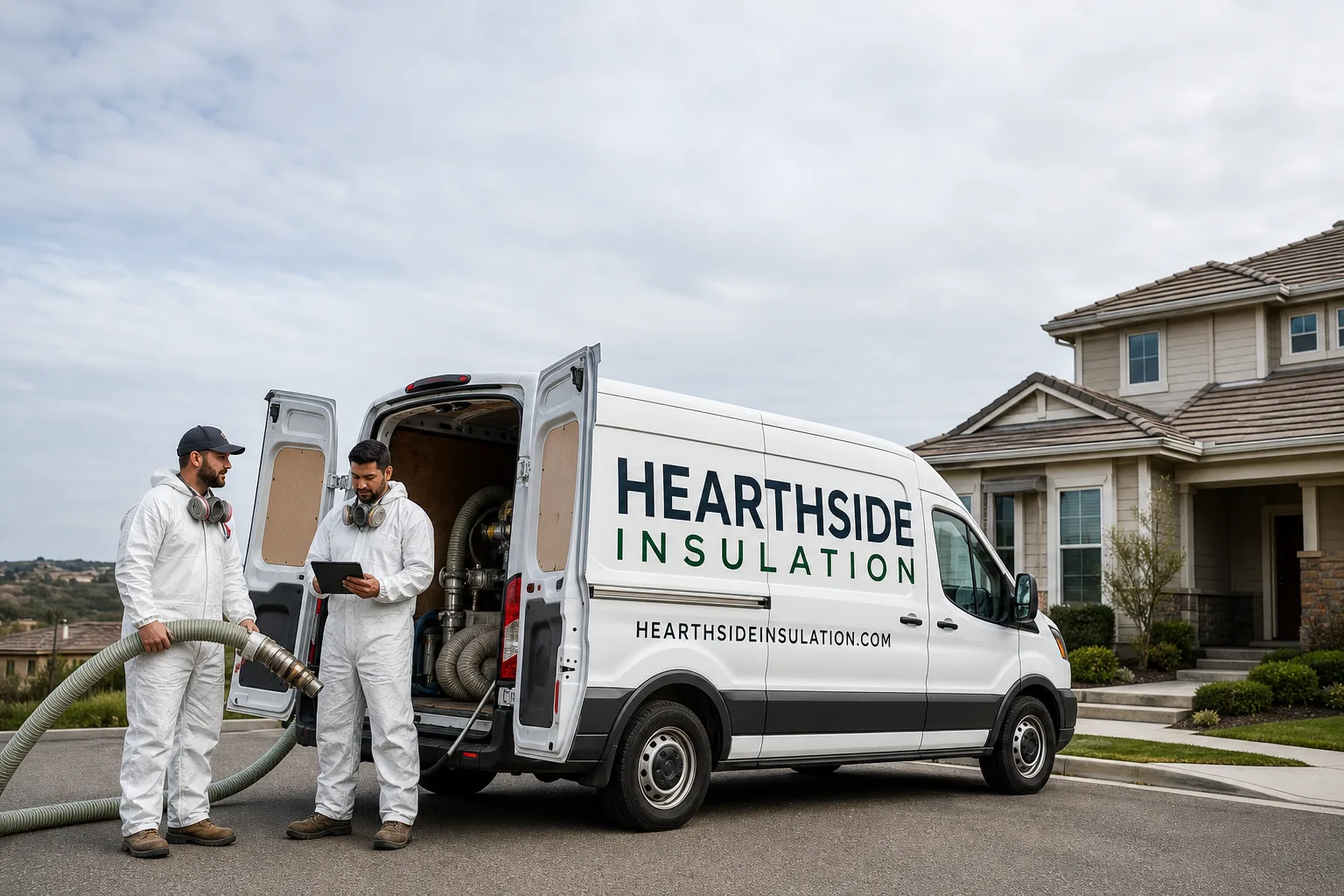
Fast, Reliable Spray Foam Insulation Across Mission Viejo
Spray foam insulation in Mission Viejo typically costs $3.50 to $7.00 per board foot installed, with most attic retrofit projects landing between $4,200 and $9,800 depending on square footage and whether you choose open-cell or closed-cell foam. Our crew reaches most Mission Viejo neighborhoods same-day for estimates and can usually schedule installation within a week. The master-planned housing stock here, mostly built between 1966 and 1980, has very specific insulation needs that a generic contractor won’t catch. Call (877) 265-4871 for a free estimate, and we’ll walk you through what your particular tract needs.
Mission Viejo isn’t like Lake Forest or Laguna Hills when it comes to insulation work. Most homes here came from a single developer working in tight phase batches, which means the insulation problems we see are remarkably consistent, tract by tract, street by street. Trevor Bassett and our team know which neighborhoods have original R-11 batts, which phases got slightly better builder-grade material, and which HOA architectural rules apply to venting changes on a foam retrofit. That local knowledge changes how we scope the job before we ever open the attic hatch.
- Same-day estimates across 92690, 92691, and 92692
- HOA-compliant venting plans for foam retrofits under Mission Viejo architectural review
- Both open-cell and closed-cell systems from Icynene and Demilec, matched to your home’s specific roof and wall assembly
- Free attic inspection with every estimate, including a batt-degradation check on original 1960s-70s material
Why Hearthside Insulation Is Mission Viejo’s Preferred Spray Foam Insulation Company
We’re an insulation-only contractor, which matters more in Mission Viejo than almost anywhere else in Orange County. The city has roughly 30,000 homes, and the overwhelming majority went up under the Mission Viejo Company master plan between 1966 and 1980. That means the insulation work here is almost entirely retrofit and upgrade, not new construction. We spend our days in attics off La Paz Road, Marguerite Parkway, and Oso Parkway, not splitting time between HVAC, roofing, and the occasional insulation job.
Homeowners around Lake Mission Viejo and the tracts near Saddleback College keep calling us because we carry both Icynene and Demilec spray foam systems, so we can give you an honest open-cell versus closed-cell comparison instead of pushing whichever single product a one-brand installer happens to stock. When a 1972 tract home needs a roofline seal under HOA venting restrictions, we have the right material for that. When a 1980s two-story needs wall cavity injection without disturbing the stucco, we have a different answer. The material follows the application here, not the other way around.
Our response time to Mission Viejo is consistently same-day for estimates and under a week to schedule installation. We stock parts and material locally for the specific housing types in 92690, 92691, and 92692, which keeps turnaround tight. Trevor Bassett has spent enough time in these attics to know what a compressed R-11 batt looks like after 50 years under a Mission Viejo roof, and that familiarity saves homeowners from paying for work that won’t hold.
Spray Foam Attic Insulation in Mission Viejo
Spray Foam Attic Insulation in Mission Viejo is the single highest-impact upgrade for the city’s original 1966-72 tract homes, where builders installed only R-11 to R-19 batt material and aging foil radiant barriers that have been degrading under 100-degree attic heat for five decades. A full attic foam retrofit here runs $4,200 to $9,800 for a typical single-family home, with closed-cell systems at the higher end and open-cell at the lower end. The work involves either sealing the attic floor with foam over the existing ceiling plane or applying foam directly to the roofline to bring the attic inside the conditioned envelope.
Roofline Seals Under HOA Venting Rules
Mission Viejo’s HOA architectural review can restrict roof and vent modifications, which matters directly for how we approach attic foam. When we apply closed-cell Icynene foam against the roofline, the attic becomes a conditioned space and active venting often becomes unnecessary, but any change to the existing vent configuration still needs to pass architectural review first. We keep the approved vent layout intact whenever possible, and we document the completed work so the homeowner can close out the ARB review cleanly.
Batt Removal Before Foam Application
We don’t spray over degraded substrate. In the oldest 1966-72 tracts, the original R-11 kraft batts are almost always compressed flat and loaded with dust, and foam won’t bond properly to a surface like that. Our crews pull the old material, verify the deck condition, and only then apply foam. Homeowners are often surprised at how much material volume disappears from the attic floor, which is exactly the point of an honest insulation retrofit.
Spray Foam Wall Insulation in Mission Viejo
Spray Foam Wall Insulation in Mission Viejo typically addresses the uninsulated or under-insulated wall cavities found in the original wood-frame, stucco-exterior construction that defines the city’s 1970s tract and townhome stock. Wall foam work here runs $3,800 to $7,500 for a standard single-story tract home, depending on cavity depth and whether we’re working from the exterior or interior. Closed-cell Demilec foam is the usual recommendation for Mission Viejo walls because it adds structural racking strength while sealing air movement, which matters when Santa Ana winds press against stucco at 50-plus miles per hour.
Injection Without Stucco Disturbance
For Mission Viejo townhomes and single-family homes where the stucco exterior must stay untouched, we inject foam through small interior access points or strategically placed exterior penetrations that get sealed and finished afterward. The existing stucco stays in place. No retexturing, no exterior repainting, no architectural review trigger.
Air Sealing the Building Envelope
Mission Viejo’s cooling loads dominate its energy picture. Hot, dry summers with frequent 90s and 100s mean your air conditioner runs hard, and unsealed wall cavities let that conditioned air escape while pulling hot outside air in. Foam insulation in the walls closes those bypass pathways, reducing HVAC runtime in ways that show up on the very next SCE bill after installation.
Trusted Brands We Service in Mission Viejo
Our Spray Foam Insulation teams in Mission Viejo work with Icynene and Demilec foam systems as our two primary spray-applied lines, giving homeowners a real open-cell versus closed-cell choice from two of the category’s most respected manufacturers. We also carry Johns Manville and Rockwool products for hybrid applications where mineral wool or fiberglass makes more sense in specific assembly details, like fire-blocking at garage-to-living-space transitions. Local availability in Foothill Ranch means material lead times for Mission Viejo jobs stay short, even during busy retrofit seasons.
Common Spray Foam Insulation Problems We See in Mission Viejo Homes
- Compressed original R-11 batts in 1966-72 tracts. These batts have been sitting under blown dust and over heated ceiling planes for 50-plus years. They’re often flattened to half their original thickness and provide almost no meaningful R-value, so they must come out before any foam goes in.
- HOA venting conflicts on foam retrofits. A homeowner adds or re-routes attic venting without architectural approval, then gets flagged by the HOA. The foam job stalls, and the vent layout has to be restored before work resumes. We scope venting compliance before starting the job.
- Delamination over degraded radiant barriers. Santa Ana wind events and 100-degree-plus attics accelerate radiant-barrier failure in Mission Viejo’s original foil installations. Foam applied over degraded substrate peels and delaminates within a year or two, so we always remove failed barriers before spraying.
- Uninsulated garage ceilings and cantilevered floors. Many Mission Viejo tract homes have bonus rooms or master suites cantilevered over garages or open air with zero insulation in the floor cavity. Homeowners feel the cold tile in winter and the heat in summer, and foam retrofit on those underside and perimeter cavities fixes the comfort problem directly.
Pricing for Spray Foam Insulation in Mission Viejo, CA
| Project Type | Typical Mission Viejo Range |
|---|---|
| Attic floor spray foam (open-cell) | $4,200 – $6,800 |
| Attic roofline seal (closed-cell) | $6,400 – $9,800 |
| Wall cavity injection (single-story) | $3,800 – $7,500 |
| Garage ceiling and perimeter | $1,900 – $3,600 |
| Rim joist air sealing | $900 – $2,400 |
Mission Viejo pricing tracks with the city’s housing density and access patterns. Attic work on a standard four-bedroom tract home off Marguerite Parkway stays in the mid-range because access is straightforward; homes with steep pitch changes near Lake Mission Viejo run higher because setup takes longer. Closed-cell foam costs more per board foot than open-cell but delivers higher R-value per inch and adds structural strength, which matters in an earthquake-conscious retrofit market. We give you a written, line-item estimate before any work starts. Call (877) 265-4871 and we’ll have a Hearthside technician out to measure free of charge.
We Also Serve Cities Near Mission Viejo
Our crews cover Mission Viejo and the surrounding South Orange County communities daily, including Coto De Caza, Lake Forest, Laguna Hills, and Rancho Santa Margarita. Each of these cities has its own housing patterns and HOA dynamics, but the insulation retrofit fundamentals carry across. If you’re just over the Mission Viejo border in any direction, the same Hearthside team that knows your tract can handle the job.
Serving Mission Viejo, CA — Our Local Coverage Area
We’re based in the Mission Viejo area and know this community well. Use the map below to see our service coverage — if you’re nearby, we can almost certainly help.
FAQs About Spray Foam Insulation in Mission Viejo
No, not if the venting configuration stays within the HOA architectural rules already on file for your home. A spray foam retrofit only triggers review when the project changes roof vents, adds ridge vents, or alters exterior penetrations. We scope every Mission Viejo job against the local association’s architectural guidelines before installing, and we keep the existing approved vent layout intact whenever the foam application makes venting changes unnecessary. If an ARB submittal is needed, we provide documentation of the completed work so you can close out the review without a violation. Call (877) 265-4871 for a compliance check before you start planning.
No, and you should be wary of any contractor who says yes. The original R-11 kraft batts in Mission Viejo’s 1966-72 tracts are almost always compressed, dust-loaded, and degraded to the point where foam cannot bond properly to the substrate. We remove the old material completely, inspect the deck condition, and only then apply spray foam. Skipping removal leads to delamination and wasted money. If your 1970 tract home still has original batts, call (877) 265-4871 and we’ll inspect the attic honestly before quoting anything.
We apply both Icynene and Demilec spray foam systems, covering open-cell and closed-cell applications from two of the industry’s most established manufacturers. Having both lines available means we can recommend the honest best fit for your Mission Viejo home’s specific roof assembly and wall construction rather than steering you toward whichever single product we happen to stock. For hybrid applications, we also carry Johns Manville and Rockwool products.
Yes, and Mission Viejo’s placement in the inland foothill corridor makes this worse than coastal cities. Santa Ana wind events press against stucco exteriors and drive air through unsealed wall cavities, while 100-degree-plus attic temperatures accelerate degradation of the original batt and radiant-barrier material. Spray foam’s air-sealing properties perform better under these conditions than batt or blown-in alone, because foam stops the air movement at the source instead of just slowing it down. The key is proper substrate preparation before application.
Yes. We inject foam through small interior access points or discreetly placed exterior penetrations that are sealed and finished after the fact, so the original stucco exterior stays completely intact. HOA boards care a lot about exterior consistency in Mission Viejo townhome communities, and an injection approach avoids the architectural review trigger entirely. For a 1970s townhome with original wall cavities, closed-cell Demilec foam is usually the right call because it adds both R-value and structural strength. Call (877) 265-4871 for a wall cavity assessment on your unit.
Written by Trevor Bassett, Owner at Hearthside Insulation, serving Mission Viejo since day one of our South Orange County operations.