
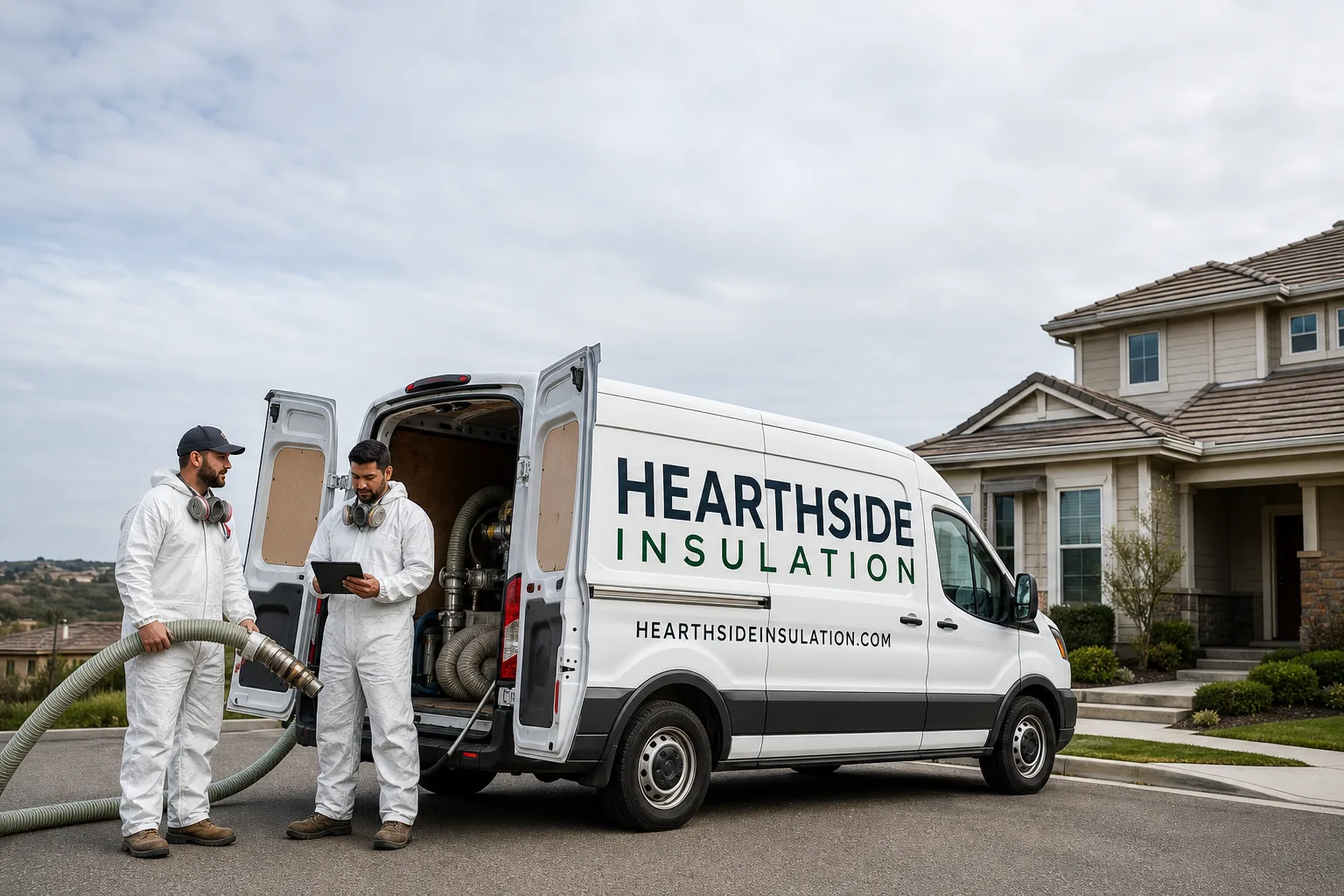
Fast, Reliable Attic Insulation Across Lakewood
Attic insulation in Lakewood, CA typically runs $1,450 – $3,200 for a full removal-and-replacement on a 1950s Lakewood Park tract home, and most jobs can be scheduled within the same week. We know these houses because we’ve worked in them for years. If your home was built between 1950 and 1953, there’s a very good chance your attic insulation is either collapsed, missing, or never met code to begin with. Call us at (877) 265-4871 and we’ll come out to your Lakewood home, inspect what’s actually up there, and give you a straight answer.
Our Attic Insulation team works across Lakewood every week, from the original Lakewood Park tract east of Lakewood Boulevard to the newer pockets near the Cerritos border. We know what lurks in these attics because we’ve opened hundreds of them. Trevor Bassett leads our crew, and he’s spent years diagnosing the specific failure patterns these postwar homes share: collapsed kraft-faced batts, choked eave vents, and attics that bake in the summer sun while the living room still feels hot.
Why Hearthside Insulation Is Lakewood’s Preferred Attic Insulation Company
Lakewood homeowners call us because we speak the language of their specific houses. The homes in zip codes 90712 and 90713, for instance, follow the original Lakewood Park slab-on-grade pattern: no basement, no crawlspace, and wall cavities you can only reach by punching through 70-year-old stucco and rock-lath. Most general contractors don’t want to touch that. We do it regularly, and we do it without turning your living room into a demo site.
We’re an insulation-only contractor. That’s all we do. No HVAC side jobs, no roofing projects on the calendar. When we’re in your attic, we’re thinking about R-value, air sealing, ventilation, and moisture control, not whether we can upsell you a furnace. That focus matters in Lakewood, where the attic is the single highest-leverage place to fix a hot house and a high energy bill. Homeowners across Bellflower, Signal Hill, and Long Beach call us for the same reason: we match the material to the application, not the other way around.
Attic Insulation Removal in Lakewood
Attic Insulation Removal in Lakewood is the step most of these older homes need before any new insulation goes in. We pull out collapsed 1950s kraft-faced batts, degraded blown-in material, and whatever rodents or roof leaks have left behind. In Lakewood Park tract homes, the original batts are often so flattened they’re holding maybe R-3 at best, assuming they were installed in the first place. Removal typically runs $0.80 – $1.50 per square foot in Lakewood, depending on depth and condition.
What We Pull Out and Why
Most Lakewood attics contain fiberglass batts that lost their loft decades ago. Fiberglass only performs when it can trap air; once it’s compressed, it’s just a thin mat against the drywall. We remove that material and inspect the ceiling plane for gaps, old wiring, and signs of moisture before anything new goes in.
Air Sealing Before New Insulation
We also air-seal the ceiling plane while we’re up there. In Lakewood Park homes, the original construction left gaps around plumbing penetrations, can lights, and top plates that leak conditioned air into the attic year-round. Sealing those gaps before blowing in new material makes a bigger difference to your energy bill than most people expect.
Insulation Contractors in Lakewood
Insulation Contractors in Lakewood vary, but most are generalists who’ll take an insulation job if it comes up. We’re not that. We only do insulation, which means we carry the right tools, the right brand lines, and the right diagnostic approach for these specific houses. When you call a generalist, you might get a crew that’s never worked in a rock-lath wall. When you call us, you get a crew that’s done it dozens of times in 90712, 90713, and 90714 alone.
Blown-In and Batt Options
We install both blown-in and batt insulation, and we’ll recommend whichever makes sense for your attic geometry. For most Lakewood Park homes, blown-in cellulose from GreenFiber is the honest best fit because it fills irregular joist bays and packs around existing framing. In attics with straightforward joist spacing and good access, we may recommend Owens Corning batts instead.
Wall Cavity Retrofits
We also handle the punch-and-blow wall retrofit work that these slab homes demand when wall insulation is the goal. It’s a careful process: small holes through exterior stucco, blown-in material into each stud bay, then patching and texture matching. Done wrong, you get voids. Done right, you get a wall that finally holds temperature. We do it right.
Trusted Brands We Service in Lakewood
We carry three of the most respected names in residential insulation: Owens Corning, GreenFiber, and Johns Manville. That matters because we’re not pushing one product line and hoping it fits your house. Owens Corning gives us proven fiberglass batt and blown-in options. GreenFiber delivers dense-pack cellulose with high recycled content, which works beautifully in retrofits. Johns Manville rounds out the fiberglass line. If a specific material is right for your Lakewood attic, we can get it, and we can get it fast because we order from these manufacturers directly, not through a distributor that adds a week.
Common Attic Insulation Problems We See in Lakewood Homes
- Collapsed original batts. The kraft-faced fiberglass batts installed in 1950s tract homes are almost always flattened by now. They were marginal even when new, and 70 years of gravity and heat have rendered them functionally useless.
- Blocked or missing eave vents. Lakewood Park homes have low-pitch roofs with narrow eave vents, and years of roofing work or blown-in insulation have often buried them. Without airflow from soffit to ridge, your attic becomes a moisture trap.
- Uninsulated wall cavities. The original builders treated wall insulation as optional. We regularly find empty stud bays behind the stucco in 90711 and 90712 homes, which means heat pours through the walls even when the attic is in good shape.
- Attic bypass leaks. The gaps around can lights, electrical boxes, and plumbing vents in these tract homes were never sealed at construction. That means the hot air in the attic works its way down into the living space, and vice versa in winter.
Pricing for Attic Insulation in Lakewood, CA
Attic insulation in Lakewood runs roughly $1.45 – $2.80 per square foot for full removal, air sealing, and new blown-in cellulose, with most Lakewood Park homes landing in the $1,800 – $3,200 range depending on attic size and access difficulty. Batt insulation typically runs $1.10 – $2.10 per square foot installed. Wall cavity retrofits run $4 – $8 per square foot of exterior wall, since the punch-and-blow process is far more labor-intensive. Every quote includes free inspection and a written line-item breakdown. Call (877) 265-4871 for an exact figure on your house, not a ballpark.
We Also Serve Cities Near Lakewood
If you’re outside city limits, don’t assume we can’t help. Our crews work regularly in Lakewood and the surrounding areas: Signal Hill, Bellflower, Long Beach, and Paramount. Many of our Lakewood customers find us through referrals from neighbors in Long Beach who hired us for their own postwar tract homes. Same team, same eight-brand lineup, same straight answers.
Serving Lakewood, CA — Our Local Coverage Area
We’re based in the Lakewood area and know this community well. Use the map below to see our service coverage — if you’re nearby, we can almost certainly help.
FAQs About Attic Insulation in Lakewood
Because these 1950s tract homes lose more energy through the attic than anywhere else, since most of the original insulation has collapsed or was never installed to begin with. The slab foundation means no basement or crawlspace to worry about, and the roof deck gets hammered by radiant heat all summer, so the attic is where the biggest temperature difference lives. Fixing the attic first fixes the house faster.
Yes. Since these homes sit on slabs, the only way to reach the wall cavities is from the outside, which means drilling small access holes through the stucco and rock-lath from the exterior. We then blow insulation into each stud bay and patch the holes. It’s a well-established process for Lakewood Park homes, and it doesn’t require tearing out drywall or living through a renovation.
Removal in Lakewood typically involves extracting the original 1950s fiberglass batts that have compressed into a thin mat, along with any loose debris. Our crew was in the Lakewood Park tract near Del Amo Boulevard working on a 1951 two-bedroom with almost no insulation to speak of. When we opened the attic hatch, we found the original kraft-faced batts collapsed against the drywall, losing R-value since the Truman administration. We removed the degraded material, air-sealed the ceiling plane, and blew in GreenFiber to bring the attic up to a real R-value. Call (877) 265-4871 for a removal quote; it’s usually finished in a day.
Yes, it’s the biggest factor most contractors miss. The original Lakewood Park homes were built with shallow-pitch roofs and narrow eave vents, which didn’t provide much airflow even when new. If we blow insulation into the attic without verifying those vents are clear, we’re trapping moisture against the underside of the roof deck. We check ventilation as part of every quote, and we won’t insulate over a blocked vent system.
We install Owens Corning and Johns Manville fiberglass batts and blown-in material, plus GreenFiber cellulose for blown-in and dense-pack applications. The right brand depends on your attic’s condition and your performance goals. If you want maximum thermal performance at a mid-range price, blown-in GreenFiber is our usual recommendation for Lakewood Park homes, but we’ll show you the tradeoffs honestly. That’s the whole point of carrying multiple lines.
Written by Trevor Bassett, Owner at Hearthside Insulation, serving Lakewood since our founding.