
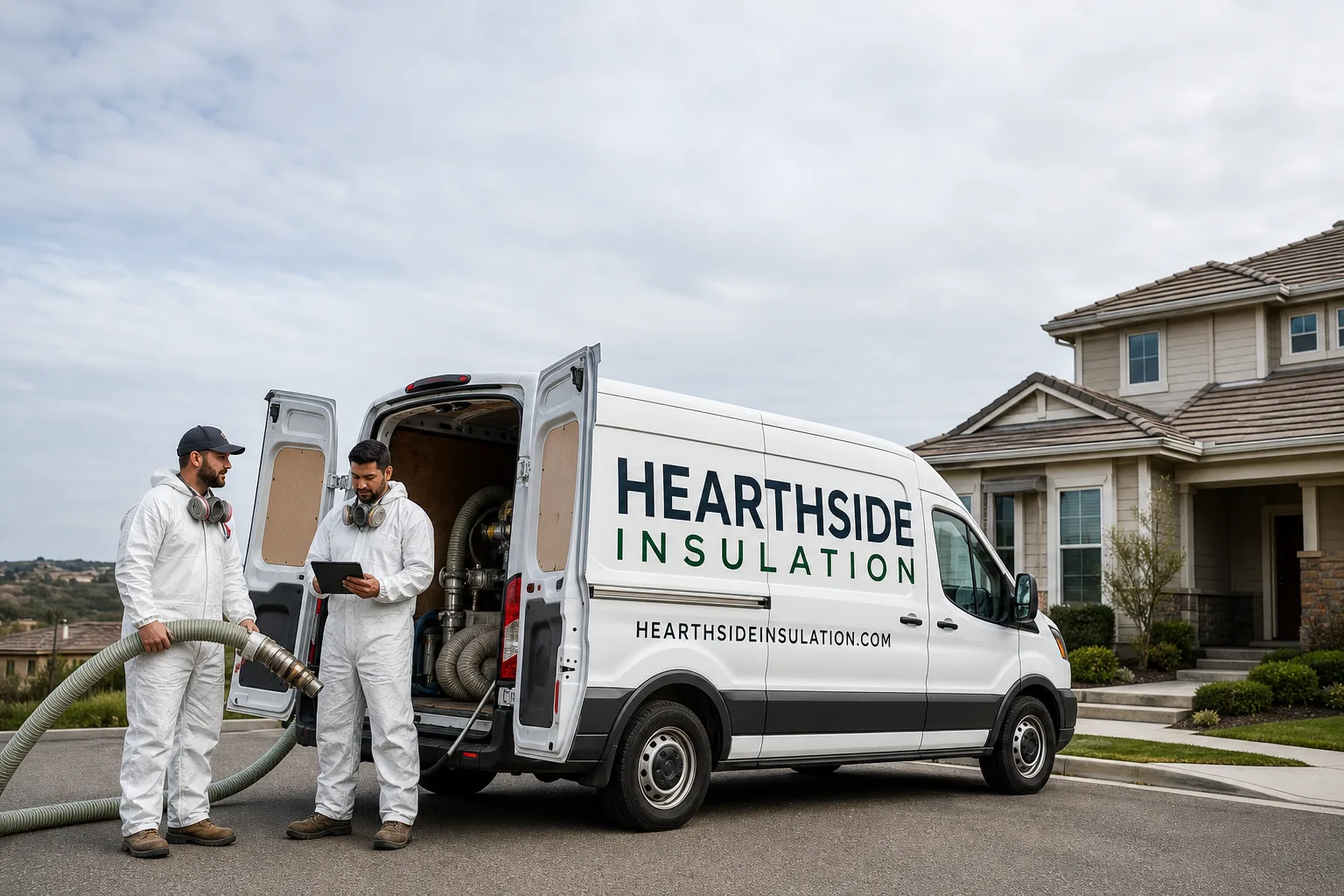
Fast, Reliable Attic Insulation Across Long Beach
Attic insulation in Long Beach fails differently than it does ten miles inland. The marine layer pushes humid onshore air into attic cavities, where it condenses against framing and settles into the insulation itself. What looks like an intact batt from the hatch is often damp, matted, and working at a fraction of its original R-value. We respond to Long Beach homes throughout 90802 through 90815 with insulation crews who understand coastal moisture, 1920s bungalow framing, and the ventilation mistakes that cause attic mold here. If your attic smells musty or your upstairs rooms swing hot and cold, call (877) 265-4871 for a free attic assessment.
Why Hearthside Insulation Is Long Beach’s Preferred Attic Insulation Company
We’re an insulation-only contractor. That means every Long Beach job we take on gets a crew whose entire focus is thermal performance, air sealing, and moisture control. We’re not an HVAC company running insulation work on the side, and we’re not a roofer who picked up a blower machine. When we open a 1940s attic in Belmont Heights or a 1960s stucco tract home in Los Altos, we’re looking at the same things a coastal building scientist would look at: vapor drive, ventilation balance, and whether the existing insulation is actually still performing.
Our Long Beach customers consistently point to two things in their feedback: we explain material tradeoffs honestly, and we show up when we say we will. Trevor Bassett, who leads Hearthside Insulation, has built the company around a simple principle: match the material to the home, not to whatever happens to be in the warehouse. With access to eight manufacturers, including Owens Corning, Johns Manville, and Knauf, we recommend what the attic actually needs. In Long Beach, that’s often not the same answer you’d get from a one-product shop.
Attic Mold Removal in Long Beach
Attic mold removal in Long Beach is a direct consequence of the marine layer. When humid onshore air enters an attic through unsealed framing voids and can’t escape through proper ventilation, it condenses against the roof deck and saturates the insulation below. In the 1920s – 1950s bungalow blocks of 90802 through 90806, we find mold starting at the sheathing and spreading into the top layer of batt insulation. Left alone, it degrades the roof decking and sends musty air down through ceiling penetrations into the living space.
A typical attic mold removal job in Long Beach runs $1,400 – $3,200 when we’re removing affected insulation, treating the framing and sheathing, and correcting the ventilation issue that caused the problem. That correction step is the part that separates a real fix from a temporary cleanup. If we pull moldy insulation and don’t fix the intake-to-ridge airflow, the mold comes back within two seasons.
Moisture Source Correction
Mold doesn’t appear because a home is old. It appears because warm, humid air is condensing on a cold surface repeatedly. In Long Beach attics, that repetition happens nightly during the marine layer cycle. We locate where the air is entering, seal those voids, and balance the ventilation before any new insulation goes in.
Sanitization and Sheathing Treatment
After removal, we treat affected framing and decking with an EPA-registered antimicrobial and confirm the attic is drying properly. New insulation only goes in once the space is stable and dry. Rushing that step is how attics end up moldy again twelve months later.
Attic Insulation Removal in Long Beach
Attic insulation removal in Long Beach is most common in homes built before 1980, where original fiberglass batts have spent decades collecting moisture, rodent debris, or dust from unsealed ceiling penetrations. Some homeowners can see the problem immediately when they open the hatch. Others don’t realize anything is wrong until an energy audit or a contractor points out that the insulation looks intact but tests at a fraction of its labeled R-value.
Removal of old attic insulation in Long Beach typically costs $1.00 – $2.10 per square foot of attic floor, depending on access, depth, and whether the material is damp or contaminated. That range usually covers removal, bagging, and disposal. In tight-access attics common to California bungalows and postwar stucco tracts across 90805 and 90807, expect pricing at the higher end.
Vermiculite and Legacy Materials
Homes built before the 1970s in Long Beach occasionally contain vermiculite insulation, which can carry asbestos. We identify it on sight and follow proper containment and handling procedures rather than disturbing it. If you suspect vermiculite, do not disturb it yourself.
Preparing for New Insulation
Removal clears the deck for air sealing. Before new insulation goes in, we seal top plates, wire penetrations, and any gaps around the attic hatch or recessed lighting. That step matters more in Long Beach than inland, because every unsealed opening is a path for humid marine air.
Trusted Brands We Service in Long Beach
Hearthside Insulation is authorized to install products from eight manufacturers, which matters in a city with housing stock this old and this varied. Owens Corning and Johns Manville fiberglass give Long Beach homes reliable, cost-conscious thermal performance. Knauf offers a full range of batt and blown-in options that fit older attics well. We choose the brand based on the job, not the other way around. For Long Beach customers, that means an honest recommendation for a damp-prone bungalow versus a newer townhome near the water. We stock and order specifically for the homes we serve across 90810 through 90815, so turnaround on common product lines is consistent.
Common Attic Insulation Problems We See in Long Beach Homes
- Flattened, matted batts in pre-1980 bungalows. Original fiberglass batts in 1920s – 50s Long Beach homes absorb marine-layer moisture, slump under their own weight, and lose most of their effective R-value even when they look acceptable from the hatch.
- Unsealed top plates and framing voids. Humid onshore air finds its way through gaps at the tops of interior and exterior walls, condenses in the attic, and soaks insulation from the underside. This is the most common failure mode we see in 90802 through 90806.
- Blocked or missing intake-to-ridge ventilation. Without balanced airflow, moisture trapped at the roof deck feeds damp insulation and eventual attic mold. Many older Long Beach homes have ridge vents that were added without corresponding soffit intake.
- Attic mold starting at the sheathing. When condensation forms repeatedly on the underside of the roof deck, mold follows. By the time homeowners notice a musty smell, the top layer of insulation is usually already contaminated.
Pricing for Attic Insulation in Long Beach, CA
Attic insulation pricing in Long Beach breaks down by method and scope. Blown-in attic insulation for a typical 1,200 – 1,800 square foot home runs $2,100 – $3,900 when it includes air sealing and ventilation prep. Attic batt insulation in the same size home generally falls between $2,600 and $4,400 depending on material and R-value target. Attic insulation top-up, where existing insulation is intact but under-depth, costs $1,200 – $2,300. Removal first adds $1.00 – $2.10 per square foot. Attic mold remediation runs $1,400 – $3,200 including the moisture correction. Every estimate is free, itemized, and based on what’s actually happening in your attic. Call (877) 265-4871 to schedule a walkthrough.
We Also Serve Cities Near Long Beach
Hearthside Insulation covers Long Beach and the surrounding communities. We regularly work in Signal Hill, Lakewood, Los Alamitos, and Rossmoor, where the same coastal humidity and aging housing stock create similar attic insulation challenges. If you’re in one of those cities and need Attic Insulation help, we can schedule you the same week in most cases.
Serving Long Beach, CA — Our Local Coverage Area
We’re based in the Long Beach area and know this community well. Use the map below to see our service coverage — if you’re nearby, we can almost certainly help.
FAQs About Attic Insulation in Long Beach
Older bungalows in Long Beach were built before modern air sealing and vapor management were standard practice. The marine layer pushes humid air into attic cavities through unsealed framing voids, where it condenses and soaks the insulation. After decades of that cycle, original fiberglass batts flatten, mat down, and lose most of their effective R-value. Newer homes have tighter building envelopes and better ventilation, so their insulation doesn’t face the same moisture load. Call (877) 265-4871 and we’ll assess what’s happening in your attic specifically.
Not always. In a 1950s – 70s stucco tract home where the existing insulation is dry, intact, and reasonably clean, a top-up can work well. If the old insulation shows any signs of moisture, rodent activity, or mold, removal is the better path. Blowing new insulation over damp or contaminated material locks the problem in permanently. We’ll tell you honestly which route fits your attic after a visual inspection.
Coastal humidity pushes the decision toward materials and methods that resist moisture. Open-cell spray foam can absorb moisture in a chronically damp attic and is rarely our first recommendation near the Long Beach coast unless the attic is fully conditioned and sealed. Closed-cell spray foam acts as a vapor barrier and air sealant, which works well on the underside of the roof deck if you’re creating an unvented attic. Loose-fill fiberglass or cellulose works well in vented attics, but only after the air sealing is complete and ventilation is balanced. Call (877) 265-4871 for a recommendation based on your home’s actual attic configuration.
Attic mold in Long Beach is caused by warm, humid air condensing repeatedly on cool roof sheathing. The moisture source is almost always unsealed voids where interior air leaks into the attic, combined with inadequate ventilation. We address it by removing contaminated insulation, treating the affected framing, sealing the air leaks, and correcting the ventilation balance. Skipping the sealing step means the mold returns.
Look for these signs: musty attic odor, upstairs rooms that run hotter than the rest of the house in summer, insulation that appears flattened or compressed, and any visible dampness or staining on the roof deck. If you’re unsure, we’ll inspect it. A free attic assessment from Hearthside Insulation includes checking depth, moisture content, and air sealing gaps. Call (877) 265-4871 to get an honest read on your attic.
If your Long Beach attic has seen better decades and you want a straight answer about insulation, ventilation, or mold, call Hearthside Insulation at (877) 265-4871. We serve all of Long Beach from 90802 through 90815, and estimates are free.
Written by Trevor Bassett, Owner at Hearthside Insulation, serving Long Beach since the company’s founding.