
Insulation Company in Corona, CA
Blown in insulation is the most common service call we handle in Corona, and for good reason: the city’s tract-home stock from the 1970s through early 2000s was built with minimal attic coverage, and triple-digit summers punish that oversight every single year. Hearthside Insulation has served Corona since 2016, matching each home to the right material rather than pushing whatever’s on the truck. Whether your attic needs cellulose, fiberglass, or a full air-seal-and-blow package, call (877) 265-4871 for a free estimate.
Why Corona Homes Are Different
Corona sits at the junction of three distinct climate zones. The valley floor gets scorching dry heat, the Santa Ana wind corridor drives hot, dusty air into attics, and the foothill edges along the 91 freeway corridor cool off faster and create thermal drafts. That means a 1980s stucco tract home in 92879 faces a different insulation challenge than a foothill property in 92883, where blown-in attic material often settles unevenly and leaves hot spots homeowners mistake for failing HVAC.
The housing stock compounds the issue. Most Corona homes were built between the 1970s and early 2000s, with a heavy concentration of 1980s and 1990s stucco-clad developments. The attic insulation in these houses, when it hasn’t degraded, is usually the original builder-grade fiberglass batt, often R-19 or less where today’s energy codes call for R-38 and up. Walls in that era rarely received more than a thin layer, if anything. The result is predictable: upstairs rooms that never cool down in August, and heating bills that spike every time the temperature dips into the 30s on a January night.
What makes Corona different from, say, coastal Orange County is the heat cycling. Insulation here doesn’t just sit still, it gets baked, then cooled, then baked again. Fiberglass batts lose loft. Cellulose settles. Radiant barriers oxidize. Any contractor quoting a one-size-fits-all solution is ignoring what the local climate actually does to materials over a decade.
Our Main Corona Services
Most Corona homeowners reach out to us about two problems: attics that need to be brought up to current performance standards, and whole-home air sealing where spray foam is the right answer. Here’s how each plays out locally.
Attic Insulation in Corona
Attic work in Corona usually means two things at once: removing or topping off degraded batts, and air sealing the ceiling plane before anything new goes down. The Santa Ana winds push hot, dry air into vented attics constantly, so even an R-38 attic underperforms if the penetrations around light fixtures, wiring, and duct chases leak conditioned air upward. We match material to the house: Owens Corning or Johns Manville fiberglass where budget matters, Rockwool where fire resistance or sound is a priority, GreenFiber cellulose for tight coverage in odd joist spacing. Read the full local breakdown on our Attic Insulation in Corona page.
Spray Foam Insulation in Corona
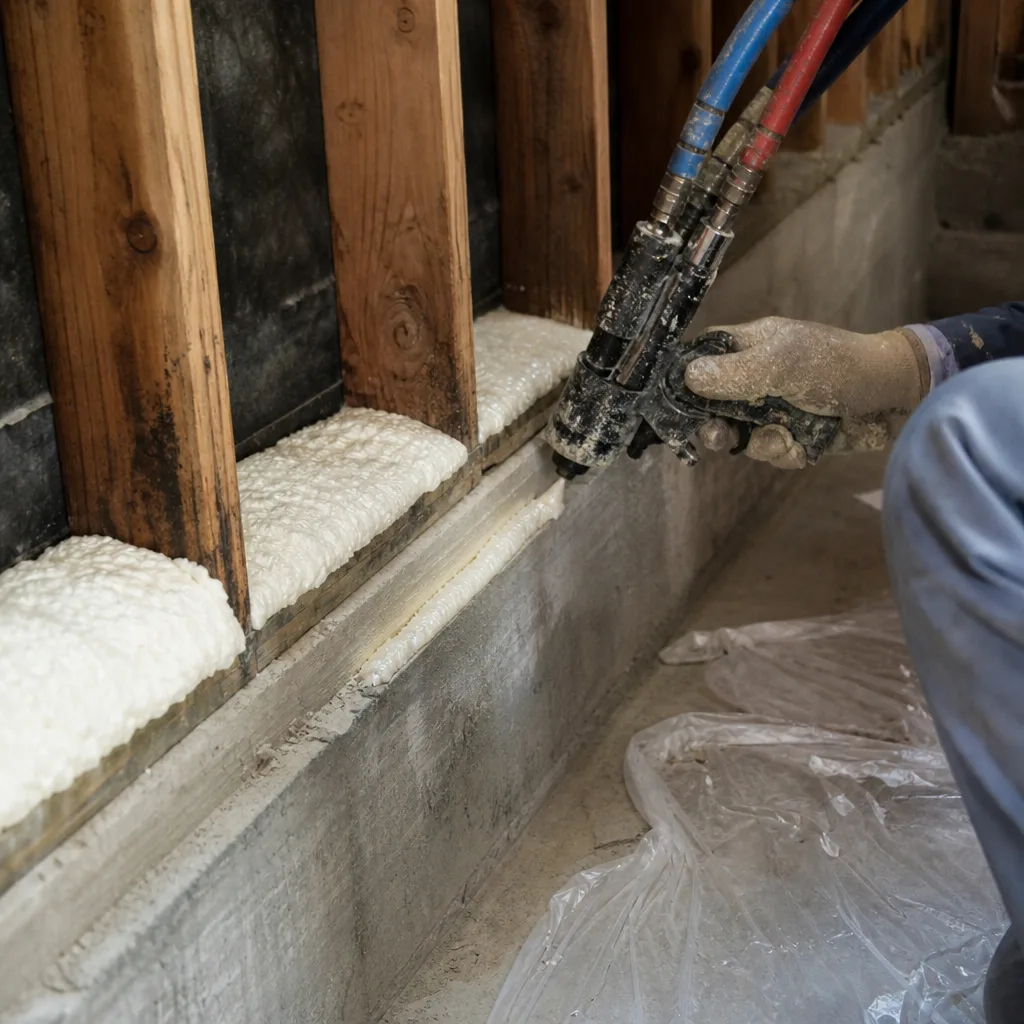
Spray foam solves what blown-in and batt materials can’t: the air leaks. Corona’s older stucco homes often have rim joists, cantilevered floors, and knee walls that leak like sieves. When we access both Icynene and Demilec open-cell and closed-cell systems, we can actually compare them honestly for your home, your roofline, and your budget. Closed-cell adds structural rigidity and vapor control, which matters in foothill microclimates. Open-cell gives excellent air sealing at a lower material cost for standard vented attics. Both have a place in Corona. The full comparison, with local pricing, is on our Spray Foam Insulation in Corona page.
What happens when you call
- 1
A real person answersNo phone trees — you reach a local pro.
- 2
You get an upfront price rangeHonest numbers before anyone is dispatched.
- 3
A background-checked tech heads outLicensed & insured, dispatched right away.
- 4
You approve before work beginsNothing starts until you say go.
Blown In Insulation in Corona
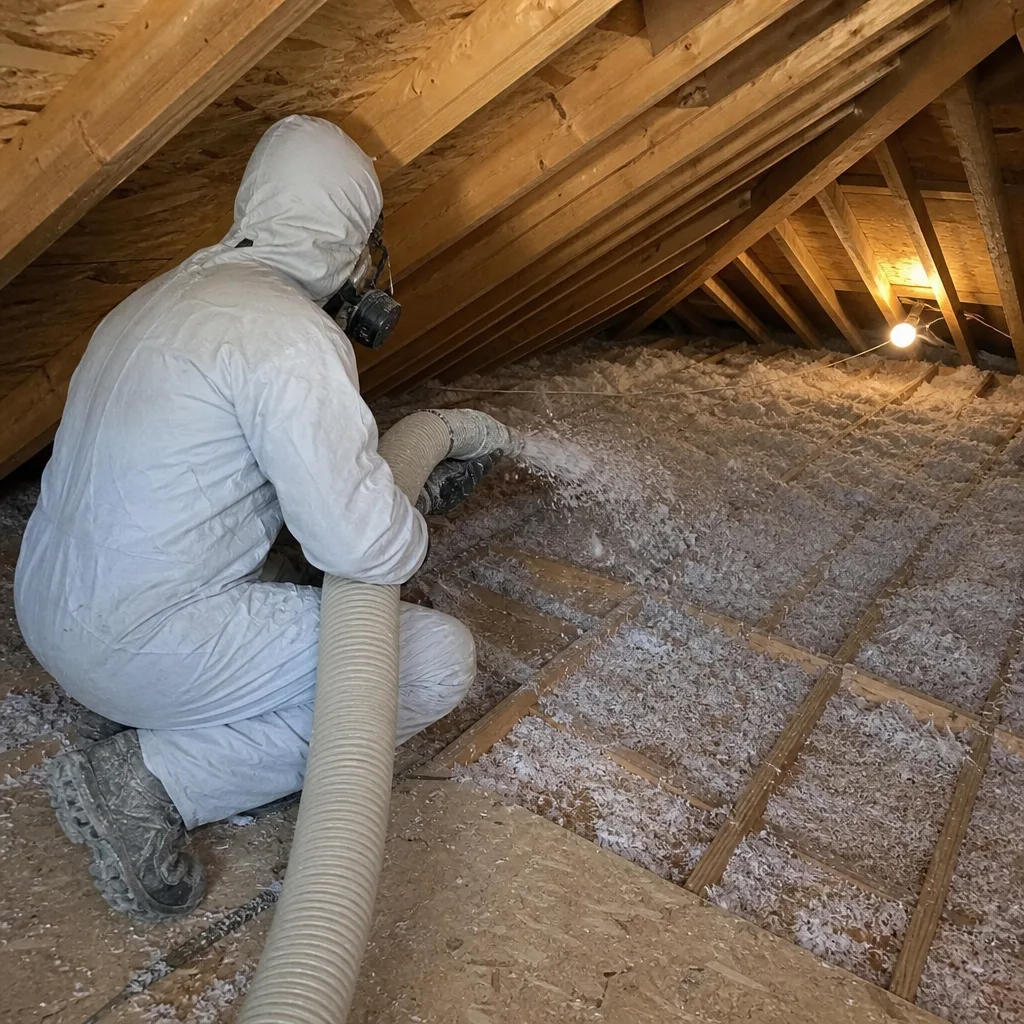
Blown in insulation is the workhorse correction for Corona’s aging tract homes. Most houses built between the 1980s and early 2000s in ZIPs like 92879 and 92882 still carry their original builder-grade fiberglass batts, now compressed, dusty, and well below current energy-code levels. On top of that, the heat cycling from Corona’s inland summers degrades whatever loft those batts once had. We blow cellulose or fiberglass over existing material or into bare attics after air sealing, reaching depths and coverage that batts simply cannot match around trusses, wires, and odd framing. For a deeper look at the material options and process, see our Blown In Insulation overview.
Cellulose Insulation
Signs you need it
Your attic insulation is shallow, settled below the top of the joists, or you notice drafty, uneven room temperatures in winter despite a newer HVAC system.
What it costs in Corona
Expect roughly $1,200 to $2,800 for a typical 1,000 to 2,000 sq ft attic blown to R-38 in Corona, depending on prep and air sealing scope.
How we do it
We air seal the ceiling plane, then blow GreenFiber cellulose to the depth required for your target R-value, using density markers and settling factors specific to Corona’s heat cycling.
Blown In Attic Insulation
Signs you need it
Upstairs rooms run 10 to 15 degrees warmer than downstairs in summer, or you see bare spots and thin patches across the attic floor.
What it costs in Corona
Most Corona attics run $1,500 to $3,200 for a full blow to R-38 or R-49, with older 92879 tract homes typically landing near the middle of that range.
How we do it
We remove or top off existing material, install baffles at the eaves so the Santa Ana-driven airflow doesn’t displace new insulation, and blow to code-plus depth.
Blown In Fiberglass Insulation
Signs you need it
Your current batt insulation is compressed, mold-stained, or rodent-damaged, and you want a clean, consistent thermal layer without cellulose settling concerns.
What it costs in Corona
Budget $1,100 to $2,500 for blown fiberglass in a standard Corona attic, with the final number driven by rafter depth and whether we’re topping off or starting fresh.
How we do it
We use Johns Manville or Knauf blown fiberglass, applying it with a calibrated machine to hit the exact R-value for your zone while maintaining consistent density.
Loose Fill Insulation
Signs you need it
You have an attic with irregular joist spacing, low-clearance areas, or hard-to-reach corners where batts leave gaps and uninsulated pockets.
What it costs in Corona
Loose fill in Corona typically falls between $1,200 and $2,900 for full coverage, depending on whether we’re also removing settled material or old batt layers.
How we do it
We prep the attic floor, seal bypasses, and blow the loose fill material in lifts, checking depth with gauge markers so hot spots don’t re-form in foothill draft zones.
What Blown In Insulation Costs in Corona
| Item | Typical range in Corona |
|---|---|
| Blown cellulose attic (1,000 – 2,000 sq ft, R-38) | $1,200 – $2,800 |
| Blown fiberglass attic (standard tract home) | $1,100 – $2,500 |
| Full attic prep, air sealing, and loose fill | $1,500 – $3,200 |
Prices climb when we’re pulling out decades of compacted, dusty material first, or when a foothill home in 92883 needs extra depth to offset the settlement caused by thermal drafts rolling down from the hills. Every quote is line-itemed upfront, and the number we give you is the number you pay.
Is blown in insulation worth it in Corona?
Yes, especially for pre-2000 tract homes. The original attic insulation in most Corona houses is R-19 or less, far below the R-38 to R-49 that today’s energy codes recommend. Upgrading it typically pays for itself in lower summer cooling bills within a few years. Call (877) 265-4871 for a free inspection.
How long does blown in insulation last in Corona?
Cellulose and blown fiberglass both hold their R-value for decades when installed at proper density, though Corona’s heat cycling can cause cellulose to settle about 5 to 10 percent in year one. We factor that settling allowance into our depth calculations. Call (877) 265-4871 if your attic hasn’t been checked in 15 years.
Brands We Service in Corona
We’re authorized to install products from eight manufacturers, which means we’re not tied to a single brand’s specs. In Corona, the most common requests are Johns Manville and Knauf blown fiberglass, Rockwool mineral wool for fire-rated or high-moisture areas, and CertainTeed batts for wall and knee wall upgrades. Most materials are stocked locally with a few days’ turnaround on specialty items. See our full lineup on our brands page.
Pricing for Insulation Company in Corona, CA
| Service | Typical range in Corona |
|---|---|
| Attic insulation upgrade (blown, R-38) | $1,500 – $3,200 |
| Blown in cellulose (attic) | $1,200 – $2,800 |
| Blown in fiberglass (attic) | $1,100 – $2,500 |
| Loose fill insulation (full coverage) | $1,200 – $2,900 |
| Spray foam insulation (open-cell, attic) | $1,800 – $4,500 |
| Spray foam insulation (closed-cell, attic) | $2,600 – $6,400 |
| Attic air sealing (standalone) | $350 – $1,000 |
| Crawl space insulation | $1,100 – $3,000 |
| Wall insulation (blown in, retrofit) | $2,500 – $5,500 |
| Mineral wool acoustic insulation | $1,400 – $3,800 |
What pushes a Corona quote higher than the baseline is removal of old, settled material, extra air sealing in drafty 1980s stucco homes, and the deeper coverage needed in foothill ZIPs that experience settlement-prone thermal drafts. But every quote is fixed before we start work, with no surprise charges at the end.
Neighborhoods We Serve in Corona
Our crews cover all four Corona ZIPs: 92877, 92878, 92879, and 92880, plus the foothill corridors where microclimates demand more thoughtful material selection. We’re in these neighborhoods most weeks:
- Sierra del Oro
- South Corona
- The Oaks
- Dos Lagos
- Corona Ranch
Response time for most neighborhoods is same-week scheduling, with emergency attic and air-sealing jobs often handled within 48 hours.
Service Area – Cities Near Corona
Beyond Corona, we serve the surrounding Inland Empire communities with the same material-agnostic approach. That includes Home Gardens, CA just to the west, El Cerrito Corona, CA on the northern edge, Eastvale, CA across the 15, and Norco, CA to the north. If you’re anywhere in this stretch of Riverside County, call (877) 265-4871 and we’ll tell you honestly what your attic actually needs.
Serving Corona, CA — Our Local Coverage Area
We’re based in the Corona area and know this community well. Use the map below to see our service coverage — if you’re nearby, we can almost certainly help.
FAQs About Insulation Company in Corona
Most Corona calls get a site visit within 3 to 5 business days, and many attic assessments can be done the same week. Jobs themselves are usually scheduled within a week or two after the quote is approved. Call (877) 265-4871 and we’ll give you a firm date, not a range.
Attic and interior insulation work almost never triggers HOA review in Corona, since it’s not visible from the street and doesn’t alter the structure. If you’re in a community with strict CC&Rs, we can provide a scope-of-work description for your board if they ask. We’ve done it many times.
We cover all four Corona ZIPs: 92877, 92878, 92879, and 92880, along with the unincorporated foothill edges that share Corona addresses. If you’re unsure whether you’re in our service area, call (877) 265-4871 and we’ll confirm in about thirty seconds.
Call Hearthside Insulation at (877) 265-4871 for a free, specific estimate for your Corona home. We’ll match the material to your house, your microclimate, and your budget, and you’ll get a straight answer on what actually needs to be done.
What happens when you call
- 1A real person answersNo phone trees — talk to a local insulation pro.
- 2You get an upfront price rangeHonest numbers before anyone is dispatched. No surprises.
- 3A background-checked tech heads outLicensed & insured, typically same-day.
- 4You approve before work beginsNothing starts until you say go.
What Corona Customers Say
"He did a blower door test before and after and gave me the numbers. I like being able to see the difference rather than being told about it."
— Angela Nguyen"Installed baffles at the soffits so the new insulation didn't block the ventilation, which the previous contractor apparently never considered."
— Sofia Delgado"Told me the crawlspace didn't need doing and only the attic did. Half the job, half the money."
— Nathan Meyer